
You pull back a damaged piece of trim and notice several pale insects moving through the wood. But in another home, the first clue might be a group of loose wings collected along a window track.
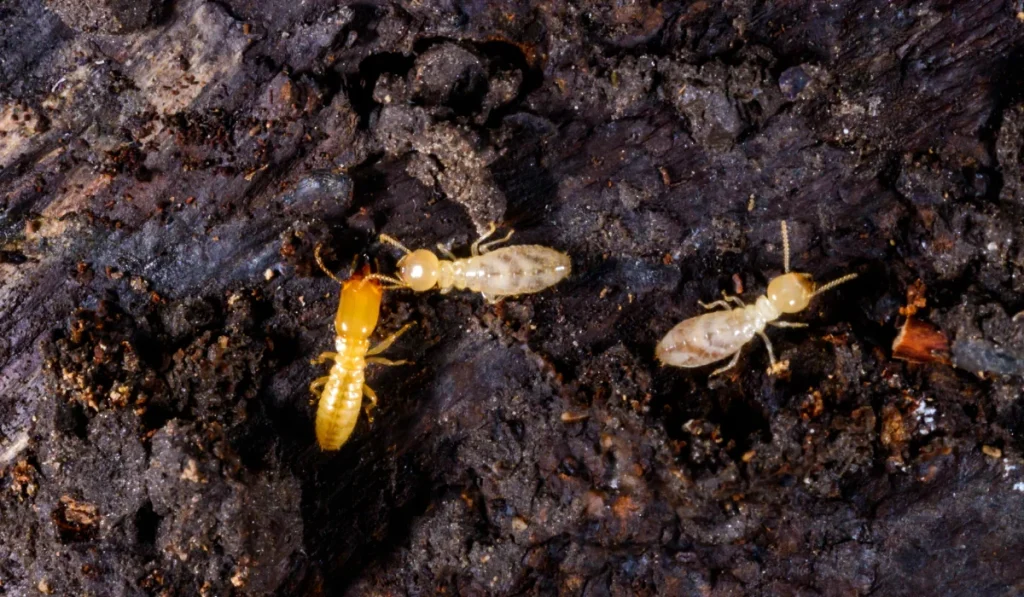
So, what do termites look like in California? Most termite workers are pale and wingless, termite soldiers have larger heads and jaws, and reproductive termites are darker with two pairs of long wings.
California termites do not all look or behave the same way. Drywood, subterranean, and dampwood termites occupy different environments and leave different evidence behind. This guide explains how to identify the main types of termites in California, how to separate flying termites from ants, and which signs of termites around your home may justify a professional termite inspection.
What Do Termites Look Like in California Up Close?
Most termites have soft bodies and a fairly even shape from the head through the abdomen. Unlike ants, they do not have a sharply pinched waist. Workers are usually cream, off-white, or light tan, while soldiers tend to have pale bodies with larger amber or brown heads.
Termite swarmers look very different from the workers hidden inside wood. These reproductive termites, also called termite alates, may appear brown, dark brown, or nearly black. Their straight or beadlike antennae and two pairs of similar-length wings are useful identification features.
Color by itself is not enough to identify a termite. A pale worker and a dark swarmer may come from the same colony even though they look like completely different insects.
| Termite Caste | Appearance | Wings | Where You May Notice It |
|---|---|---|---|
| Termite workers | Pale, soft-bodied, and small | No | Inside damaged wood or an exposed gallery |
| Termite soldiers | Pale body with a larger amber or brown head | No | Exposed galleries, damaged wood, or shelter tubes |
| Termite swarmers | Brown to nearly black with a straight body | Yes | Windows, doors, lights, patios, or indoor swarm sites |
| Reproductive after swarming | Dark body after shedding its wings | No | Near discarded termite wings after a recent swarm |
California has more termite diversity than many homeowners expect. The UC Statewide Integrated Pest Management Program reports at least 23 termite species in the state and identifies subterranean, drywood, and dampwood termites as the main pest groups affecting structures. Some subterranean colonies can contain hundreds of thousands of termites, while drywood colonies generally contain fewer than 1,000.
What Each Type of California Termites Look Like
Where you find the insects can tell you almost as much as their appearance. Termites living in dry framing behave differently from termites entering a building from underground, while another group depends on wood that stays damp.
That matters across a state with very different climates. Termites in Southern California may show up under different conditions than Bay Area termites or termites in San Francisco, where cooler coastal moisture can play a larger role.
Subterranean Termites
Subterranean termites build colonies in soil and travel toward wood for food. Their workers are pale and wingless. Soldiers have light bodies with larger heads, while reproductive swarmers are usually dark brown to nearly black.
These termites occur throughout much of California. Their colonies may become very large, but homeowners rarely see thousands of insects at once because most remain underground or inside wood.
Termite mud tubes are a much more common clue. These narrow earthen passages run from soil toward structural wood and allow subterranean termites to travel without being exposed to dry air.
Drywood Termites
Drywood termites can live completely inside dry wood without maintaining contact with soil. They may infest framing, window and door components, trim, furniture, fences, and other sound wood.
Workers remain hidden in their galleries, while drywood termite swarmers are darker and generally larger than common subterranean swarmers. Homeowners often notice flying termites near windows or light sources when a mature colony releases reproductives.
Drywood termites are especially relevant to termites in Southern California, including Los Angeles and San Diego, though they also occur along coastal California and in parts of the Central Valley. Termite frass is one of the most recognizable signs associated with this group.
Dampwood Termites
Dampwood termites prefer wood with substantial moisture. Leaking plumbing, roof leaks, drainage problems, decay, or wood touching wet soil can create suitable conditions.
These termites are generally larger than California’s common drywood and subterranean species. They occur throughout the state but are particularly associated with cool, humid coastal locations.
Finding dampwood termite activity can point to a moisture problem as well as a pest problem. Correcting the water source may therefore be an important part of addressing the conditions that allowed the termites to remain in the wood.
| Termite Group | Typical Habitat | Common Visible Clue | California Context |
|---|---|---|---|
| Subterranean termites | Soil and wood reached from underground | Termite mud tubes | Widespread across much of California |
| Drywood termites | Dry structural or finished wood | Termite frass and discarded wings | Especially common in Southern California and coastal areas |
| Dampwood termites | Moist or decaying wood | Large galleries in damp wood | Often associated with cool, humid coastal areas |
How Can You Tell Termites From Flying Ants?
A dark winged insect near a sliding door can look like either pest at first glance. Fllying ants and termites can look surprisingly similar when they are moving quickly.
Start with the waist. A termite swarmer has a broad, fairly uniform body, while a flying ant has a clear pinch between the thorax and abdomen. Then look at the antennae. Termites have straight or beadlike antennae, while ant antennae bend sharply.
The wings provide another useful check. Termite swarmers have four wings of roughly equal length. Flying ants also have four wings, but their front pair is noticeably longer than the rear pair.
| Feature | Termite Swarmer | Flying Ant |
|---|---|---|
| Waist | Broad and fairly straight | Narrow and pinched |
| Antennae | Straight or beadlike | Bent or elbowed |
| Wings | Front and rear pairs similar in length | Front wings longer than rear wings |
| Overall shape | Fairly uniform body | Clearly divided at the waist |
A few flying termites outdoors can come from nearby soil, a stump, a fence, landscape timber, or another structure. Repeated indoor swarmers deserve a closer look, especially when they appear with frass, mud tubes, or visible termite damage.
What Signs of a Termite Infestation Should You Look For?
Seeing a live termite is only one way to discover a termite infestation. Most colony activity remains inside wood, underground, or within protected passages, which means the evidence around the insects often tells you more than the insects themselves.
The California Department of Pesticide Regulation advises homeowners to look for signs that include drywood termite pellets, discarded wings, mud tubes, small openings in wood, and damaged wood. Each clue points toward a different part of termite behavior.
Termite Frass and Droppings
You notice what looks like coarse sawdust below a wooden windowsill. If the material returns after you clean it up, look more closely. Drywood termite droppings, also known as termite frass, consist of hard pellets rather than loose wood fibers.
Individual pellets have six flattened sides running lengthwise, although you may need magnification to see the shape clearly. Their color depends on the wood being eaten, so a pile can appear cream, tan, reddish brown, or dark brown.
Drywood termites push these pellets through small openings in infested wood. Window frames, baseboards, furniture, trim, attic lumber, and other wooden surfaces are common places to find them.
Termite Mud Tubes
A strip of dried mud running up concrete points toward a different type of termite problem. Subterranean termites build shelter tubes to travel between their underground colony and wood while maintaining the humidity they need.
Check foundations, crawl space supports, piers, plumbing penetrations, and areas where structural wood sits close to soil. The tubes may be narrow, irregular, and easy to overlook against rough concrete or masonry.
An old mud tube does not prove that termites are active at that exact moment. Fresh tubes, live insects, new damage, or other activity nearby provide stronger evidence.
Termite Wings and Wood Damage
After termite swarmers leave a colony, they shed their wings. Small groups of similar translucent termite wings near windows, doors, vents, or light fixtures may be the only evidence left from a short swarm.
Termite damage often stays hidden longer. The insects can feed below a painted or finished surface while the outside still appears intact. Wood that gives way unexpectedly, exposes internal galleries, or sounds unusually hollow deserves attention when other termite signs are present.
When Termites Swarm in California
California does not have one universal termite season. Temperature, moisture, rainfall, termite type, location, and time of day all influence when swarmers leave their colonies.
Common subterranean termites may swarm during warm periods following spring or fall rain. Western drywood termite swarmers are often associated with summer and fall. The exact timing can differ between termites in San Diego, termites in Los Angeles, and termites in San Francisco because local climate conditions are not identical.
One outdoor swarm does not prove that termites are living in your house. Indoor swarmers combined with frass, termite mud tubes, discarded wings, or wood damage create a much stronger case for scheduling an inspection.
Why Does Correct Termite Identification Matter?
Not every damaged piece of wood points to the same problem. Carpenter ants, wood-boring beetles, excess moisture, and old termite damage can create clues that resemble an active termite infestation.
Even confirmed California termites require another level of identification. Drywood termites can remain entirely inside lumber, subterranean termites usually maintain contact with soil, and dampwood termites depend on high moisture. Those differences affect where a technician looks and which termite control approach is appropriate.
The financial stakes are significant without needing exaggeration. The U.S. Environmental Protection Agency reports that termites cause billions of dollars in structural damage each year in the United States and that property owners spend more than $2 billion annually treating them.
A good termite inspection answers questions that a photo or pellet pile cannot. Identifying the type of termite helps determine where activity may extend, whether the evidence appears current, and which parts of the structure need closer evaluation before termite treatment is recommended.
Know What You Found Before Deciding What to Do
If you are still asking what do termites look like in California, focus on the full pattern rather than one isolated clue. Pale termite workers, darker swarmers, straight antennae, equal-length wings, termite droppings, mud tubes, and damaged wood each provide a different piece of information.
Visible evidence has limits. Frass can point toward drywood termite activity without showing how far the galleries extend, while a mud tube can reveal a subterranean travel route without showing the entire colony. That is why correct identification should come before choosing termite control.
If the signs around your home point to termites, Round the Clock Pest Services can inspect the property, identify the termite involved, and check the areas where that type is most likely to be active. A professional termite inspection gives you a clearer basis for choosing treatment and helps you avoid paying to address the wrong pest or the wrong part of the structure. Contact us now to learn more about our services.