
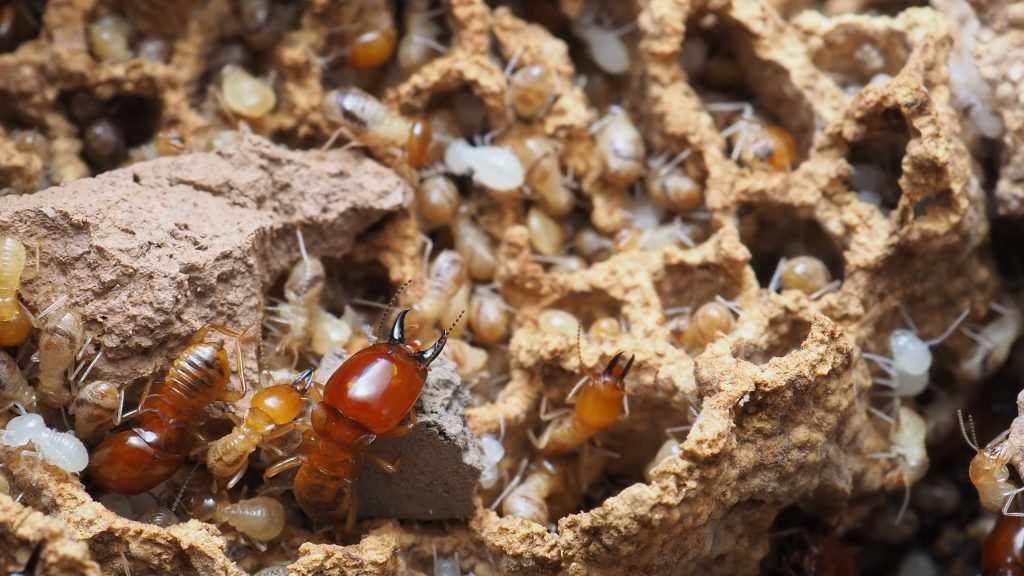
Finding a pile of wings near a window or small pellets below a wooden beam can leave you with plenty of questions. Are termites already inside the house? Did they arrive after the last rain? Can you wait and see whether the problem goes away?
Termites in California do not follow one simple pattern. Some species live underground and enter homes through foundations or wood that touches soil. Others settle inside dry rafters, trim, furniture, or fences. Termites that depend on wet wood are more common near leaks, damaged decks, and damp coastal areas.
California has at least 23 termite species, although only a few regularly infest buildings. The main structural pest groups are subterranean, drywood, and dampwood termites. Each one leaves different evidence and becomes more noticeable under different weather conditions.
Learning those differences can help you recognize a potential infestation before hidden wood damage becomes harder to repair.
The Most Common Types of Termites in California
The three main types of termites in California differ in where they build colonies and how they reach a home. Correct identification matters because a colony in the soil requires a different control plan than one living entirely inside an attic beam.
The following comparison gives homeowners a practical starting point. An inspection is still needed to confirm the species, determine whether the evidence is current, and locate the affected wood.
| Termite type | Where it usually lives | Common California locations | Evidence homeowners may find |
| Subterranean termite | In soil or underground colonies | Foundations, crawl spaces, patios, garages, and wood touching soil | Mud tubes, damaged wood, swarmers, and discarded wings |
| Drywood termite | Inside dry, sound wood | Eaves, rafters, window frames, decks, fences, and furniture | Hard pellets called frass, kick-out holes, wings, and hollow wood |
| Dampwood termite | Inside wet or decaying wood | Leaking roof areas, damp decks, crawl spaces, and coastal structures | Large galleries, moist debris, swarmers, and water-damaged lumber |
The UC Statewide Integrated Pest Management Program identifies subterranean, drywood, and dampwood termites as California’s main termite pest groups. It also notes that subterranean termites occur across most of the state, while dampwood termites favor moist wood in humid or forested settings.
Subterranean Termites
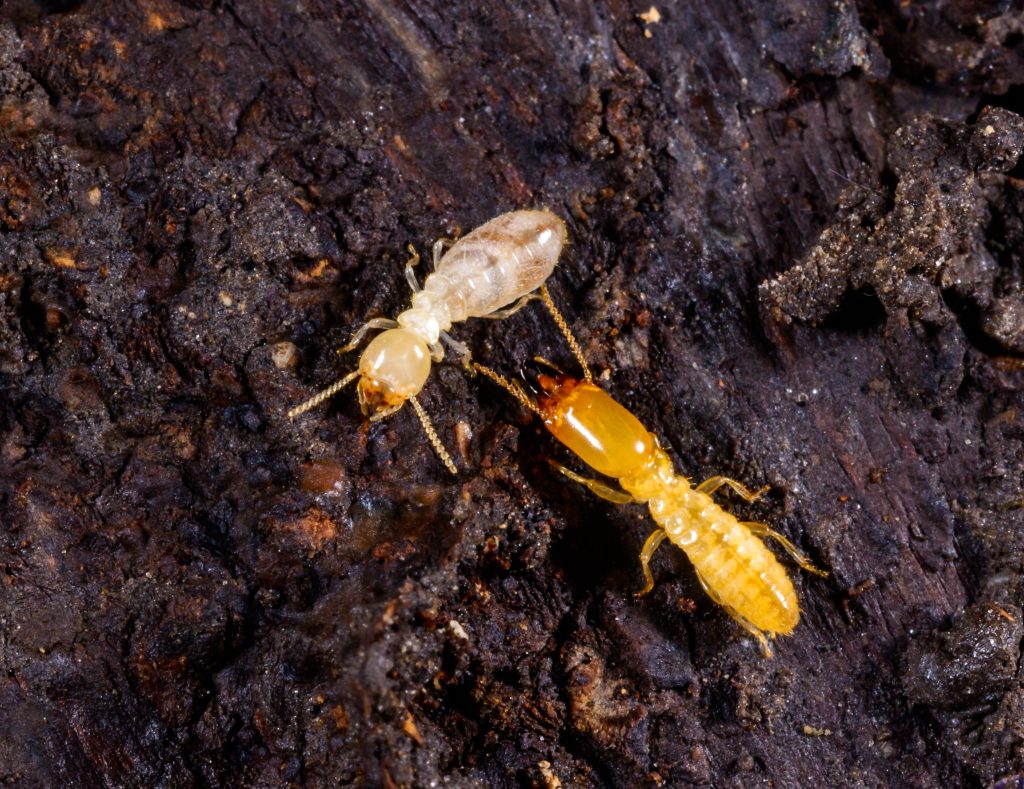
Subterranean termites are California’s most common termite pests. Colonies usually live below ground, where the soil protects workers from sunlight and dry air. The termites leave the colony to search for cellulose in lumber, tree roots, stumps, cardboard, and other plant-based materials.
These termites often enter homes through cracks, expansion joints, plumbing openings, and wooden materials that touch the soil. They can also build mud tubes over concrete or masonry. The tubes create a protected route between the colony and a food source.
Moisture near the foundation can make a property more attractive. Leaking hose bibs, poor drainage, overwatered planters, and sprinkler heads aimed toward the house can keep soil damp. Porch posts, siding, fence boards, and deck supports are especially vulnerable when they remain in contact with the ground.
Drywood Termites
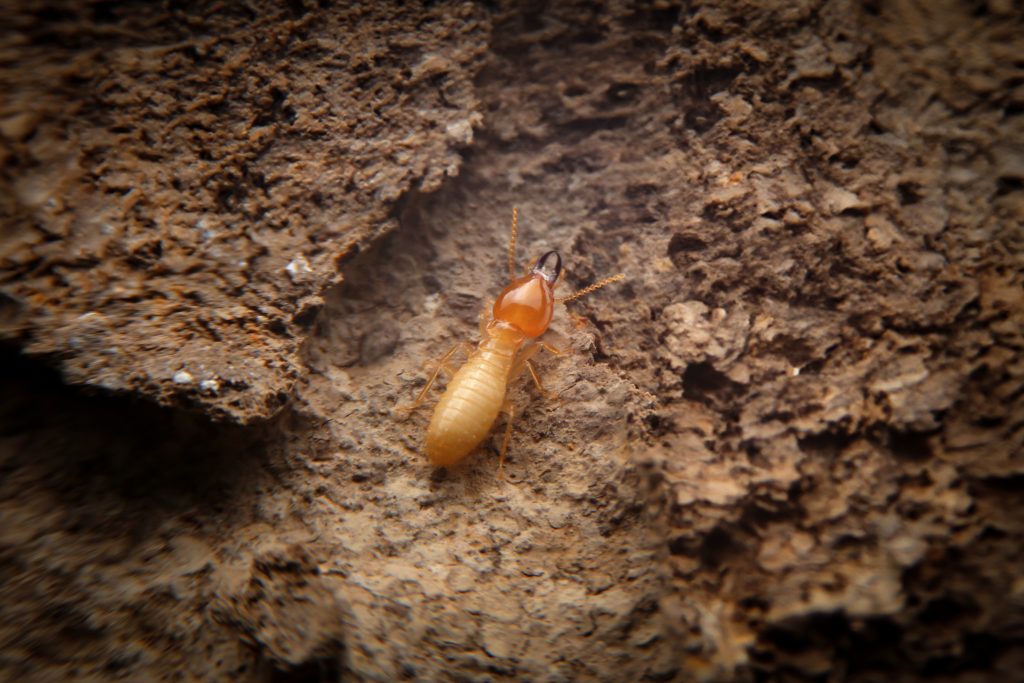
Drywood termites live inside wood without maintaining a connection to the soil. A pair of swarmers can enter a small crack, exposed wood joint, attic vent, or unfinished section of trim and begin a colony inside the structure.
The western drywood termite is the most common drywood species in California. It occurs along much of the Pacific Coast and extends into the Central Valley and Southern California deserts. Homes in Los Angeles, San Diego, the Bay Area, and other coastal communities may have several exposed wooden features that provide suitable nesting sites.
Drywood termite colonies are often smaller than subterranean colonies, but their location makes them difficult to notice. Workers can remain inside rafters, fascia boards, doorframes, furniture, and window trim for years. Homeowners often discover them after seeing piles of hard, grain-sized pellets below a small opening in the wood.
Dampwood Termites
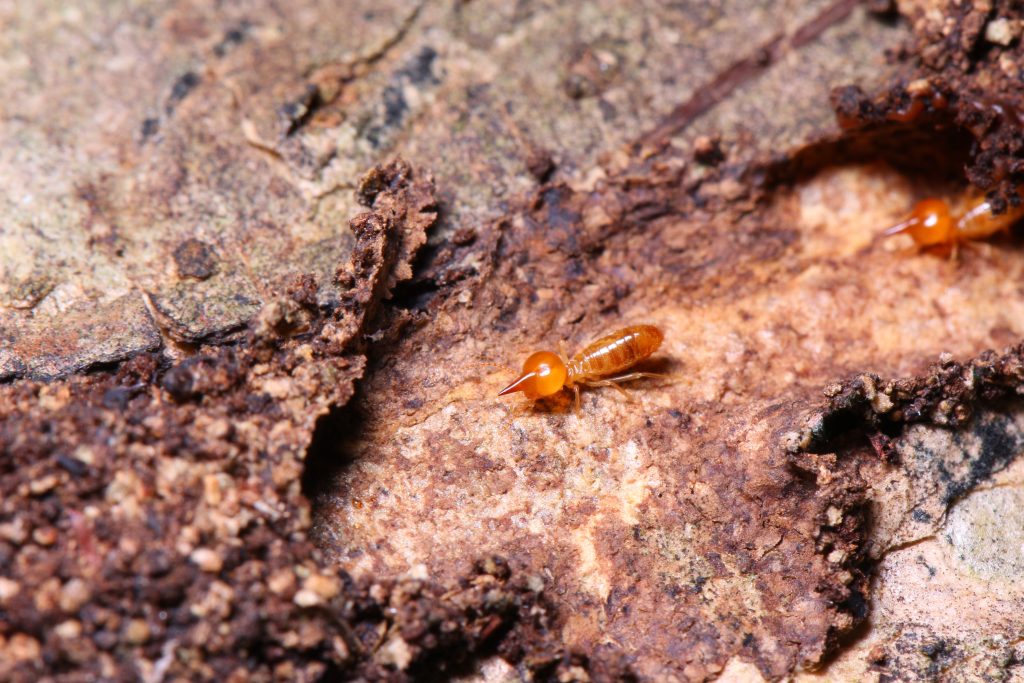
Dampwood termites require wood with a high moisture level. They commonly infest decaying trees and stumps, but they can move into a building when roof leaks, plumbing problems, drainage failures, or poor ventilation keep lumber wet.
Their presence can point to two problems at once. The colony must be addressed, but the source of moisture also needs repair. Replacing damaged wood without correcting a leak may leave the new material exposed to the same conditions.
Dampwood termites are generally larger than California’s common subterranean and drywood species. They tend to appear in cool, humid coastal areas, although any property with consistently wet wood may provide a suitable habitat.
When Is Termite Season in California?
Termite season in California is the time when homeowners are most likely to see winged reproductive termites, also called swarmers or alates. It is not the only time termites feed. Workers remain hidden inside wood or soil and may continue damaging a structure even when no flying termites are visible.
Swarm timing depends on the species, temperature, rain, wind, humidity, and location. This is why a single statewide answer such as “spring is termite season” does not tell the whole story.
| Termite group | Common swarming period | Typical conditions | Where swarmers may appear |
| Subterranean | Often winter through spring, but timing varies | Mild temperatures, moist soil, and calm weather after rain | Near foundations, patios, crawl spaces, windows, and doors |
| Drywood | Summer through fall | Warm, sunny weather, often during the daytime | Around eaves, attics, windows, fences, decks, and exposed wood |
| Dampwood | Summer through fall | Warm conditions near moist or decaying wood | Around exterior lights, damp decks, rooflines, and wooded areas |
A brief swarm may last only a short time. Once the insects land, they shed their wings and look for a suitable place to start a colony. By the time a homeowner cleans up the wings, the remaining insects may already be hidden.
Swarmers found outdoors do not always prove that the house is infested. Swarmers coming from an interior wall, window frame, attic, or baseboard are more concerning because they may have emerged from wood inside the structure.
How California’s Regions Affect Termite Activity
California’s size and varied climate create different termite conditions from one region to another. Local moisture and construction details still matter more than a ZIP code, but regional patterns can help homeowners understand what to watch for.
| California area | Conditions that affect termite activity | Areas of a home worth checking |
| Southern California | Long warm seasons, drywood termite pressure, irrigation, and warm fall weather | Eaves, attics, fascia, decks, fences, window frames, and foundations |
| San Francisco Bay Area | Coastal humidity, winter rain, older wood, and shaded crawl spaces | Crawl spaces, roof edges, decks, siding, subfloors, and damp framing |
| Inland valleys | Hot summers, irrigated landscaping, and drywood or subterranean activity | Hose connections, planter boxes, patios, foundations, and exterior trim |
| Wooded or coastal properties | Moist air, tree cover, wet lumber, and decaying wood | Porch supports, roof framing, shaded decks, stumps, and drainage areas |
In Los Angeles and San Diego, drywood termite swarmers may find exposed roof timbers, wooden balconies, decorative trim, and older window frames. Warm fall conditions can extend the period when homeowners notice flying termites.
Bay Area homes may face a wider range of moisture conditions. Winter rain, fog, shaded lots, crawl spaces, and aging decks can create suitable sites for dampwood termites. Subterranean termites also remain a major concern throughout Northern California.
Dry inland weather does not make a house termite-proof. Sprinklers, plumbing leaks, air-conditioning drainage, and poorly graded soil can create small pockets of moisture. A wet strip beside the foundation may provide better termite conditions than the surrounding climate suggests.
Signs That Termites May Be in Your Home
Termite evidence varies by species, and not every damaged board is caused by termites. Carpenter ants, beetles, wood rot, and previous infestations can create similar concerns. Looking at the type and location of the evidence can help narrow the possibilities.
Mud tubes are strongly associated with subterranean termites. They may run along a foundation, crawl space pier, garage wall, pipe, or crack. Breaking a tube may reveal live workers, but an empty tube does not prove the colony is gone. Termites can abandon one route and build another nearby.
Drywood termite frass appears as hard pellets with a sand-like or coarse texture. The pellets are often pushed through small kick-out holes and collect on floors, windowsills, shelves, or furniture. A fresh pile that returns after cleaning deserves attention.
Discarded wings are another common clue. Termite wings are similar in length and may accumulate near windows, doors, vents, sinks, and lights. Flying ants have a pinched waist, bent antennae, and front wings that are longer than the back pair. Termite swarmers have a wider waist, straighter antennae, and four wings of nearly equal length.
Wood may sound hollow when tapped, break under light pressure, or show blistered surfaces. These signs cannot reveal how far the damage extends because galleries may remain hidden behind paint, flooring, drywall, or insulation.
Why Termite Damage Deserves a Prompt Response
Termites do not spread diseases through a home, but they feed on materials that contain cellulose. Structural framing, subfloors, roof supports, window assemblies, cabinets, decks, and fences can all provide food.
The U.S. Environmental Protection Agency reports that termites cause billions of dollars in structural damage each year. U.S. property owners spend more than $2 billion annually on termite treatments. Those are national figures, but they show why signs of activity should not be ignored.
The cost of a termite problem depends on the species, colony location, affected materials, and length of time the termites have been feeding. Damage to an accessible fence board is different from damage inside a wall or roof support. Waiting for wood to sag or collapse can turn a pest problem into a larger construction project.
An inspection can determine whether the evidence is new, old, or unrelated to termites. It can also find moisture, soil contact, and construction gaps that may have helped the infestation develop.
What to Do When You Find Termite Evidence
Start by taking clear photos. Save a few wings, pellets, or insects in a sealed container when you can do so safely. This evidence may help an inspector identify the termite group, especially when the swarm has ended before the appointment.
Avoid spraying the area with a general household insecticide. A surface spray may kill the insects you can see, but it will not reach a colony deep inside lumber or below the soil. Painting over holes, removing all mud tubes, or replacing wood before an inspection can also hide useful evidence.
Treatment depends on where the colony lives. Subterranean termite control may involve a soil treatment, bait system, direct wood treatment, or a combination of methods. A small, accessible drywood infestation may qualify for localized treatment. Widespread drywood activity may require treatment of the full structure. Dampwood control also calls for leak repair, improved ventilation, or removal of decayed wood.
The University of California Agriculture and Natural Resources advises homeowners to get a professional identification because control methods differ among termite groups. An accurate inspection prevents homeowners from choosing a treatment that does not reach the colony.
Protecting Your California Home From Termites
A few property changes can reduce the conditions termites use. Repair roof and plumbing leaks, direct irrigation away from the building, and keep gutters and drainage systems working. Remove unnecessary wood-to-soil contact around siding, steps, fences, decks, and crawl spaces.
Check exposed wood throughout the year rather than waiting for swarm season. Look below eaves, around windows, near garage framing, inside crawl spaces, and along the foundation. Pay attention to new pellets, discarded wings, damp wood, and mud tubes.
Termites in California can enter from the soil, fly directly into dry wood, or settle where moisture has damaged lumber. Finding the species and the source of the activity is the first step toward choosing the right response.
If you find termite wings, pellets, tubes, or suspicious wood damage, contact Round The Clock Pest Services. A trained technician can inspect the property, identify the type of termite activity, and explain which treatment fits your home.