
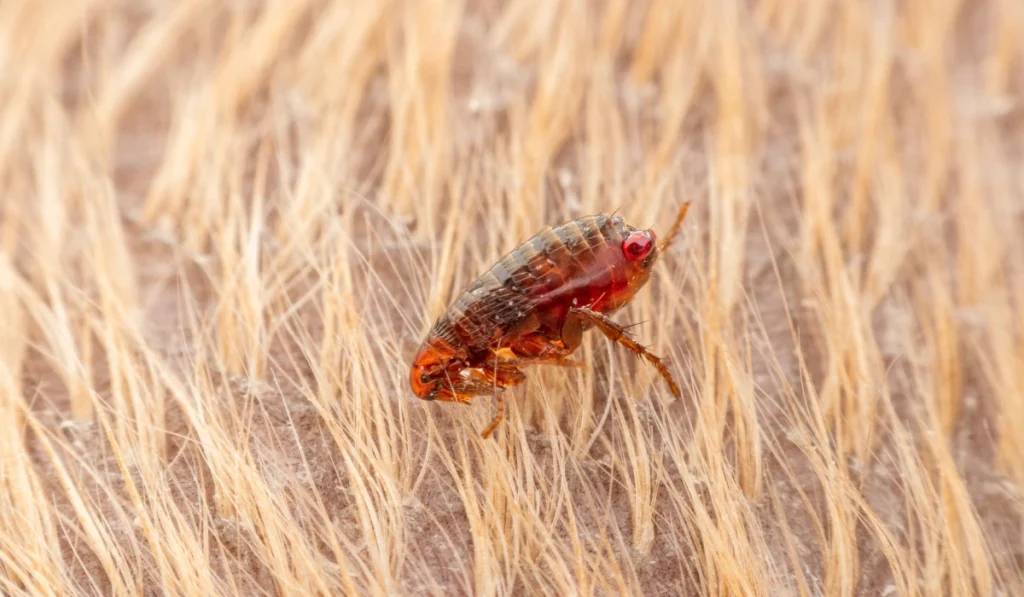
Getting ahead of fleas in California means treating your pets while addressing the developing fleas already in your home. Adult fleas may disappear after treatment, but eggs, larvae, and pupae can remain in carpets, pet bedding, and sheltered outdoor areas. As new adults emerge, the infestation can appear to return. California’s mild coastal weather and protected indoor conditions make consistent flea prevention especially important, even outside summer.
Why Flea Season in California Can Last Most of the Year
Fleas remain active when temperatures, humidity, and animal hosts support their development. Across California, those conditions vary by region, making it difficult to define a single statewide flea season.
The cat flea, Ctenocephalides felis, is the species most commonly found on California dogs and cats. Despite its name, it feeds on both animals. Fleas can also bite people, particularly when they emerge in an infested room without an available animal host.
Coastal and Inland Flea Activity
Mild coastal conditions around San Diego, Los Angeles, and the San Francisco Bay Area can support outdoor flea activity over extended periods. Moisture and shade are especially relevant because immature fleas are vulnerable to drying out.
Inland heat creates different conditions. An exposed lawn may be too hot and dry for flea larvae, while irrigated planting beds, sheltered kennels, and spaces beneath decks remain suitable.
The University of California’s Integrated Pest Management Program’s flea guidance identifies coastal locations with moderate temperatures and relatively high humidity as favorable for outdoor flea populations. It also documents flea activity in shaded, protected Central Valley environments.
These regional differences affect seasonal flea activity in California. The conditions around an animal’s resting area are often more useful for assessing flea risk than the season alone.
Why Indoor Fleas Can Survive Winter
Indoor temperatures protect fleas from some seasonal changes. When pets remain available for feeding, adult fleas can continue reproducing while immature stages develop in sheltered parts of the home.
Carpets, rugs, and upholstered furniture can hold eggs and larvae, particularly where pets regularly sleep. A flea problem that begins during warmer weather may continue indoors after outdoor conditions become less favorable.
Ask your veterinarian whether your pets need year-round flea prevention. The recommendation should reflect each animal’s health, exposure, and local flea activity rather than a fixed summer-only schedule.
Why Fleas Keep Coming Back After Treatment
The main reason fleas reappear is their life cycle. Fleas pass through four stages, and treatments that control adults do not necessarily reach every egg, larva, or pupa already present.
Adult fleas are the most noticeable stage because they jump onto hosts and feed. Much of an established infestation may be developing away from the animal in carpets, bedding, and other protected areas.
This is why the first improvement after treatment may not mean the infestation is finished.
| Flea Stage | Where Homeowners May Find It | Why It Matters |
| Egg | Pet bedding, rugs, carpets, and resting areas | Eggs fall from animals into their surroundings |
| Larva | Carpet fibers, floor crevices, and sheltered outdoor areas | Larvae develop away from the host |
| Pupa | Silk cocoons in protected locations | Cocoons make developing fleas harder to reach |
| Adult | Primarily on dogs, cats, and other animal hosts | Adults feed and produce the next generation |
Eggs Fall Into Pet Resting Areas
Female cat fleas produce eggs after feeding and mating on a host. Under favorable conditions, a female can lay approximately 20 to 50 eggs daily.
The eggs are small and smooth, so they fall easily from fur onto bedding, carpets, and upholstery. A pet’s favorite sleeping spot can therefore become a major location for developing fleas.
Cleaning those areas is necessary even when you cannot see eggs. Removing adults from the animal will not immediately eliminate eggs already deposited throughout the house.
Larvae Hide Below the Surface
Flea larvae are small, wormlike, and sensitive to light. They move into protected locations such as the base of carpet fibers, floor crevices, and the spaces beneath furniture.
They feed on organic material, including flea dirt left by adult fleas. Flea dirt is largely digested blood, which supplies nutrients for developing larvae.
The same conditions can occur outdoors where animals rest on shaded soil. Flea development is less successful in exposed, dry locations, making sheltered resting areas the more useful places to inspect.
Pupae Can Survive Initial Treatment
After developing as larvae, fleas form silk cocoons and become pupae. Their protective covering can limit the effectiveness of treatments that control exposed flea stages.
A fully developed flea may remain inside its cocoon until warmth, movement, or other signals indicate that a host is nearby. Walking across a carpet or vacuuming can encourage emergence.
The CDC’s explanation of the flea life cycle describes how development and adult emergence depend on environmental conditions. Consequently, adults may continue appearing after the first cleaning or treatment because they were protected inside cocoons beforehand.
Adult Fleas Restart Reproduction
Newly emerged adults seek an animal host, feed, and begin reproducing. Cat fleas typically remain on their hosts, where mating and egg production occur.
If household pets are not adequately protected, emerging fleas can establish themselves and deposit another generation of eggs.
Consistent veterinary flea prevention helps interrupt that process. Cleaning the surrounding environment reduces the immature stages waiting to develop.
Early Signs of Fleas in Your Home
Flea problems are easiest to address when you identify activity before it spreads. The best evidence is a combination of fleas on an animal, flea dirt in its coat, and activity in the places where it rests.
Scratching and unexplained bites are useful warnings, but neither confirms a flea infestation on its own.
Check Pets for Fleas and Flea Dirt
A dog or cat with fleas may scratch, bite at its skin, or groom more frequently. Some animals develop redness, hair loss, or intense itching, while others show few obvious symptoms.
Look for small, dark specks in the fur, particularly around the back and base of the tail. Flea dirt resembles ground pepper and may leave a reddish-brown stain when placed on a damp white paper towel.
Use a flea comb to check for moving adults and debris. If your pet has irritated skin or persistent itching, consult your veterinarian rather than relying solely on home treatments.
Check the Rooms Where Animals Rest
Inspect pet beds, rugs, upholstery, and carpeted rooms where animals spend the most time. Fleas are especially likely to develop in protected locations that collect eggs and flea dirt.
Small, jumping insects near the floor provide a stronger identification clue than skin irritation alone. Flea bites may cause itchy red spots, commonly around the ankles and lower legs, but other insect bites in California can resemble them.
Homes without pets can also develop flea problems. Visiting animals, previous occupants’ pets, or rodents and wildlife sheltering around the property may be involved. Confirming the insect and its source is particularly useful when no household animal is present.
Why Treating Pets Alone May Not Stop Fleas
Veterinary flea products can play a major role in controlling an infestation. Depending on the product, they kill adult fleas or interfere with reproduction.
However, fleas that developed before treatment may still be present in the environment. Pupae are particularly difficult to eliminate because their cocoons protect them until adults emerge.
Effective pet prevention can control newly emerging fleas, but cleaning heavily used resting areas helps reduce the developing population more quickly.
What Happens When Adults Are Controlled?
When adult fleas are controlled on a pet, egg production decreases. That limits the number of new fleas entering the environment.
Eggs and larvae already present in carpets or bedding still need attention. Vacuuming removes flea stages and debris, while washing bedding reduces contamination where pets sleep.
These measures complement pet treatment. Neither approach should be treated as a substitute for the other when the household environment is already infested.
When New Fleas Appear After Treatment
Newly emerged adults may appear even when the initial treatment worked against exposed fleas. Pupae that formed earlier can continue developing inside their protective cocoons.
Keep monitoring the rooms where activity was highest, especially pet sleeping areas. A few newly emerged fleas during the treatment period should be evaluated in the context of the products used and whether overall activity is declining.
Do not reapply flea pesticides earlier than the label permits. If activity remains substantial, contact your pest control provider and veterinarian to review the treatment plan.
How to Get Rid of Fleas in Your House and Yard
Flea control works best when pet protection, household cleaning, and any necessary environmental treatment happen together. Start with the animals and the locations they use most, then investigate outdoor sources if flea activity continues.
The CDC’s recommendations for getting rid of fleas emphasize sanitation, pet treatment, environmental management, and follow-up. A coordinated approach addresses several stages of development rather than concentrating only on adult fleas.
Treat Household Pets With Veterinary Guidance
Speak with your veterinarian about a suitable flea prevention product for each pet. Selection depends on the animal’s species, weight, age, health, and exposure.
Use only products labeled for the animal being treated. Some ingredients used in dog flea products are hazardous to cats, making species-specific directions particularly important.
If several pets share a home, ask your veterinarian how to protect all susceptible animals. An untreated pet may allow flea reproduction to continue while another animal is receiving treatment.
Vacuum and Wash the Places Pets Use
Concentrate cleaning where fleas are most likely to develop. Vacuum pet resting areas, carpets, upholstered furniture, floor edges, and accessible spaces beneath furniture.
Wash pet bedding and affected washable fabrics according to their care labels. Cleaning these materials removes flea stages and the organic debris that larvae use for food.
During an active infestation, repeat vacuuming regularly rather than stopping after one thorough cleaning. Handle vacuum contents promptly according to the equipment’s instructions to prevent collected pests from escaping.
Inspect Shaded Outdoor Locations
Outdoor flea populations tend to be concentrated near animal resting areas rather than spread uniformly across a yard.
Inspect shaded soil, kennels, sheltered spaces beneath decks, and places where pets or visiting animals lie down. These locations can protect larvae from direct sunlight and drying conditions.
Remove unnecessary debris and improve access to sunlight where practical. Broad applications across an entire lawn are generally unnecessary when flea activity is limited to specific sheltered areas.
Coordinate Professional Treatment and Follow-Up
Professional flea control may be useful when activity continues despite suitable pet prevention and repeated cleaning, or when fleas are present in several rooms.
A technician can inspect areas where fleas are developing and determine whether targeted environmental treatment is needed. Some treatment programs use insect growth regulators to interfere with immature flea development.
Professional treatment should focus on confirmed problem areas and follow the product label. Because pupae can remain protected, monitoring may still be necessary after the initial service.
Environmental flea control does not replace veterinary care. Homeowners need to maintain appropriate protection for their pets while infested surroundings are being addressed.
How to Prevent Fleas From Returning in California
Once flea activity has declined, prevention becomes a matter of keeping pets protected and recognizing conditions that could support another infestation.
Indoor cleaning and outdoor animal management remain relevant throughout the year, particularly in California areas where mild conditions favor continued flea activity.
Maintain Pet Protection and Routine Cleaning
Continue the prevention schedule recommended by your veterinarian. Consistent treatment helps prevent fleas introduced by outdoor exposure from reproducing on household pets.
Vacuum animal resting areas regularly and wash bedding as needed. Check your pets during grooming for flea dirt or live fleas, particularly after visits to locations where other animals spend time.
If fleas return despite consistent pet prevention, investigate whether the animal’s exposure has changed or whether an environmental source remains untreated.
Limit Wildlife and Rodent Access
Rodents, opossums, free-roaming cats, and other mammals can carry fleas into residential areas. Fleas may develop where these animals repeatedly shelter or rest.
Keep pet food from attracting animals overnight, secure garbage, and address openings that allow unwanted animals beneath buildings or into crawlspaces.
If wildlife or rodents are already present, include their activity in the flea-control assessment. Removing an animal without addressing fleas left behind can create further exposure for people or pets.
Getting Ahead of Fleas With Round the Clock Pest Services
A recurring flea infestation is often sustained by developing fleas in carpets, bedding, or protected outdoor locations. Treating the animals is a major part of the solution, but the surrounding environment also needs attention when fleas have become established.
Start with veterinary-approved pet protection and consistent cleaning. If fleas continue appearing in several rooms, remain active after treatment, or seem connected to animal activity around your property, a professional inspection can help identify where they are developing.
Round the Clock Pest Services provides flea control for California homeowners dealing with ongoing pest activity. If fleas keep appearing in your home, contact Round the Clock Pest Services to request a quote and discuss your treatment options.