
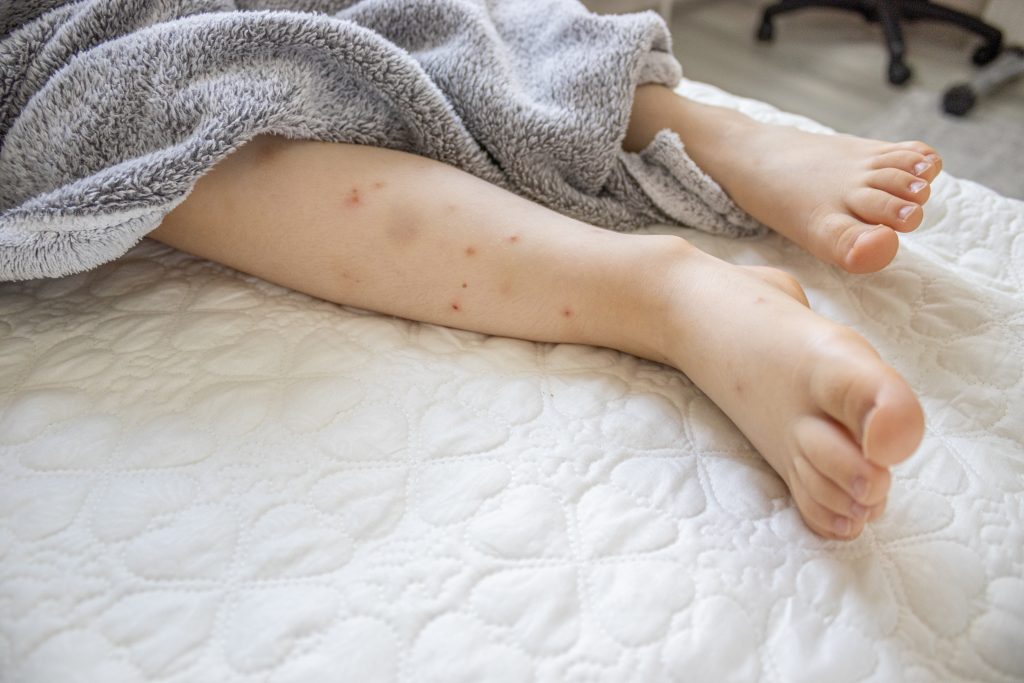
You wake up with several itchy bumps on one arm. Nothing was there when you went to bed, and a quick look around the room turns up no obvious insect. California bugs that bite often leave similar reactions, so the mark itself may not tell you whether the source is a bed bug, flea, mosquito, tick, or another pest.
The better clues are usually around you. Where did the marks appear? When did you first notice them? Were you sleeping, working in the yard, hiking, or sitting near a pet? This guide explains how to identify bug bites using the pattern, exposure history, and physical pest evidence together.
What California Bugs That Bite Can Leave Behind
California bugs that bite can cause redness, swelling, itching, warmth, or pain. The reaction depends partly on the pest and partly on your immune system. Two people exposed to the same insect may develop completely different bug bite marks.
That variation makes insect bite identification difficult. A row of bumps after sleep makes the bedroom worth inspecting, but it does not prove that bed bugs are present. Marks around the ankles may fit flea activity, yet they need to be considered alongside pets, rugs, flooring, and upholstered furniture.
The UC Statewide Integrated Pest Management Program (UC IPM) notes that bed bug reactions can be difficult or impossible to separate from flea, mosquito, and spider bites by appearance alone. Finding an insect, shed skin, spotting, flea dirt, an attached tick, or an active nest gives you better evidence.
How Common Bug Bites in California Compare
| Pest | What You May See or Feel | Where Marks Often Appear | What Makes the Identification Stronger |
| Bed bugs | Red itchy bumps that may be scattered, grouped, or arranged in a line | Arms, shoulders, neck, face, and other exposed skin | Dark spotting, shed skins, eggs, or live bugs close to a bed |
| Fleas | Small, intensely itchy bumps, often close together | Ankles, feet, and lower legs | Flea dirt, live fleas, or repeated scratching by a pet |
| Mosquitoes | Raised, itchy welts with round or uneven edges | Any skin left uncovered | Mosquitoes indoors, damaged screens, or standing water outside |
| Ticks | A small irritated area, sometimes with the tick still attached | Hairline, waist, armpits, groin, and behind the knees | An attached tick or recent time in brush or tall grass |
| Biting flies | A painful, burning, or swollen welt | Arms, legs, face, and neck | Pain felt during outdoor activity |
| Bees and wasps | Immediate sharp pain followed by redness and swelling | Any exposed area | A stinger, visible insect, nest, or repeated flight path |
| Spiders | Redness, tenderness, or swelling that varies widely | Any area where contact may have occurred | A spider seen and safely collected at the time of the incident |
These patterns can help direct your inspection, but they cannot diagnose a skin condition. Rashes, infections, allergies, and contact irritation can resemble different types of bug bites.
Biting Pests Found Inside California Homes
Bites that appear indoors often lead back to the bedroom, flooring, upholstered furniture, pets, or an opening to the outside. Bed bugs and fleas can reproduce inside a home. Mosquitoes usually enter through a door, window, damaged screen, or another small gap.
Bed Bugs
Bed bugs feed while people rest, but their marks do not always appear the next morning. A reaction may take several days to become visible. Some people develop clustered bug bites or bites in a line, while others have scattered marks or no clear reaction at all.
Instead of counting the bumps, inspect the room. Pull back the sheets and check mattress seams, box spring edges, the bed frame, headboard, nightstand, and nearby furniture. Dark spots, rusty stains, pale shed skins, tiny eggs, or flat reddish-brown bugs provide stronger evidence than marks on the skin.
According to the Centers for Disease Control and Prevention (CDC), bed bugs are not known to spread disease. Their bites may still cause itching, sleep loss, allergic reactions, and skin infections when scratching breaks the skin.
Bed bugs can arrive in luggage, folded clothing, backpacks, bedding, and used furniture. A clean home is not protected from an introduction. Travel, apartments, hotels, and shared sleeping spaces simply create more chances for the insects to move with belongings.
Fleas
Fleas stay close to floors and animal resting areas, so bites often collect around the feet, ankles, and lower legs. The bumps tend to itch intensely and may appear in several tight groups.
Look at the pet and the room together. Frequent scratching, chewing near the tail, or dark pepper-like particles in the fur may point toward fleas. Check pet beds, rugs, couch seams, carpet edges, and floor cracks where immature fleas can remain protected.
No pet in the home does not rule fleas out. Rodents, wildlife, visiting animals, or a former resident’s pet may have introduced them. Vacuuming removes part of the population, but recurring itchy bug bites suggest that eggs, larvae, or pupae remain in the environment.
Mosquitoes Indoors
A mosquito can enter when a patio door opens or through a small tear in a screen. It may rest behind curtains, beneath furniture, or in a shaded corner before becoming active again.
Several scattered welts in one night can come from a single mosquito. Check screens and window frames, then inspect the patio or yard for containers holding water. That combination is more useful than assuming every nighttime mark came from a bed bug.
Outdoor Biting Insects in California
Patios, irrigated yards, hiking trails, gardens, and brushy areas expose you to a different mix of biting insects in California. What you were doing when the mark appeared can quickly narrow the search.
Mosquitoes and Biting Flies
Mosquito bites often begin itching after the insect is gone. Biting flies are harder to miss because feeding may hurt immediately. Their marks can remain sore, hot, or swollen for a period afterward.
California has more than 50 mosquito species, though not every species regularly feeds on people. The California Department of Public Health (CDPH) explains that immature mosquitoes develop in standing water.
Check flowerpot saucers, buckets, birdbaths, toys, tarps, clogged drains, and low spots reached by irrigation. Even during dry California weather, a small water source can support mosquito activity around a home.
Ticks
With ticks, the insect matters more than the mark. An attached tick may look like a small dark bump until you inspect it closely.
After hiking, gardening, or walking through tall grass, check the scalp, waist, armpits, groin, backs of the knees, and sock lines. Look over children and pets too. Ticks favor protected areas that are easy to miss during a quick shower.
Remove an attached tick using current public health instructions. Saving it in a sealed container can help a healthcare provider identify the species if symptoms develop later.
Bees, Wasps, and Yellow Jackets
A sharp sting while trimming a shrub or walking across the lawn calls for a look at the surrounding area. Paper wasps may build exposed nests under eaves, while yellow jackets can nest in soil, wall voids, or other concealed spaces.
Repeated insects using the same opening usually signal a nearby nest. Do not plug the hole or strike the nest. Blocking an active wall opening can send insects deeper into the structure, and disturbing a colony can trigger defensive behavior.
Match Your Exposure to the Likely Pest
| What Happened Before the Marks Appeared? | Pests Worth Checking For | Where to Look |
| You noticed marks after sleeping | Bed bugs or mosquitoes | Mattress seams, furniture, curtains, windows, and screens |
| You sat on a rug or handled a pet | Fleas | Pet bedding, carpet edges, furniture seams, and fur |
| You worked around shrubs or the lawn | Mosquitoes, flies, ants, bees, or wasps | Water containers, flowers, eaves, soil openings, and foliage |
| You walked through grass or brush | Ticks, mosquitoes, or biting flies | Clothing, socks, scalp, skin folds, and pets |
| You felt an immediate sharp pain | Bees, wasps, yellow jackets, ants, or biting flies | Stinger, insect, nest, or repeated flight path |
| New marks appear only in one room | Bed bugs, fleas, or mosquitoes | Beds, flooring, furniture, pets, windows, and nearby water |
Why Spider Bites Are Easy to Misidentify
A swollen mark with no visible insect often gets blamed on a spider. That conclusion can pull attention away from fleas, ticks, mosquitoes, bed bugs, biting flies, or a medical condition.
Most spiders avoid people and bite when pressed against the skin or disturbed. A spider is a credible cause when you feel the contact, see the spider, and can preserve it for identification. A mark discovered later provides weak evidence.
Black widows occur in California and can cause serious symptoms. Severe pain, muscle cramping, weakness, nausea, or breathing trouble needs medical attention. A pest inspection can locate spider activity around storage areas, garages, woodpiles, and exterior gaps, but it cannot diagnose the skin reaction.
Pest Evidence Matters More Than Bite Shape
| Evidence You Find | What It Suggests | How Useful It Is |
| Live bed bug, shed skin, or dark spotting near a bed | Bed bug activity | Strong evidence |
| Flea dirt or live fleas on an animal | Flea activity | Strong evidence |
| Tick attached to the skin | Tick exposure | Strong evidence |
| Active nest with insects following one route | Bee, wasp, or yellow jacket activity | Strong evidence |
| Mosquitoes resting near water or damaged screens | A nearby mosquito source | Useful supporting evidence |
| A group of bumps with no pest signs | Several possible causes | Weak evidence |
| A similar photograph found online | Visual resemblance only | Very weak evidence |
How to Identify Bug Bites Using Better Evidence
When new marks keep appearing, create a short record. Write down the time you noticed them, which room you had used, what skin was uncovered, whether pets were nearby, and what you had done earlier that day.
Take photos under similar lighting to track changes in the skin. If you find an insect, place it in a clear sealed container without crushing it. A recognizable specimen gives a technician far more useful information than a blurry photo of California insect bites.
Work through the property in sections. Start with the bed and nearby furniture when marks appear after sleep. Shift to carpeting, pet bedding, and upholstery when the ankles are affected. Outside, inspect stored water, shaded vegetation, eaves, wall openings, and areas with repeated insect traffic.
Avoid applying several sprays before the source is known. The wrong product may miss the hiding place, scatter pests, or remove evidence that could have shortened the inspection.
Questions That Narrow the Search
| Question | What the Answer Can Reveal |
| Did the mark hurt immediately? | A sting, ant, or biting fly becomes more plausible |
| Did you notice it after sleep? | The bed, furniture, windows, and curtains deserve attention |
| Are most marks near the ankles? | Fleas and floor-level exposure move higher on the list |
| Were you in brush or tall grass? | Check carefully for ticks |
| Do pets scratch more than usual? | Inspect fur, bedding, rugs, and furniture for flea evidence |
| Is there a nest or repeated flight path? | Keep away and arrange a professional inspection |
| Do fresh marks keep appearing? | An active pest source may remain close to the room or yard |
When to Get Medical and Pest Control Help
Mild itching and redness often settle with basic care. Wash the area, avoid scratching, and ask a healthcare professional about symptom relief when needed.
Call emergency services for trouble breathing, swelling of the face or throat, faintness, confusion, or widespread hives. Contact a medical provider when redness continues spreading, the skin becomes hotter or more painful, pus appears, red streaks develop, or fever begins. Suspected black widow exposure or illness after a tick bite also calls for medical guidance.
Pest control answers a different question: what is active on the property, and where is it coming from? A professional inspection looks for the pest itself, its hiding areas, entry points, nesting sites, and the conditions allowing activity to continue. That process is more dependable than treating a room based only on bite marks. It also reduces the chance of wasting time on products that do not fit the pest or reach the source.
Round the Clock Pest Services helps homeowners identify and control California bugs that bite, including bed bugs, fleas, mosquitoes, ticks, spiders, wasps, and yellow jackets. Local technicians inspect the areas where activity occurs and recommend treatment based on the evidence they find. Contact us when new marks keep appearing, you find signs of an infestation, or a biting pest is active around your home.