
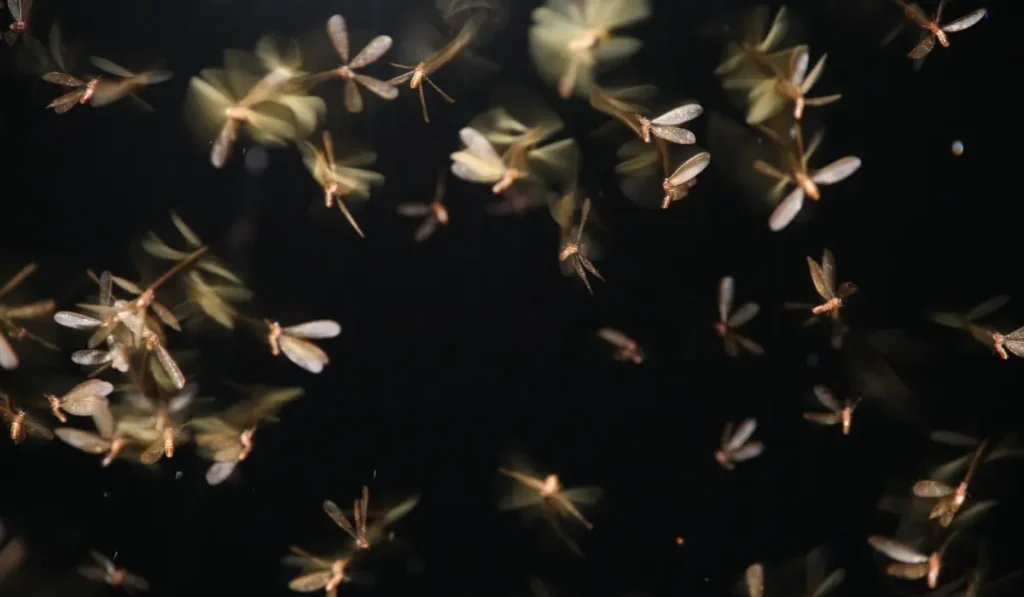
Flying termites in California are reproductive insects that leave mature colonies to mate and establish new ones. Finding them indoors can indicate a termite infestation, although some swarmers simply enter through open doors or windows.
Suppose you open your sliding patio door and discover a cluster of dark insects beside the glass, with loose wings scattered along the track. Are they termites or flying ants, and where did they come from? The answer depends on their physical features, the season, and whether they emerged from your home. A few simple checks can help you recognize the warning signs, preserve useful evidence, and decide when to schedule a professional inspection.
Key Takeaways
- Flying termites and flying ants have distinct physical differences. Termites have straight antennae, broad waists, and four wings of approximately equal length.
- Indoor termite swarmers deserve closer attention. Insects emerging from wood, recurring in closed rooms, or leaving piles of wings indoors can indicate a concealed colony.
- The first 48 hours are best spent gathering evidence. Photograph the insects, save a specimen, note where they appeared, and arrange an inspection rather than spraying the visible swarm.
What Are Flying Termites, and How Can You Identify Them?
Flying termites, also called termite swarmers, are reproductive members of an established colony. When conditions favor reproduction, they leave their original nest, find mates, and attempt to establish new colonies. After landing, surviving pairs shed their wings and search for suitable nesting locations.
Most swarmers never establish a colony. Their appearance still matters because it means an existing colony has matured enough to produce reproductive insects. The workers that remain hidden inside soil or wood are responsible for most of the feeding damage homeowners need to worry about.
Flying Termites vs. Flying Ants
Flying ants can look remarkably similar to termite swarmers, particularly when several insects gather around a porch light or windowsill. Instead of relying on color or size, examine the antennae, waist, and wings.
| Physical Feature | Flying Termites | Flying Ants |
| Antennae | Straight and beadlike | Bent or elbowed |
| Waist | Broad and relatively uniform | Narrow and pinched |
| Wings | Four wings of approximately equal length | Front wings longer than rear wings |
| Body shape | More uniform through the middle | Clearly defined body segments |
The California Structural Pest Control Board’s termite guide confirms these identification features and explains why homeowners frequently mistake winged termites for ants.
For a closer look, photograph an intact insect from above using your phone’s zoom feature. If its wings have already fallen off, the waist and antennae can still provide useful clues. Save a specimen if you remain unsure.
When Do Flying Termites Swarm in California?
When termites swarm in California depends on their species, temperature, rainfall, and location. There isn’t one statewide swarming season, and insects appearing after rain aren’t necessarily the same type as those flying around a sunny patio in September.
California has three main termite groups: subterranean, drywood, and dampwood termites. Understanding their nesting habits makes seasonal sightings easier to interpret.
Common California Termites and Their Swarming Patterns
| Termite Type | Typical Swarming Period | Where Colonies Develop |
| Subterranean termites | Spring or fall, often on sunny days following substantial rain | Underground, with protected pathways leading to wood |
| Drywood termites | Warm summer and fall days | Inside dry wood, including framing, trim, and furniture |
| Dampwood termites | Summer and fall, often during warm evenings | Moist or decaying wood |
These are general termite seasonal patterns. Individual species can swarm at different times, and unusual weather can shift their activity.
Regional Differences Homeowners Should Know
In Walnut Creek and the San Francisco Bay Area, the first substantial autumn rain can trigger subterranean termite swarms. Homeowners may notice insects emerging from soil near walkways, foundations, or landscaped areas once the weather clears.
Los Angeles and San Diego homeowners often encounter drywood termite swarmers during warm late-summer and fall afternoons. Unlike subterranean termites, drywood colonies don’t need direct soil contact. They can establish themselves inside wooden components well above ground level.
Dampwood termites are more closely associated with moisture-rich environments, particularly coastal areas. Their presence near rotting outdoor wood calls for a different assessment than drywood swarmers coming from interior trim.
Do Flying Termites in Your House Mean an Infestation?
Finding flying termites in your house is a reason to investigate, although the sighting alone doesn’t confirm structural damage. A swarmer can enter through an open window or door after emerging from a colony elsewhere in the neighborhood.
The stronger warning sign is where the insects originated. Termites appearing repeatedly in a closed room, emerging from flooring, or crawling out of wooden trim suggest activity closer to the structure itself.
Indoor vs. Outdoor Termite Sightings
| Where You Find Them | What It Could Mean | Recommended Response |
| Around an outdoor light | Swarmers may have traveled from a nearby colony | Record the location and check nearby wood |
| Beside an open patio door | Insects may have entered from outdoors | Save a specimen and monitor for further activity |
| Inside a closed room | Termites may have emerged from a concealed area | Schedule a termite inspection |
| Coming from flooring or wooden trim | A colony may be established within or beneath the structure | Request a prompt professional assessment |
Shed Wings and Other Signs of Termite Activity
Termite swarmers shed their wings after landing, often leaving small piles near windows, door tracks, and light fixtures. Discarded wings inside the house deserve attention, especially if they reappear in the same location.
Other signs depend on the type of termite involved. Some are easy to spot during routine cleaning, while others remain hidden until wood has deteriorated.
| Warning Sign | What to Look For | What It May Indicate |
| Discarded termite wings | Small, similarly sized wings collected near windows or doors | Reproductive termites recently landed nearby |
| Mud tubes | Soil-colored tunnels running along foundation walls or structural surfaces | Subterranean termites traveling between soil and wood |
| Termite droppings | Small, hard pellets collecting beneath wooden surfaces | Possible drywood termite activity |
| Damaged wood | Hollow sections, surface blistering, or weakened trim | Possible concealed feeding or moisture damage |
Drywood termite droppings, also called frass, have six flattened sides. The University of California notes that colonies usually contain fewer than 1,000 individuals and can take years to mature. It also explains that droppings alone cannot establish whether an infestation remains active.
This is why an inspection matters even when homeowners can’t see live termites. The evidence may be visible long after a swarm has ended, while the insects themselves remain concealed in the wood.
What to Do in the First 48 Hours After Finding Flying Termites
If you discover termite swarmers indoors, resist the urge to spray everything immediately. A few minutes spent documenting the insects can provide information an inspector won’t be able to recover after the area has been cleaned.
The first 48 hours offer a practical window for preserving evidence and arranging an assessment. They aren’t a strict treatment deadline, and termite damage doesn’t suddenly accelerate once that period ends.
First Few Hours: Photograph and Collect a Sample
Take close photographs of the insects, including their wings and antennae if visible. Capture a wider image showing where they gathered, such as a window frame, baseboard, or door track.
Save two or three intact specimens in a small, sealed container. If only loose wings remain, preserve a few of those as well. Record the date and approximate time of the sighting.
Within 24 Hours: Check Nearby Areas
Examine accessible windowsills, door frames, baseboards, and visible foundation surfaces. Look for additional wings, drywood termite pellets, or mud tubes without opening walls or removing structural materials.
Note whether the swarm followed rainfall, occurred during warm daylight hours, or appeared around a light after dark. These observations can help narrow down the likely termite group.
Within 48 Hours: Arrange an Inspection
Contact a qualified termite inspection provider if swarmers appeared indoors or you found other warning signs. Share your photographs and describe where the insects first appeared, particularly if they seemed to emerge directly from wood.
Avoid spraying suspected nesting areas before the inspection. Killing visible swarmers won’t eliminate workers hidden inside structural wood or underground, and disturbing the area may make the source harder to locate.
Why Professional Termite Control and Prevention Matter
Getting rid of flying termites on a windowsill doesn’t address the colony that produced them. Household insect sprays may kill exposed insects, but they don’t reliably reach the workers and other colony members living inside protected galleries.
The UC Statewide Integrated Pest Management Program advises that do-it-yourself termite pesticides are generally ineffective and recommends professional inspection when a structural infestation is suspected.
What Happens During a Professional Inspection?
A termite professional examines accessible areas where activity is suspected, including foundation surfaces, crawl spaces, attics, and wooden components. The inspection looks for evidence of feeding, likely entry or emergence points, and conditions that support termite activity.
The findings guide the treatment recommendation. A nearby outdoor swarm may not call for treatment of your house, while termites emerging directly from structural wood require closer investigation.
Treatment Options Depend on the Termite Type
| Termite Type | Possible Professional Treatment | What It Addresses |
| Subterranean termites | Soil treatments or termite baiting systems | Colonies and pathways associated with the soil |
| Drywood termites | Localized wood treatment, wood replacement, or whole-structure treatment | Colonies established inside wooden materials |
| Dampwood termites | Moisture correction, removal of damaged wood, and treatment when needed | Conditions supporting termites in wet wood |
An inspector should explain why a particular treatment fits the findings. Fumigation, for example, isn’t necessary for every drywood termite infestation.
How Often Should You Inspect for Termites?
Routine prevention is easier when you address moisture and wood deterioration before they become persistent problems. Repair plumbing leaks, improve drainage around the foundation, and avoid leaving untreated wood scraps or firewood against exterior walls.
UC IPM recommends termite inspections every 3 to 5 years for general prevention. Annual inspections can be a reasonable precaution for properties with a history of termite activity or ongoing risk factors, but they aren’t a universal requirement. New evidence of termite activity calls for an inspection regardless of when the last one occurred.
Get Help With Flying Termites in Your California Home
Finding flying termites in California calls for identification and a closer look at the surrounding property. Indoor swarmers, recurring piles of wings, mud tubes, or suspicious wood damage can justify an inspection even when the insects have disappeared.
Round the Clock Pest Services provides termite inspection and treatment services for California homeowners. Our termite control process includes examining the structure, documenting findings, and recommending treatment based on the termite type and evidence discovered. This approach helps you understand the condition of your home before committing to a treatment plan.
If you’ve discovered winged insects near your windows or suspect termites are emerging from structural wood, contact Round the Clock Pest Services to arrange a termite inspection. Getting the source identified is the first step toward choosing the right treatment and protecting your home.
Flying Termites in California: FAQs
Do flying termites mean you have an infestation?
Not necessarily. Flying termites can travel from outdoor colonies and enter homes through open doors or windows. However, repeated indoor swarms, discarded wings near the same opening, or insects emerging directly from wooden surfaces suggest a closer source. A professional inspection can determine whether the structure is affected.
How long does a termite swarm last?
An individual termite swarm is usually a brief event, although its duration varies by species and weather conditions. Swarming activity can occur again when conditions are favorable. The disappearance of flying insects doesn’t mean the original colony has died, so continued evidence inside the home deserves investigation.
Are flying termites dangerous to people?
Flying termites aren’t known for biting or stinging people, and the swarmers themselves aren’t the main source of wood damage. The concern is the established colony they came from. Worker termites can feed on wooden structural materials while remaining hidden, which is why identifying the source matters.
How do you get rid of flying termites in your house?
You can remove visible insects with a vacuum, but save a few specimens and photograph the area first. Household sprays won’t reliably eliminate an established colony. If you find indoor swarmers or other evidence of termite activity, arrange an inspection so the termite type and appropriate treatment can be determined.