
You step outside on a warm afternoon and notice dozens of winged insects gathering near a window, patio light, or exterior wall. A few days later, you find discarded wings on a windowsill or near a doorway. Those signs can raise an important question for homeowners: are termites seasonal? While swarms often appear during specific times of the year, termites can remain active in Southern California homes throughout every season.
Southern California’s mild climate allows termite colonies to continue feeding year-round, which means termite activity does not stop when swarming season ends. This guide explains when termite activity is most noticeable and the warning signs homeowners should watch for around their property.
Key Takeaways About Termite Seasonality
- Termite workers can remain active throughout the year, while swarmers may appear during certain seasons, so the risk to your home is not limited to one time period.
- Swarming termites are seasonal, but the termites causing damage inside a home can remain active throughout the year.
- Regular inspections can help identify termite activity before hidden damage becomes more extensive.
How to Identify Seasonal Termite Activity
Whether termite activity feels seasonal or year-round often depends on the species involved. Knowing which termite species you are dealing with, and where they nest, helps you catch signs of activity before damage progresses. Below is what to look for around your home.
How to Spot Termite Activity Inside Your Home
Subterranean termites often leave mud tubes along foundations, stem walls, and other surfaces where they travel between the soil and wood. Finding these tubes can indicate year-round termite activity, even if you have not seen swarmers recently.
Drywood termites can appear in unexpected places, such as furniture and picture frames. They can also be structural pests. Check wooden items you may not suspect, not just walls and floors. Because nests of most drywood termite species remain entirely above ground and do not connect to the soil, interior signs can develop without any visible ground-level evidence. Frass pellets pushed out of small holes in wood are one indicator to watch for indoors.
Where Termite Activity Shows Up Around Homes
Subterranean termite species typically build mud tubes along foundation walls and other surfaces to reach wood. These shelter tubes are among the most recognizable signs that a colony is active nearby. Since several termite species can occupy one building simultaneously, you may notice signs in multiple areas at the same time.
Nests of most drywood species stay entirely above ground, so activity can concentrate in upper portions of a structure, attic framing, or detached wooden items rather than near the soil line.
Why Seasonal Termite Problems Develop
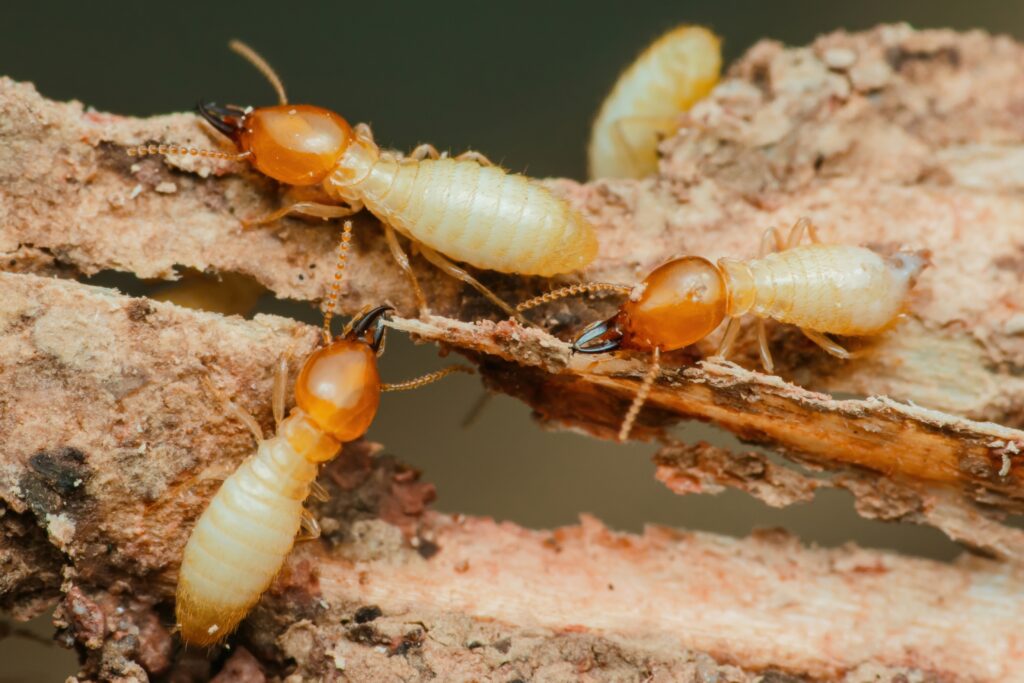
Termite colonies stay active beneath the soil throughout the year. Worker termites forage for wood in every season, so the threat never fully pauses. What changes with the calendar is visibility. Swarming events draw attention to colonies that may have been feeding for months or even years before a homeowner notices anything unusual.
Southern California’s mild climate allows termite colonies to remain active throughout the year, which is one reason homeowners may encounter termite activity outside of traditional swarming periods.
Outdoor Nesting Areas for Termites
Subterranean termites live in the soil and build their colonies underground. These colonies can be located 1 to 30 feet below the soil surface. Because subterranean termites are soft-bodied and require moisture to survive, their colonies typically follow a moisture gradient to locate new food sources. The queen stays deep within the colony, where workers care for her.
Food and Shelter That Attract Termites
Wood is the primary food source that draws termite colonies toward structures. Subterranean termites forage from soil-based colonies into buildings to access wood. As they consume it, they excavate galleries inside, sometimes leaving only a thin wooden exterior behind. Moisture availability in and around a structure can guide colonies toward a food source, since these termites depend on damp conditions to survive.
How Termites Move Around Homes
Subterranean termites move between the soil and nearby structures while searching for wood. This activity can continue throughout the year, even when swarmers are not visible.
In Southern California, swarming activity often becomes more noticeable during warmer periods of the year, even though worker termites remain active year-round. Worker termites, however, remain active year-round regardless of swarming season.
Trails and Entry Points Termites Use
Subterranean species typically reach a home from the soil, building mud tubes up exterior foundation walls. Any wood-to-ground contact creates an opportunity for these termite species to enter unnoticed. Look along the base of your home where soil meets the structure.
Because termite activity often remains hidden, routine exterior inspections can help identify new mud tubes before damage becomes more extensive.
Risks From Seasonal Termite Infestations
Whether termite activity peaks in a particular season or continues year-round, the damage these pests cause can accumulate without visible signs. The challenge with termites is that damage can continue long before homeowners notice visible signs of activity.
Structural Risks From Termites
Subterranean termites feed on wood and are common household pests, according to Texas A&M AgriLife Extension. Because workers can remain active inside a structure regardless of what you see on the surface, the structural wood in your home may be under ongoing stress.
Mud tubes help subterranean termites travel between the soil and wood while staying protected from dry conditions. Finding mud tubes is a strong indication that termites may be active nearby and that a closer inspection is warranted.
Hidden Termite Damage in Homes
Termite damage often progresses behind walls, under floors, or inside wood members where it is not immediately visible. As UC IPM notes, careful inspection is needed to detect and contain termite damage and colonies to make the best use of localized treatments, especially for drywood termites. Without an inspection that covers interior wood, foundation walls, and attic framing, damage can go unnoticed for months or years.
Homeowners are most likely to notice swarmers because they are visible, but worker termites are responsible for the damage occurring inside wood.
When a Termite Problem Needs Action
Except for removing infested wood yourself, homeowners should seek help from pest control professionals for drywood termite infestations, as UC IPM notes. Drywood termites in particular require careful inspection and targeted treatment that goes beyond what most homeowners can manage on their own.
If you notice shelter tubes on your foundation, swarmers near windows, or soft spots in wood, those signs point to an active problem. A professional inspection can determine the scope and guide the right course of action before hidden damage extends further into your home’s structure.
Professional Pest Control for Seasonal Termites
A professional inspection paired with a structured control plan helps address a termite infestation before wood damage accumulates.
How to Reduce Attractants for Termites
Homeowners can take steps to correct conditions that are conducive to a subterranean termite infestation. Replacing termite-damaged wood and addressing moisture or soil-to-wood contact around your home are tasks you can handle on your own. These corrections help make the structure less inviting to foraging termites.
Reducing attractants is a practical first layer of defense. However, correcting conditions alone does not address an active infestation. When signs of termite activity appear, professional involvement becomes necessary.
Why Termite Control Starts With an Inspection
Shelter tubes, sometimes called mud tubes, are the most commonly seen evidence of a subterranean termite infestation. Spotting these along your foundation or interior walls is one of the clearest indicators that termites have found a path into the structure.
Signs of a subterranean termite infestation include swarms of winged reproductives in the summer, summer, or fall, the presence of shelter tubes, and evidence of tunneling in wood. Each of these signs can appear at different times, which is why a single seasonal check may not be enough.
Finding live termites foraging within wood is a sure sign of an active infestation. A trained service professional knows where to look and what to document so that the full scope of the problem is understood before any treatment begins.
What to Expect During Professional Termite Treatment
Applications of registered products for termite control are regulated and require a licensed pest control professional to carry out the inspection and control program. This is not a do-it-yourself task. As UC IPM notes, homeowners can replace damaged wood and correct conducive conditions, but a licensed professional must perform the treatment.
Round The Clock Pest Services helps homeowners identify termite activity, assess the extent of an infestation, and determine the appropriate treatment strategy.
What to Expect From a Termite Control Plan
A structured control plan accounts for the fact that termite activity can surface across multiple seasons. Swarms of winged reproductives may appear in summer, summer, or fall, and shelter tubes can develop whenever conditions allow. A plan built around regular inspections helps catch new evidence of tunneling in wood or fresh mud tubes early.
Round The Clock Pest Services develops treatment plans based on inspection findings and the conditions around your property. Because termite activity can become more or less noticeable depending on the season, ongoing monitoring helps identify new signs before damage becomes more extensive.
Are Termites Seasonal: Bottom Line
Termite activity can shift throughout the year, but these pests do not simply disappear once a particular season ends. Workers may continue feeding on wood year-round, while swarmers appear during warmer months as a visible sign of an established colony. Because the products needed to address termite infestations are not available to the general public, working with a licensed pest control professional is the recommended path. If you suspect termite activity in your home, contact Round The Clock Pest Services to discuss your situation and next steps.
Frequently Asked Questions
Do termites go away in winter?
Worker termites can remain active beneath the soil even during cooler months. While you may not see visible swarmers in winter, that does not mean a colony has left your property. Subterranean termites live in the soil and can continue to forage into structures to access wood regardless of the season.
What are the first signs of a termite problem?
Shelter tubes along foundations are a common early indicator. These earth-hardened tubes are constructed by workers and can appear on walls or other surfaces leading from the ground to wood. Homeowners may also notice winged swarmers indoors, which often signals a nearby colony.
Can I handle a termite issue on my own?
Homeowners can take steps such as replacing damaged wood and correcting conditions that may attract termites. However, the treatment products required for controlling infestations are highly regulated and typically require a licensed pest control professional to apply them.
Why should I call a professional for termites?
Drywood and subterranean termites each call for different approaches, and the products involved are not sold to the general public. A licensed professional can assess which type of termite is present and determine the appropriate course of action for your home.