
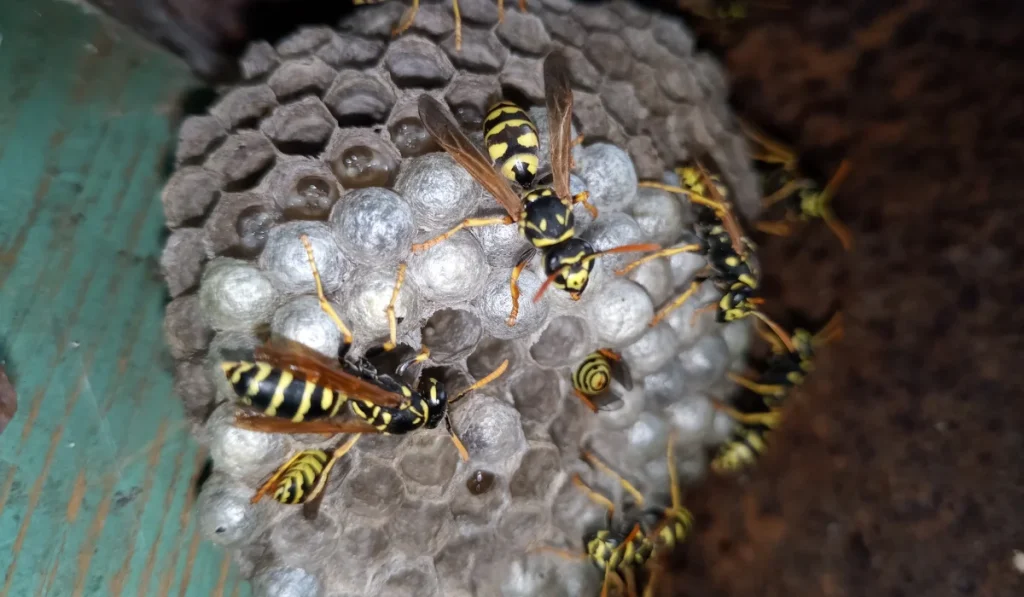
You step into the yard and see several wasps flying low over the same patch of grass. One drops into a hole beside the sprinkler line, then another follows. If you searched for “wasp California” after seeing something similar, that repeated flight path matters because it can point to a nest nearby.
Homeowners encounter several types of wasps in California, and they do not all pose the same problem. Some live alone and rarely sting. Others form large colonies and defend the area around their nest. This guide covers the common species, seasonal activity, nest locations, sting risks, and what you can do when wasps settle too close to your home.
What California Homeowners Should Know About Wasps
California wasps fill several roles outdoors. Many hunt spiders or other insects, while some visit flowers for nectar. Trouble usually starts when a social species establishes a colony beside a lawn, patio, doorway, play area, or another part of the property you use often.
The UC Statewide Integrated Pest Management Program identifies yellowjackets as the primary pest among California’s social wasps. Depending on the species, some colonies contain 1,500 to 15,000 yellowjackets. Paper wasp colonies are much smaller, generally ranging from 15 to 200 wasps.
The number of insects you see is only part of the story. One wasp crossing the yard may simply be looking for food. Several insects entering the same ground hole, wall gap, or roof opening every few minutes give you much stronger evidence of an active wasp nest.
| Quick Fact | What You May Notice at Home |
|---|---|
| Some yellowjacket colonies contain 1,500 to 15,000 wasps | Traffic can become heavy as an established colony grows |
| Paper wasp colonies generally contain 15 to 200 wasps | Several adults may be visible on an exposed nest |
| Yellowjackets can use ground and structural cavities | You may see the entrance without seeing the actual nest |
| Paper wasps make open paper combs | Look beneath eaves, railings, and patio covers |
| Mud daubers live alone | Their nests do not contain a large defensive colony |
Common Types of Wasps in California
The common wasps in California are easier to separate when you look beyond color. Body shape, nest material, location, and flight patterns usually tell you more than black and yellow markings alone.
A stream of compact wasps disappearing into the lawn suggests something very different from a slender insect sitting on an exposed paper comb. Knowing those differences can help you judge whether you are seeing routine insect activity or a colony close to the house.
Yellowjackets
Yellowjackets have compact bodies with contrasting black, yellow, or pale markings. Many yellowjackets in California use abandoned rodent burrows and other underground cavities. Some species also nest inside walls, ceilings, attics, and protected gaps around buildings.
You may notice workers before you locate the colony. Certain yellowjackets readily scavenge meat, pet food, garbage, fallen fruit, and sweet drinks. A patio meal or open trash container can attract insects from a wasp nest that is not visible from your property.
German yellowjackets deserve extra attention when insects are entering a building. The UC Riverside Center for Invasive Species Research reports that this introduced species reached Southern California in 1991. It often uses walls and attics for nesting, and established colonies may contain more than 4,000 wasps by July or August.
Paper Wasps
Paper wasps have slimmer bodies than yellowjackets, along with a narrow waist and long legs that are easy to notice in flight. Their nests are also distinctive. You can see the individual open cells instead of an enclosed paper shell.
Check beneath eaves, railings, patio covers, and other sheltered surfaces if paper wasps keep appearing around the same area. They generally create fewer conflicts than pest yellowjackets, but a nest directly over a doorway or beside a seating area still puts people close to defensive adults.
Mud Daubers
Mud daubers have an extremely narrow waist and make nests from mud rather than paper. You may find their hardened cells attached to walls, garage beams, ceilings, sheds, or other dry surfaces.
These wasps live alone instead of forming a large colony. Mud daubers rarely sting people and do not defend hundreds or thousands of nestmates. Their presence usually calls for less concern than heavy yellowjacket traffic around an underground entrance.
When California Wasps Become More Active
There is no single statewide wasp season because conditions vary from the coast to hotter inland communities. Still, most annual social wasps in California follow a predictable cycle that begins with a new colony and builds toward heavier activity later in the year.
A reproductive female establishes the colony as temperatures warm. Once the first workers mature, they take over food collection and nest duties. More workers are produced through summer, so a colony that was nearly invisible in spring can become easy to spot by late summer.
| Time of Year | Typical Activity |
|---|---|
| Spring | A new colony begins and the first workers develop |
| Early Summer | More workers leave the nest to collect food |
| Late Summer | Larger colonies produce heavier traffic around nests |
| Fall | Some yellowjackets spend more time scavenging around food and garbage |
| Winter | Most annual colonies die while reproductive females seek protected shelter |
Why Late Summer Brings More Encounters
Imagine a ground nest that started with one reproductive female in spring. By late summer, hundreds or even thousands of workers may be traveling between the nest and nearby food. That is why yellowjackets in California can seem to appear suddenly even though the colony has been developing for months.
Food choices also bring some workers closer to people. Open soda cans, ripe backyard fruit, recycling, pet bowls, trash, and food left outside provide easy meals. A few yellowjackets around lunch can turn into repeated visits when the food stays available.
Mild weather can stretch the normal colony cycle. In parts of coastal California south of San Francisco, some yellowjacket colonies can survive through winter instead of dying off at the end of one season. Those colonies have more time to increase in size.
Where Wasp Nests Show Up Around California Homes
You will not always see a wasp nest hanging from a branch. Some of the nests that cause the most trouble are underground or hidden inside a wall, attic, or roof space. The entrance may be the only visible clue.
Watch the route from a safe distance. If several insects use the same hole or gap within a short period, note the location and stay clear of it. Chasing individual wasps around the yard tells you much less than watching where they repeatedly disappear.
What Attracts Wasps to Your Yard
Food can turn a single visit into a regular route. Yellowjackets that find an open trash container, outdoor pet bowl, sugary spill, ripe fruit, or plate of food have a reason to return and search the same area.
You can reduce that attraction without changing the entire yard. Close garbage lids, bring pet dishes inside after feeding, cover outdoor drinks, rinse sticky recycling, and collect fallen fruit before it sits beneath a tree.
Other California wasps visit yards because they are hunting prey. Paper wasps capture insects for developing young, while mud daubers hunt spiders. A well-kept yard can still attract individual wasps, so occasional activity does not automatically mean you have an infestation.
What to Do When You Find a Wasp Nest
Do not approach a suspected nest just to get a better look. Stand back and note whether the insects are entering the ground, siding, roofline, shrub, or an exposed paper structure. A photo taken from a safe location can help with later identification.
Pause nearby mowing, digging, hedge trimming, or repair work until you know what is there. If insects are entering a structural opening, avoid sealing it immediately. Live wasps may still be active inside the wall or roof space, and closing the visible entrance is not the same as wasp removal.
How Serious Are Wasp Stings?
Most encounters with a passing wasp end without a sting. Risk rises when you get close to a social colony without realizing it. A lawn mower passing over an underground nest or hedge clippers shaking a branch beside an active colony can put you within the area workers are defending.
Many wasps can sting repeatedly because their stingers do not remain behind the way a honey bee’s does. With a large colony, one defensive encounter can also involve several insects. That makes repeated wasp stings a greater concern than a single insect flying through the yard.
The health effects vary widely. Pain, itching, redness, and swelling near the sting site are common. A severe allergic reaction can develop quickly and requires a different response.
Trouble breathing, swelling of the tongue or throat, fainting, or other signs of a serious allergic reaction require emergency medical care. If you have a known insect-sting allergy, follow the emergency plan your healthcare provider has given you.
Getting Help With Wasp Problems Around Your California Home
The first question is whether you are seeing ordinary foraging or a colony close to your living space. An occasional wasp hunting around plants may move on. Regular traffic into the same lawn opening, wall gap, eave, or shrub points to a specific wasp nest that should be avoided and assessed.
Professional wasp control makes more sense when the nest is underground, inside a structure, above comfortable reach, or beside a place your household needs to use. Proper identification also matters because paper wasps, mud daubers, yellowjackets, and bees do not call for the same response. A technician can evaluate the insect, nest location, access, and amount of activity before deciding how the problem should be handled.
Round the Clock Pest Services provides wasp control around Southern California homes, including activity near lawns, foliage, and home exteriors. If wasps keep returning to the same area of your property, contact Round the Clock Pest Services to have the activity assessed and determine which treatment approach fits the nest and location.