
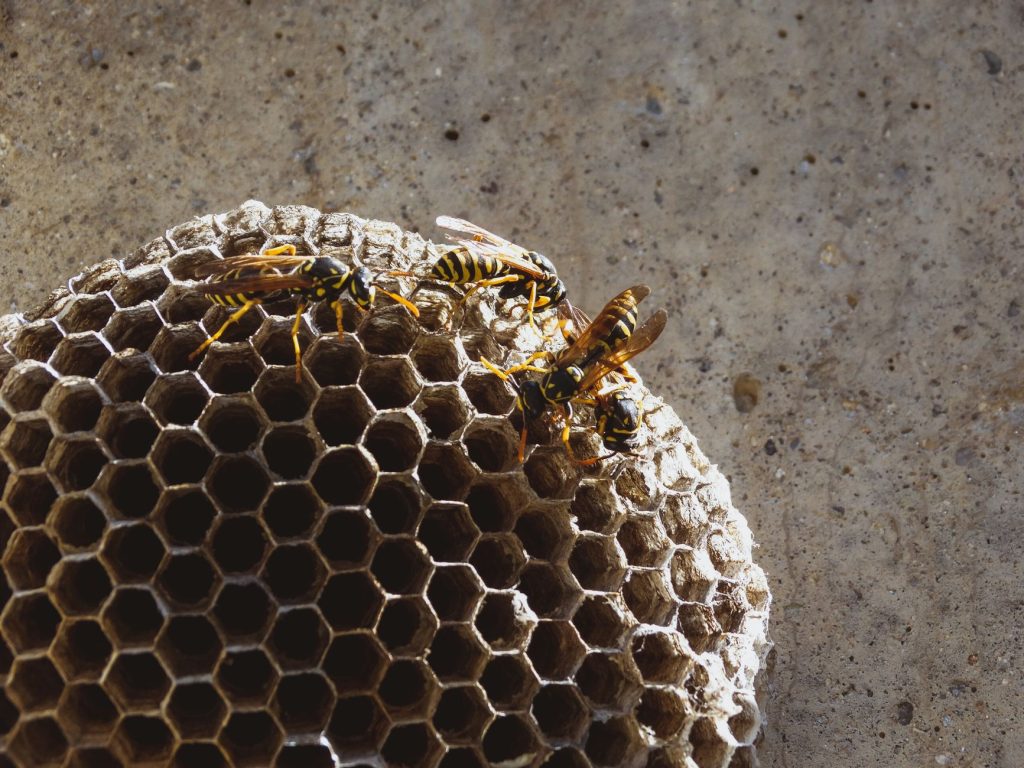
Wasp activity can cause costly problems when early signs are missed. Learn the signs, risks, wasp nest removal, and when to call Round the Clock Pest Services.
Key Takeaways About Wasp Nest Removal
- Knowing the difference between wasps, yellowjackets, hornets, and bees helps you choose the right approach to nest removal and avoid disturbing less aggressive species that may not pose a stinging threat.
- Wasp nests near doorways, walkways, or other areas where your household spends time can increase the chance of stings, so removal may be warranted when a nest is close to regular activity.
- Attempting wasp nest removal without proper preparation can be risky. A professional assessment from Round the Clock Pest Services can help you determine the safest path forward.
- Prevention matters. Monitoring your home’s exterior for early nest-building activity gives you a better window to address wasp nests before a colony grows.
How to Identify a Wasp Nest on Your Property
Knowing what wasp nests look like and where they tend to appear is the first step toward deciding whether removal is needed. Several species build nests in and around homes, and each species leaves different clues. Understanding these differences helps you figure out what you’re dealing with before the situation becomes a concern.
How to Tell Different Wasp Nest Types Apart
Not all wasp nests look the same. The baldfaced hornet, a large black and white species, builds a familiar grayish, pear-shaped nest. According to Purdue Extension, the thick paper envelope encloses two to four horizontally arranged combs. These nests can grow to a noticeable size and are typically suspended from trees or building surfaces.
Several species of yellowjackets build subterranean nests with architecture similar to baldfaced hornet nests. Most species are relatively unaggressive, but some can be more aggressive than others and may fly several feet to sting someone near the nest site. Recognizing the nest type helps you gauge the level of caution required.
How to Spot Wasp Activity Inside Your Home
Social wasps and bees sting to defend their colony, so increased stinging insect traffic near interior spaces can signal a nest nearby. If you notice wasps repeatedly entering through the same gap or hovering near a doorway, a nest may be positioned close to that opening.
Most species are relatively unaggressive, yet they can become a problem when they nest over doorways or in other areas of regular human activity. Persistent buzzing near entry points or repeated sightings in the same room deserve a closer look at nearby exterior walls and overhangs.
Where Wasp Activity Shows Up Around Homes
Baldfaced hornet nests typically hang from trees or the sides of buildings, making them visible once they reach full size. Yellowjacket species often build subterranean nests in areas such as creek banks, lawns, and garden and flower beds, as Purdue Extension notes. These ground-level nests can be easy to miss until foot traffic disturbs the colony.
Wasps may also nest near fruit trees and other areas of human activity. Keep in mind that bees and wasps are largely beneficial insects. Most wasp species attack, feed on, or parasitize other insects, including many damaging flies and caterpillars, so identification matters before any removal decision.
Exterior Entry Points Wasps Use
Doorways are a common trouble spot. When nests form directly over a door, even typically unaggressive species can pose a problem for anyone passing through. Some yellowjacket species can also become aggressive during late summer and fall and may sting unprovoked, raising the stakes around high-traffic entry points.
Building sides, tree branches near the roofline, and ground-level garden beds are all spots where nests may appear. Watching where wasps fly in a steady line back and forth can help you trace their path to the nest location without getting too close.
Why Wasp Nest Problems Develop
Wasp nest removal becomes a concern when colonies settle close to areas you use every day. Social wasps form populous colonies made up of an egg-laying queen and many sterile female workers, all centered around a paper nest. Because these colonies are annual and a nest is used only during the season it is built, activity can appear suddenly in spring and grow through summer before the colony dies off in fall.
Outdoor Nesting Areas for Wasps
Where a nest ends up depends on the species. Bumble bees and yellowjackets nest in the ground, which can put colonies right in your yard. Paper wasps build their nests above ground on sheltered surfaces. Social wasp colonies are tied to their paper nest structure, so any spot that offers a stable anchor point can become a nesting area during the active season.
Food and Shelter That Attract Wasps
Wasps seek out sheltered locations where a paper nest can stay intact for the season. A colony needs a site that supports the queen and her workers through one full cycle. Spots that offer overhead cover or wind protection tend to draw nesting activity. Keep in mind that regardless of species, according to Mississippi State University Extension, paper wasp nests last only one season, so nesting pressure resets each year.
How Wasps Move Around Homes
A colony present one season does not mean a colony will appear in the same site the following season. New queens start fresh each year, choosing new locations. This means wasp nest removal concerns can shift around your property from one year to the next, sometimes appearing in areas that were previously quiet.
Trails and Entry Points Wasps Use
Ground-nesting species like bumble bees and yellowjackets use small openings at soil level to access their colonies. When a ground nest is threatened, bumble bees can become aggressive and may sting. Yellowjackets pose a particular risk near entry points because, as University of Georgia pest guide warns, a mistake during nest treatment can result in hospitalization or death from excessive stings. If you spot stinging insects entering a hole in the ground or a gap near your home, approach with caution and avoid disturbing the area.
If the insects near your home turn out to be honey bees, consider contacting a beekeeper, who may be willing to gather the swarm and relocate it for you.
Risks From Wasp Nest Removal
Health Risks Linked to Wasp Nests
Wasp stings hurt, and some people are highly sensitive to stings, according to Mississippi State University Extension. That sensitivity makes any removal attempt a potential health concern, especially when a nest is disturbed without proper preparation. Even a single sting can be painful, and the risk multiplies when several wasps respond at once.
Pain levels can also vary by species. Most people who have experienced both agree that red wasp stings are more painful than Guinea wasp stings. Knowing which pests you are dealing with before approaching a nest helps you gauge the level of risk involved.
Property Damage From Wasp Nests
Removing a wasp nest on your own can create problems beyond stings. Using the wrong product or approach may leave residue on surfaces or fail to address the nest completely. As Mississippi State University Extension notes, choosing the right spray for the job and taking necessary precautions helps limit the potential for stings during the process.
Paper wasp nests built in the wrong place, where they are likely to cause stings, need to be addressed before the colony grows larger. Waiting too long can make the removal process more difficult near your home’s structure.
Food Areas and Wasp Activity
Social wasps capture insects such as flies, caterpillars, and beetle larvae, making them beneficial pests in many settings. However, according to Purdue Extension, destruction of colonies is warranted when they are located in or around structures and areas of human activity where stings can occur. Outdoor dining spots and cooking areas near your home are places where wasp activity raises concern.
When to Take a Closer Look at Wasp Activity
If you notice wasps flying repeatedly to and from a fixed point on your home, that pattern often signals an active nest nearby. Paper wasp nests in high-traffic areas deserve prompt attention. The longer a nest remains, the more wasps it may support, and the greater the chance of stings during your daily routine.
In Georgia, certain pests require licensed professionals. For honey bees specifically, a person licensed in Honey Bee Removal and Control must be contacted through the Georgia Department of Agriculture. For wasps and other pests near your home, a trained service professional can assess the situation and handle removal with the right precautions in place.
Professional Pest Control for Wasp Nest Removal
Wasp Nest Removal is not always a straightforward task, and understanding when to act and when to call in a professional pest control operator can help you avoid unnecessary risk. Most nests should be left alone if they are not causing a direct problem. When removal is warranted, the right preparation and approach matter.
How to Reduce Attractants for Wasps
One of the simplest ways to lower your chances of dealing with a wasp infestation is to remove old nests, spider webs, and other debris that can attract new activity. Check eaves, porches, and outbuildings. These materials can attract various pests to sheltered areas around your home. Clearing these away from eaves, porches, and outbuildings reduces the appeal of those spots to wasps looking for a place to build.
Routine cleanup of these materials is a practical step you can handle on your own, especially during the off-season when nests are inactive. Staying on top of this kind of maintenance helps make your property less inviting to wasps and other pests over time.
Why Wasp Control Starts With an Inspection
Before any wasp nest removal takes place, a thorough inspection is important. Colonies can be large and are often located far from the entrance hole, deep into the structure of your home. That means the nest you see on the outside may only hint at a much larger infestation hidden from view.
A professional pest control operator knows how to trace activity back to the colony itself. Without this step, partial treatment may miss the core of the infestation, leaving you with a recurring problem.
What to Expect During Professional Wasp Treatment
Above-ground and nearly all structural colonies are best handled by professional pest control operators unless the person attempting control is knowledgeable about social wasps, as Purdue Extension notes. Late summer colonies may consist of nearly a thousand workers, which makes protective gear and quick, efficient treatment imperative.
What to Expect From a Wasp Control Plan
A solid pest control plan accounts for both the current infestation and steps to discourage future nesting. Small, early season colonies and most underground colonies are simpler to control, but as the season progresses and colonies grow, professional intervention becomes more important.
Your pest control plan should include ongoing monitoring and the removal of old nests and webs that can harbor new infestations. Round the Clock Pest Services emphasizes the customer experience from start to finish, keeping you informed throughout the process so you understand what was found and what was done.f
Bottom Line on Wasp Nest Removal
Wasp nests can pose a real concern when they are close to your home or areas where your family spends time. Because colonies can grow large and some species attack when their nests are disturbed, attempting removal on your own carries risk. A professional pest control operator can assess the situation, identify the species involved, and handle the nest with the right protective gear and approach. If you have a wasp nest that needs attention, contact Round the Clock Pest Services to request a quote and get the help you need.
Frequently Asked Questions
Should I Try to Remove a Wasp Nest Myself?
In most cases, nest removal is best left to a professional. Colonies can be large, and a mistake during treatment can lead to multiple stings. Some species, such as yellowjackets, may attack when disturbed, and the consequences can be serious. A trained service professional has the protective gear and knowledge to handle the job with fewer risks.
Do Wasp Nests Come Back Every Year?
Social wasp colonies are annual, meaning each nest lasts only one season. However, new queens may choose a similar spot the following year if conditions remain favorable. Addressing the nest and making the area less inviting can help reduce the chance of a new colony forming in the same location.
When Is the Best Time to Address a Wasp Nest?
Earlier in the season, colonies tend to be smaller and easier to manage. As the season progresses, the number of workers can grow, which may make the nest more difficult and more dangerous to handle. If you notice wasp activity near your home, it is worth having a professional take a look sooner rather than later.
Are All Wasps Harmful?
Many wasps and bees are beneficial because they help with pollination or prey on other insects. Removal is generally warranted only when a nest is located near structures or high-traffic areas where stings are a real possibility. A pest control professional can help you determine whether a colony needs to be addressed or can be left alone.