
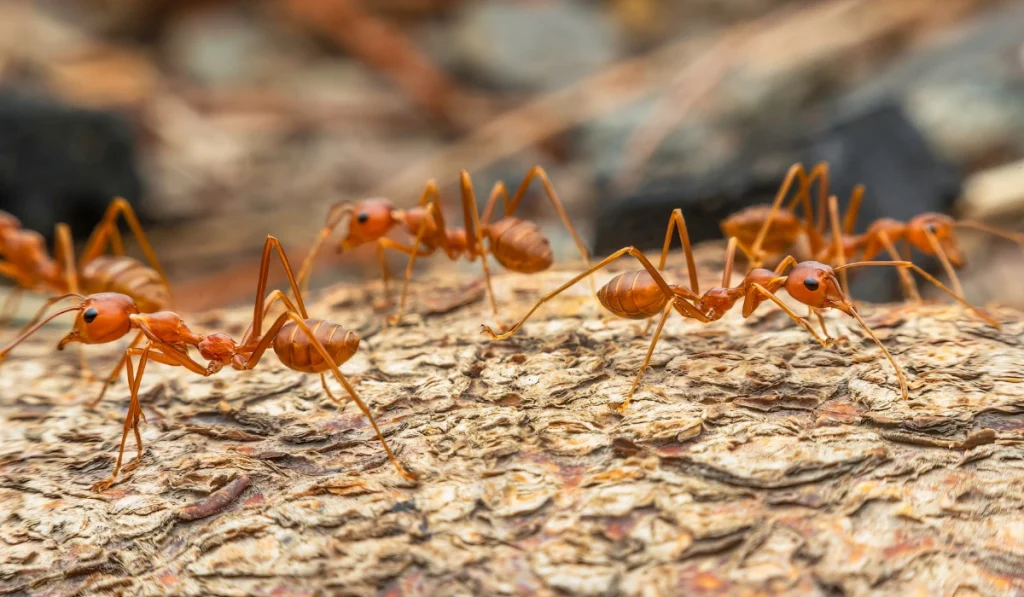
California fire ants, particularly the invasive red imported fire ant, are a concern in parts of Southern California because they can sting repeatedly when their colonies are disturbed. They nest in lawns, gardens, and landscaped areas, sometimes beneath mounds that resemble ordinary piles of soil. If you find a suspicious mound, keep children and pets away, avoid disturbing it, and arrange proper identification. Effective fire ant control targets the underground colony, not just the workers visible on the surface.
What to Do If You Find California Fire Ants in Your Yard
Keep your distance from a suspected fire ant mound and prevent anyone from walking or playing near it. Red imported fire ants defend their nests aggressively, and several workers can sting a person or animal within seconds of contact.
If you can do so safely, photograph the mound without approaching it. Note its location, nearby irrigation or landscaping, and whether similar patches of loose soil appear elsewhere. This information can help a pest control professional or agricultural authority assess the sighting.
Avoid Disturbing the Mound
Don’t kick, dig into, flatten, or mow over a suspicious mound. A nest that appears inactive at the surface may still contain an active underground colony.
Keep pets from sniffing or digging near the soil. Until the species has been identified, avoid pouring boiling water, household cleaners, or other improvised treatments into the nest. These methods can expose you to stings and may leave much of the colony unaffected.
How to Identify Red Imported Fire Ants in California
Red imported fire ants (Solenopsis invicta) are reddish brown, with workers of noticeably different sizes living in the same colony. According to the University of California Integrated Pest Management Program, workers measure approximately 1/16 to 1/5 inch long.
Size variation is useful when examining a clear photograph, but color and size alone cannot confirm the species. California’s native southern fire ant looks similar, and reliable identification may require examination by a specialist.
What Fire Ant Mounds Look Like
Red imported fire ant mounds consist of loose soil brought to the surface as workers excavate their underground nests. In undisturbed locations, the soil may form a rounded mound as much as one foot high.
Southern California mounds are often less obvious. Irrigated lawns and routine mowing can leave them looking like flattened circles of loose dirt. Colonies may also occupy sheltered sites beneath sidewalks or around outdoor utility equipment without creating a prominent surface mound.
Unlike many familiar ant nests, these mounds generally lack an obvious central entrance. Workers use underground passages and openings around the mound, so homeowners should never disturb the soil to look for an entrance.
Fire Ants vs. Other Red Ants in California
Red coloring alone is a poor identification method. California has several reddish ants, including native species that can also deliver painful stings.
| Species | Identification Clues | Homeowner Concern |
| Red imported fire ant | Reddish-brown workers of different sizes; loose-soil mounds | Aggressive nest defense and repeated stings |
| Native southern fire ant | Similar size and coloring; often irregular soil deposits | Can sting when disturbed |
| California harvester ant | Relatively large red workers of similar size | Can deliver painful stings |
| Argentine ant | Small, uniformly sized, grayish-brown workers traveling in trails | Common household nuisance requiring different management |
The native southern fire ant (Solenopsis xyloni) is particularly difficult to distinguish from the imported species without specialist examination. California harvester ants are usually larger, while Argentine ants are generally associated with established foraging trails around homes.
A colony should be identified before treatment, particularly when an invasive species is suspected outside its documented range.
Why Fire Ant Stings Are Dangerous
Red imported fire ants grip the skin with their jaws and use a stinger on the abdomen to inject venom. One ant can sting repeatedly, while a disturbed colony may send many workers onto the same person.
A sting usually causes immediate burning pain, followed by redness, itching, and swelling. White pustules may form afterward and can become infected if scratched or broken.
Most people experience localized reactions. However, severe allergic reactions are possible, and numerous stings can be especially concerning for young children, pets, or anyone unable to move away quickly.
What to Do After a Fire Ant Sting
Move away from the nest and brush any attached ants off your skin. Wash the affected area with soap and water once you’re safely away from the colony.
For minor localized reactions, a cold compress can help reduce discomfort. Avoid scratching the skin or opening pustules.
Difficulty breathing, fainting, significant dizziness, or swelling of the throat or tongue may indicate a severe allergic reaction. Call 911 immediately if these symptoms occur, and follow any prescribed epinephrine emergency plan.
Protecting Children and Pets
Children may disturb nests while playing on lawns or digging in flower beds. Keep them away from unexplained soil mounds, especially near play structures and frequently used paths.
Pets can encounter colonies while sniffing or digging. Ants may sting their paws, faces, and other exposed areas.
If a pet develops facial swelling, weakness, breathing difficulty, or signs of numerous stings, seek veterinary care promptly. Don’t attempt to treat the colony while animals remain nearby.
Where California Fire Ants Are Found and How to Report Them
Red imported fire ants were officially detected in California in 1998. The University of California Integrated Pest Management Program’s fire ant guidance documents infestations in portions of Orange, Los Angeles, Riverside, San Bernardino, and San Diego counties, along with detections in Central Valley almond-growing areas.
These records do not mean the species occurs throughout every county listed. An ant colony in a California yard should not be identified as red imported fire ants solely because of its location.
Reporting Suspected Red Imported Fire Ants
The California Department of Food and Agriculture accepts reports of suspected invasive pests through its Report a Pest program and statewide Pest Hotline at 1-800-491-1899.
Include the address or location, a description of the ants, and any photographs taken from a safe distance. If an agency needs a specimen, ask for instructions rather than attempting to collect live ants from an active mound yourself.
Reporting is especially relevant when suspected red imported fire ants are found outside locations where the species is already established.
Local Fire Ant Programs in Southern California
The Orange County Mosquito and Vector Control District’s fire ant program accepts reports of suspected red imported fire ant colonies. Orange County residents can call (714) 971-2421 for assistance with identification and applicable control services.
The Coachella Valley Mosquito and Vector Control District also operates a program for red imported fire ants within its service area. Other county agencies may have different responsibilities or reporting procedures.
Homeowners in Los Angeles, San Diego, San Bernardino, and other counties can use CDFA’s statewide reporting service or contact their county agricultural commissioner’s office for current direction. Public treatment availability varies by jurisdiction.
Why DIY Fire Ant Mound Treatments Often Fail
A fire ant mound is only the visible part of an underground colony. Beneath it, workers care for eggs, larvae, and other colony members, while reproductive ants sustain the population.
Killing workers on the surface can temporarily reduce activity without controlling the colony. Effective management must reach the insects responsible for maintaining and reproducing the population.
The Limits of Spraying Individual Mounds
Surface sprays can kill exposed ants, but they may not reach reproductive ants and developing brood underground. Some insecticides can also disturb colonies, potentially making control more difficult.
Properly selected mound treatments can control individual colonies. The limitation is treating only the mounds you notice when additional nests remain active elsewhere in the yard.
For a property with several confirmed colonies, inspecting the broader area helps determine whether targeted treatment or an area-wide baiting approach is more appropriate.
Why Homemade Treatments Are Unreliable
Boiling water, household cleaners, and improvised mixtures may kill some exposed ants without reaching the full underground colony.
Boiling water can burn skin and damage surrounding plants. Household products used outside their intended purpose introduce additional safety concerns and should not replace registered, correctly applied pest-control products.
If a colony remains active after repeated DIY attempts, continued application of the same method is unlikely to address the underlying problem. Species identification and an appropriate treatment strategy are more useful.
How Professional Fire Ant Baiting Controls Colonies
Fire ant baiting uses the ants’ normal feeding behavior to move treatment into the nest. Foraging workers collect attractive bait particles and transport them back to other colony members.
This allows a properly selected product to affect ants that are sheltered underground. Unlike a surface spray, bait does not depend entirely on direct contact with visible workers.
How Bait Treatments Work
Fire ant baits combine food-based attractants with active ingredients intended for colony control. Different formulations have different effects.
Some contain insect growth regulators that interfere with development and reproduction. Others use active ingredients that act more directly on colony members.
Results depend on the formulation and conditions. UC IPM describes certain insect growth regulator baits as taking four to six weeks to achieve their maximum effect, while other bait types may act sooner.
These timeframes are not guarantees for every product or property. A licensed professional should select a bait registered for the intended use and follow its current label.
Why Timing and Irrigation Matter
Workers need to be actively foraging for bait applications to work well. UC IPM identifies temperatures around 70 to 90°F as favorable for bait collection, although local conditions and product instructions still matter.
Water can interfere with some bait products. Sprinklers, wet turf, and rainfall need to be considered before an application.
For properties with multiple confirmed colonies, broadcast baiting may offer more comprehensive control than repeated spot treatments. Whether broadcast or targeted treatment is appropriate depends on the infestation and product label.
When to Seek Professional Fire Ant Control
Professional assistance is worth considering when several mounds appear, colonies develop near play areas or walkways, or earlier treatments haven’t resolved the activity.
An inspection can establish whether the ants are red imported fire ants, identify affected areas, and help determine an appropriate treatment method.
Children, pets, irrigation, and nearby landscaping also influence treatment planning. Discuss these conditions with the technician before any application, along with when the treated area can be used again.
How to Reduce Fire Ant Activity Around Your Yard
Check irrigated lawns, garden beds, sidewalk edges, and areas around sprinklers for new patches of loose soil. These are practical places to monitor because red imported fire ants can nest in managed landscapes.
A newly formed mound near a patio or children’s play area deserves attention before lawn work or outdoor activities continue nearby.
Reduce Food Sources and Monitor the Yard
Remove pet food after feeding and clean food scraps from outdoor eating areas. These steps can reduce opportunities for foraging ants, although they won’t eliminate an established underground colony.
Managing what attracts ants around a home also involves limiting accessible food and unnecessary moisture. For fire ants, these habits supplement colony control rather than replace it.
Avoid transporting soil, sod, or potted plants suspected of containing invasive ants. Moving infested material can spread colonies to new locations, and agricultural quarantine restrictions may apply.
Inspect Before Outdoor Maintenance
Look over the lawn before mowing, edging, or working around landscaped areas. Regular maintenance can flatten mounds, making them harder to recognize later.
If a suspicious mound appears, keep equipment and foot traffic away until the ants have been identified. Homeowners using ant prevention around Los Angeles homes should distinguish general household ant exclusion from the colony-level management needed for confirmed red imported fire ants.
Protecting Your California Yard From Fire Ant Infestations
Red imported fire ants can turn ordinary yard activities into a sting hazard when their colonies occupy lawns and landscaped areas. The priorities are straightforward: avoid disturbing suspicious mounds, confirm the species, report suspected invasive ants when appropriate, and choose treatment that reaches the colony.
For confirmed infestations, professional baiting may provide broader control than repeatedly spraying visible ants. Product selection, foraging activity, irrigation, and the number of colonies all influence the treatment plan.
If you’re dealing with recurring ant activity or suspicious mounds, Round The Clock Pest Services can help you assess your options. Contact Round The Clock Pest Services to describe the problem, request a quote, and discuss appropriate next steps for your yard.