
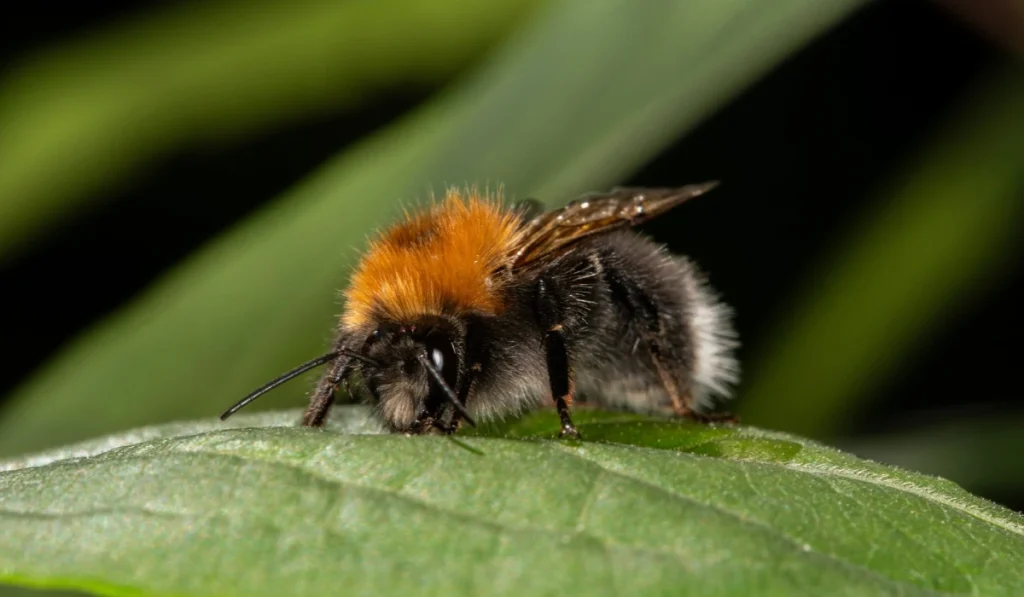
The California bumble bee is a native pollinator with a fuzzy, rounded body and black and yellow markings. It’s usually harmless while gathering pollen, but an active nest near your home can raise safety concerns.
Say you’ve noticed bees disappearing into a hole beside your patio. Are they bumble bees, carpenter bees, or yellowjackets? Before reaching for bug spray, you’ll want to know what you’re dealing with, where it might be nesting, and whether there’s any reason to intervene.
Key Takeaways
- Most California bumble bees don’t need removal. They’re valuable native pollinators that generally leave people alone unless threatened or disturbed near their nests.
- Identification and nest location matter. Bumble bees look similar to carpenter bees, honey bees, and yellowjackets, but their nesting habits and potential risks differ.
- Professional help is best reserved for genuine safety concerns. Nests near doorways, play areas, or other busy spaces deserve assessment before anyone attempts treatment or relocation.
How to Identify a California Bumble Bee
The California bumble bee is one of several native bumble bee species found in the state. It has a stocky body covered in dense hair, with black and yellow markings that can vary between individuals. Several other bumble bee species share these features, so color alone isn’t enough to identify one with certainty.
Look at what the bee is doing, too. Bumble bees often move steadily between flowers, collecting nectar and packing pollen onto their hind legs. You might notice bright yellow or orange pollen loads as they fly through a garden.
Bumble Bee vs. Carpenter Bee, Honey Bee, and Yellowjacket
A large bee near your home isn’t necessarily a bumble bee. Carpenter bees, honey bees, and yellowjackets can look similar from a distance, especially when they’re moving quickly.
| Insect | Identifying Features | Typical Nesting Location |
| Bumble bee | Round, densely hairy body, often black and yellow | Existing ground cavities, abandoned burrows, and sheltered vegetation |
| Carpenter bee | Large body, often with a relatively smooth, shiny abdomen | Tunnels excavated into wood |
| Honey bee | Slender body with brownish or golden bands | Wax combs inside hives, trees, or building cavities |
| Yellowjacket | Smooth body, narrow waist, and distinct yellow and black markings | Underground or enclosed paper nests |
Carpenter bees are worth investigating when you find neat, round holes in a wooden railing or exposed deck board. Female carpenter bees excavate tunnels to raise their young, while bumble bees generally occupy cavities that already exist. Bumble bees don’t cause the same type of wood damage.
Yellowjackets create a different identification challenge because some also nest underground. They’re less hairy than bumble bees and can defend their colonies aggressively. If you can’t tell which insect is entering a hole, watch from a safe distance rather than approaching the entrance.
Where Do California Bumble Bees Nest?
California bumble bees usually select sheltered places that offer protection from weather and disturbance. Abandoned rodent burrows are common nesting sites, but colonies may also occupy cavities beneath thick grass, undisturbed compost, garden debris, or gaps around retaining walls.
Some bumble bees settle into existing openings within exterior walls. You may not see the nest itself, only workers repeatedly entering and leaving a small gap. Unlike honey bees, they don’t build large honeycombs or maintain substantial honey stores.
How to Tell Whether a Bumble Bee Nest Is Active
One bee examining a hole doesn’t necessarily mean there’s a colony inside. It could be a queen searching for a suitable nesting site. Repeated traffic through the same opening, particularly workers returning with pollen, is a stronger sign of an established nest.
Colony size varies by species and stage of development, but many mature bumble bee colonies contain dozens to several hundred individuals. Even so, you won’t see every worker outside at once. Foraging bees leave the nest to gather food and return throughout the day.
When Bumble Bees Are Most Active in California
Bumble bee activity follows an annual cycle, although California’s climate influences the timing. A colony in a mild San Diego neighborhood may develop differently from one in a cooler Bay Area location or mountain community.
| Season | Typical Activity | What Homeowners May Notice |
| Spring | Overwintered queens emerge and search for nesting sites | Large bees examining ground openings and sheltered spaces |
| Early summer | Workers emerge and begin gathering food | More frequent flights between flowers and the nest |
| Mid-to-late summer | Colonies grow and produce new queens and males | Increased activity near established entrances |
| Fall | Many colonies decline as their annual cycle ends | Fewer workers and gradually reduced traffic |
| Winter | Newly mated queens of many species remain sheltered | Little visible activity, depending on species and local climate |
Most bumble bee colonies don’t survive as functioning colonies into the following year. The original queen and workers eventually die, while newly mated queens establish future colonies. However, don’t seal a nest entrance based on the calendar alone. Confirm that activity has ended before changing the site.
Do California Bumble Bees Sting or Act Aggressively?
Bumble bees aren’t generally aggressive while visiting flowers. A bee collecting pollen from lavender or tomato blossoms is focused on feeding and will usually fly away rather than confront someone nearby.
The situation changes when a colony feels threatened. Stepping on a concealed ground nest, moving materials around its entrance, or running a lawn mower directly overhead can provoke defensive behavior. Female bumble bees can sting repeatedly, unlike worker honey bees, which usually lose their stingers after stinging human skin.
What to Do if a Bumble Bee Stings You
For most people, a sting causes immediate pain, redness, and localized swelling. The University of California Integrated Pest Management Program explains that bee and wasp stings usually cause temporary discomfort, although some people experience serious allergic reactions.
Move away from the nesting area before checking the sting. Wash the affected skin with soap and water, then apply a cold compress to ease discomfort. If swelling spreads significantly or symptoms worsen, contact a healthcare professional.
When Is a Bumble Bee Sting a Medical Emergency?
Difficulty breathing, swelling of the tongue or throat, fainting, or widespread allergic symptoms can indicate anaphylaxis. Call 911 immediately if you suspect a severe allergic reaction. Use prescribed epinephrine if available and indicated.
Families with young children or pets should take extra care around concealed ground nests. A dog digging beside an entrance or a child running barefoot through the grass could disturb a colony without realizing it. Anyone with a known severe sting allergy should avoid the nesting area entirely.
Why California Bumble Bees Matter and When a Nest Becomes a Problem
Bumble bees help flowering plants reproduce by carrying pollen between blossoms. Their dense body hair collects pollen as they forage, supporting native plants, garden flowers, and agricultural crops.
Some species also perform buzz pollination. They grip a flower and vibrate their flight muscles to release pollen that other insects may struggle to collect. Tomatoes and peppers are familiar examples of plants that benefit from this behavior.
Are Bumble Bees Protected in California?
Bumble bee conservation has become a concern as several species experience population declines. The Xerces Society reports that 28% of North American bumble bee species face some degree of extinction risk. That statistic covers North America, rather than California alone.
The California Department of Fish and Wildlife confirmed in August 2026 that four species have candidate status under the California Endangered Species Act: Crotch’s bumble bee, Franklin’s bumble bee, the western bumble bee, and Suckley’s cuckoo bumble bee.
These species receive protections against unauthorized take while their listing status is under consideration. The species specifically called the California bumble bee isn’t among those four candidates. Still, an unfamiliar colony may be difficult to identify accurately, which is one reason to avoid unnecessary pest control product use.
When to Leave a Bumble Bee Nest Alone
If a bumble bee nest is in a quiet garden corner where people rarely walk, leaving it undisturbed is often the best choice. You can allow the colony to complete its seasonal cycle without changing how you use most of your property.
Keep pets from digging around the entrance, postpone mowing immediately beside it, and use another route through the yard if needed. There’s no reason to disturb a nest simply because bees are present.
When Is a Nest Near Your Home a Safety Concern?
A nest beside your front steps, under a frequently used patio, or near a children’s play area creates a more difficult situation. You may not be able to avoid the entrance during normal household activities, increasing the chance of accidental disturbance.
Nests inside wall voids also deserve professional attention, particularly when bees regularly enter structural openings. Don’t plug the hole or attempt to dig out the colony. Blocking an active entrance can complicate the situation, while spraying or flooding the nest may provoke defensive bees and harm beneficial pollinators.
Should You Attempt Bumble Bee Removal Yourself?
DIY bumble bee removal is rarely the best starting point. Household sprays, boiling water, and attempts to move a nest can expose homeowners to stings and may affect protected species.
A qualified professional can help identify the insect, evaluate the nest’s location, and explain appropriate options. Relocation is specialized work and isn’t always practical or legally permissible. For a colony that poses little risk, leaving it in place may remain the most appropriate recommendation.
Protect Your Home With Help From Round the Clock Pest Services
Finding a California bumble bee in your yard usually doesn’t call for treatment. Knowing which insect you’re seeing and where it’s nesting helps you distinguish normal pollinator activity from a genuine safety concern. When bees occupy a location your family can’t avoid, a professional assessment is a sensible next step.
Round the Clock Pest Services is a locally owned California pest control company offering bee control services to communities across Los Angeles, the San Fernando Valley, and the San Francisco Bay Area. Our familiarity with local stinging insects and residential pest concerns can help homeowners understand what they’re dealing with before deciding on a response.
If you’ve noticed bees entering a wall, gathering beside a doorway, or nesting near a busy outdoor space, contact Round the Clock Pest Services to discuss the activity and ask about a nest assessment. Identifying the insect first can help protect your household while avoiding unnecessary harm to California’s native pollinators.
California Bumble Bee: FAQs
Do California bumble bees sting more than once?
Yes. Female bumble bees, including workers and queens, can sting repeatedly because their stingers generally don’t remain embedded in human skin. However, they’re unlikely to sting while gathering pollen unless trapped or threatened. The greatest risk comes from accidentally disturbing an occupied nest.
Are California bumble bees endangered or legally protected?
Not all California bumble bee species have the same conservation status. Four species have candidate status under the California Endangered Species Act and receive protections against unauthorized take. Because identification can be difficult, avoid disturbing or treating an unknown colony without qualified guidance.
Will a bumble bee nest go away on its own?
Most bumble bee colonies follow an annual life cycle and naturally decline later in the season. Newly mated queens survive to establish future colonies, while the original workers and queen die. If a nest can be safely avoided, allowing its activity to end naturally is often preferable to removal.
What is the difference between a bumble bee and a carpenter bee?
Bumble bees generally have densely hairy bodies, including their abdomens. Carpenter bees often have smoother, shinier abdomens. Their nesting habits also differ. Carpenter bees excavate tunnels in wood, while bumble bees usually occupy existing cavities in the ground, vegetation, or sheltered spaces.