
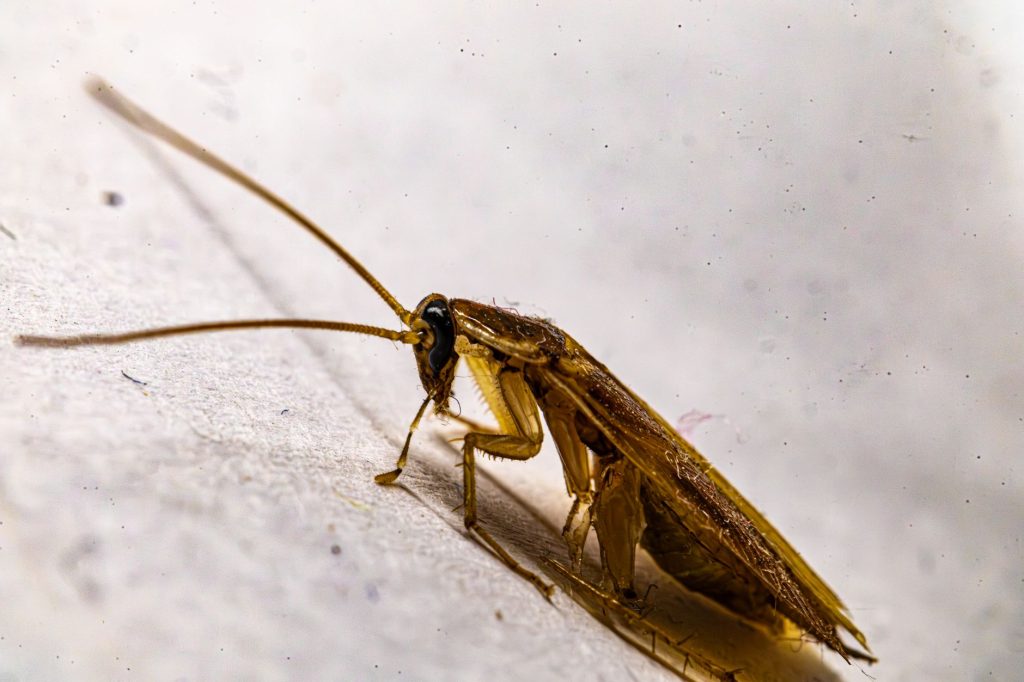
White roaches can cause costly problems for Santa Ana homeowners when early signs are missed. Learn the risks, and when to call Round the Clock Pest Services.
Key Takeaways About White Roaches
- A white roach is not a separate species or an albino cockroach. It is a cockroach that has recently molted and has not yet regained its normal coloring.
- Spotting a white roach in your home can indicate a growing population nearby, since molting cockroaches typically stay hidden and are rarely seen out in the open.
- Proper identification matters because other white or pale-colored pests can be mistaken for white roaches, and each type may call for a different approach to control.
- Reducing clutter, sealing entry points, and keeping your home clean can help limit roach activity and the chances of encountering a freshly molted cockroach.
How to Identify White Roaches
When you spot a pale or white-colored insect in your home, it can be hard to know exactly what you are looking at. The term “white roaches” often refers to cockroach nymphs that display white markings on their body, though other species with a white appearance can cause confusion. Knowing what to look for helps you narrow down the species and choose the right response.
How to Tell White Roach Types Apart
Smokybrown cockroach nymphs are one of the most commonly misidentified species. According to the University of Georgia pest guide, first instar nymphs have a white band across their backs, just behind the thorax, and a white band on the tips of their antennae. Younger nymphs of this species are black with two white bands on the body and white-tipped antennae, while older nymphs become uniformly reddish brown.
Other species can also appear white or pale. Some springtail species may be white, though most springtails are dark-colored, brown, grey, or black. Certain beetle larvae are off-white, robust, and grublike, sometimes with a dark brown head. These body shapes and color patterns differ from a cockroach nymph, so examining the overall body structure is important for proper identification.
How to Spot White Roach Activity Inside Your Home
Cockroach nymphs with white markings on their body tend to stay hidden during the day. You may notice them when you open cabinets, move stored items, or turn on lights in a dark room. Because these nymphs are small, they can be easy to overlook unless you are watching for pale-colored insects.
If you see a white or nearly white insect, compare its body shape to known cockroach species. A flat, oval body with visible antennae points toward a cockroach nymph. A round, grublike body with no clear antennae may indicate a beetle larva instead.
Where White Roach Activity Shows Up Around Homes
White-marked cockroach nymphs often appear in warm, sheltered areas of your home. Kitchens, bathrooms, and utility spaces where moisture collects are common spots. These nymphs tend to stay close to the areas where they hatched, so finding one can suggest others are nearby.
Springtail species that appear white may also show up in damp indoor areas. Their small size and color can make them easy to confuse with young cockroach nymphs, so pay attention to body shape and movement.
Exterior Entry Points White Roaches Use
Smokybrown cockroach nymphs may move indoors from exterior harborage sites. Gaps around doors, windows, and utility penetrations give these small nymphs access to your living spaces. Checking these openings and noting where you find nymphs with white bands on their body can help you understand how they are getting inside.
Keep in mind that several species besides cockroaches can appear white or pale. Accurate identification of the species you are dealing with is the first step toward choosing the right response for your home.
Why White Roach Problems Develop
Most “white roaches” are not a separate species. They are cockroach nymphs that have just molted. According to Kansas State University Extension, nymphs periodically shed their exoskeleton and appear white for a few hours until the new exoskeleton hardens and darkens. A nymph may molt anywhere from 5 to 18 times depending on the species before reaching maturity, so a growing population can produce frequent white sightings. before reaching maturity, so a growing population can produce frequent white sightings.
Outdoor Nesting Areas for White Roaches
Cockroach nymphs develop in sheltered spots close to food and moisture. Outdoor nesting areas that stay dark and undisturbed give nymphs the cover they need while they cycle through multiple molts. Because each molt leaves the nymph temporarily white and soft, hidden nesting sites allow roaches to complete this vulnerable stage without exposure.
Food and Shelter That Attract White Roaches
Wherever food debris accumulates, cockroach populations can grow. More nymphs in a given area means more frequent molting events, which increases your chances of spotting a white roach. Keeping food sources cleaned up reduces the resources nymphs need to develop through each successive molt.
Shelter is equally important. Tight gaps and warm, humid spaces give molting nymphs the protection they require during the hours when their exoskeleton has not yet hardened.
How White Roaches Move Around Homes
Nymphs tend to stay close to harborage between molts. Because they appear white only briefly after shedding, you may notice them near the same crevices and voids where they hide. Some cockroach nymphs are dark brown with white segments at the end of their antennae and across their backs, so partial white coloring on a moving nymph can also catch your eye.
Trails and Entry Points White Roaches Use
Cockroach nymphs use the same pathways as adults. Gaps around plumbing, wall voids, and cracks along baseboards can serve as routes between nesting areas and food. Seeing a white nymph along one of these trails usually means a larger population is molting nearby, since the white stage lasts only a few hours before the exoskeleton darkens again.
Small insects near these entry points are sometimes mistaken for white roaches. Carpet beetles and hide beetles, for instance, are only about 1/10-inch long, and carpet beetles can appear mottled white, brown, and dark yellow. Correct identification matters before deciding on next steps.
Risks From White Roaches
A white roach sighting can raise questions about what other pests may be sharing your space. Because a white appearance can belong to cockroach nymphs, worker termites, or even other household pests, understanding the risks tied to each possibility helps you respond appropriately.
Health Risks Linked to White Roaches
White-bodied cockroach nymphs are still cockroaches, and multiple species can be present in and around homes. The smokybrown cockroach is the most common cockroach in suburban Southern neighborhoods with mature hardwood trees, according to the University of Georgia pest guide. Other species, such as the Asian cockroach and the palebordered field cockroach, have also spread throughout the Southeastern United States. When any of these pests move indoors, they can create unsanitary conditions in living areas.
Good sanitation is one of the most important steps you can take to manage a cockroach infestation. Removing food, water, and hiding places for these pests is difficult, but consistent housekeeping can help minimize favorable habitats.
Property Damage From White Roaches
Not every white-bodied pest is a roach. White, soft-bodied worker termites are seldom seen, yet they are the ones that can seriously damage a structure. According to Purdue Extension, they eat the soft grain of wood, leaving a thin shell outside and only splinters inside. Mistaking a worker termite for a white cockroach could delay your response to a structural threat.
Other small pests, such as thrips, can also appear translucent white or yellowish, so accurate identification matters before deciding on next steps.
Food Areas and White Roach Activity
Cockroach nymphs seek out the same resources as adults. Kitchens, bathrooms, and any area where food, water, or shelter is available can attract these pests. Reducing access to those resources through sanitation is a practical first step toward making your home less hospitable.
Wood roaches, by contrast, do not breed indoors or become established in the home. They live outdoors and measure from half an inch to one inch long with bodies in various shades of brown to black. If you spot a pale roach that wandered inside, it may simply be a wood roach nymph rather than a sign of an indoor infestation.
When to Look Closer at White Roach Activity
A single white roach may not point to a large problem, but repeated sightings deserve closer attention. Eight species of wood cockroaches alone are found in the Southeastern United States, all native species. Add introduced species like the Add introduced species like the Asian cockroach, first identified in Lakeland, FL in 1986, and accurate identification becomes even more important for choosing the right response., and accurate identification becomes even more important for choosing the right response.
If you notice pale, soft-bodied insects near wood surfaces, consider whether termite workers could be involved. Early recognition helps you address the correct pest before the situation grows more complex.
Professional Pest Control for White Roaches
Addressing a white roach infestation requires more than a single approach. Because white roaches are simply cockroaches that have recently molted, the same integrated strategies used for cockroach control apply. Clearing away the conditions that support an infestation and correctly identifying the species involved are the foundation of any lasting control plan.
How to Reduce Attractants for White Roaches
Prevention is the first line of defense against any cockroach infestation. According to Purdue Extension, you can prevent cockroach infestations by removing their food, water, and hiding places. That means keeping your kitchen and bathrooms clean, fixing leaky pipes, and reducing clutter where roaches can shelter undisturbed.
Reducing these attractants throughout your home limits the resources cockroaches need to survive and reproduce. When food, moisture, and harborage are scarce, cockroaches have less reason to stay or establish a growing population inside your walls.
Why White Roach Control Starts With Inspection
An inspection before treatment identifies the species present and maps active harborage sites. Identifying the cockroach species matters because hiding places vary depending on the species, and you need to direct control efforts to the right locations. Large accumulations of shed skins may be found in or near the site of the infestation, which helps service professionals pinpoint where cockroach activity is concentrated.
White roaches themselves are a useful clue. Spotting a freshly molted cockroach with a tan abdomen, white markings, and light brown legs banded with dark brown suggests the infestation is active and the population is growing nearby. A careful inspection maps these signs so treatment can be focused where it matters most.
What to Expect During Professional White Roach Treatment
Addressing a cockroach infestation is difficult and requires an integrated pest management approach that combines several control strategies. A single method is rarely enough on its own. Round the Clock Pest Services uses this multi-strategy framework to target roaches at every stage of development.
For moderate to heavy German cockroach infestations, as many as 12 to 15 bait stations may be needed in a standard-sized home, according to the University of Georgia pest guide. The number of stations and placement depend on the severity and species involved, which is why a professional inspection comes first.
What to Expect From a White Roach Control Plan
Round the Clock Pest Services builds each plan around the specific cockroach species found in your home. Because hiding places vary by species, treatment is tailored rather than generic. The plan addresses the active infestation while also targeting the conditions that allowed the population to grow.
As a woman-owned and operated company, Round the Clock Pest Services emphasizes quality, communication, and your satisfaction throughout the process. A service professional will contact you before arrival, keeping you informed at every step. Your plan may include ongoing monitoring to watch for shed skins and other signs that activity has returned, so adjustments can be made as needed.
Bottom Line on White Roaches
A white roach is not a separate species. It is a cockroach that has recently molted, leaving it pale and soft-bodied for a brief period before its outer shell hardens and darkens. Spotting one means roaches are actively growing and reproducing in or near your home. Because these freshly molted nymphs tend to stay hidden, seeing even one can point to a larger population nearby. Removing food, water, and hiding places is the foundation of prevention, but a professional inspection can reveal the full scope of the issue.
Contact Round the Clock Pest Services to schedule an assessment of your home.
Frequently Asked Questions
Are White Roaches a Different Species?
No. A white roach is simply a cockroach nymph or adult that has just shed its exoskeleton. The pale color is temporary. Once the new outer shell hardens, the roach returns to its typical brown or dark brown coloring. Multiple cockroach species go through this process as they grow.
Why Did I Find One in My Home?
Freshly molted roaches prefer dark, sheltered spots while they are vulnerable, so they rarely come out into the open. If you spotted one, it may indicate that roaches have found suitable food, water, and harborage inside your home. Reducing access to those resources can help make your space less attractive to them.
Should I Be Concerned About Just One Sighting?
A single white roach suggests that roaches are actively developing nearby. Because nymphs molt multiple times before reaching maturity, the presence of even one freshly molted individual can point to a population that is established in a hidden area. A professional inspection can help determine the extent of the activity.
What Steps Can I Take to Prevent Roaches?
Focus on removing the three things roaches need most: food, water, and hiding places. Keep living spaces clean and dry, seal gaps where roaches may enter, and fix moisture issues as soon as you find them. If activity persists, a pest professional can evaluate your home and recommend a targeted approach.