
You step onto the patio to water a few plants before work. A mosquito lands near your ankle, bites, and vanishes beneath the leaves. Another appears a few minutes later, even though the sun is up and there is no pond, creek, or puddle nearby.
The Asian tiger mosquito helps explain why mosquito season in California no longer feels limited to warm evenings. This black-and-white mosquito bites during the day and breeds in small containers close to homes. Its confirmed range remains limited, but other invasive mosquitoes in California behave in much the same way. Knowing what you are dealing with can help you find the source of the bites and protect the areas where your family spends time.
Why California’s Bite Season Feels Different
Many California homeowners still expect mosquitoes to become active around sunset. Several native species follow that pattern, but day-biting mosquitoes can start looking for a blood meal in the morning. They may rest during the hottest part of the day, then return in the afternoon.
That schedule puts mosquito activity in the middle of ordinary routines. You may notice Asian tiger mosquito bites while trimming plants, unloading groceries, sitting under a covered patio, or watching children play outside. Low shrubs and shaded garden beds give adult mosquitoes a place to wait near people.
Mosquito season in California also varies from one region to another. Los Angeles, San Diego, Walnut Creek, and the Bay Area have different temperatures, rainfall patterns, and irrigation habits. A warm week can speed development, while a leaking sprinkler or overwatered planter can support mosquitoes during a dry month.
| What You Notice | What May Be Happening |
| Bites before noon | A day-biting mosquito may be active near the house |
| Several bites around the ankles | Adults may be resting in low plants or ground-level shade |
| Activity near one patio corner | Furniture, foliage, or irrigation may be creating shelter |
| Mosquitoes during dry weather | Household water may be replacing rainfall |
| A sudden increase after warm weather | Development may have accelerated |
| Bites after visible water was removed | Eggs may remain, or adults may be arriving from nearby |
The change is not just about a longer season. It is also about timing and location. Homeowners now deal with mosquitoes during the day, near doors and patios, and around small household water sources that once seemed harmless.
Where the Asian Tiger Mosquito Is Found in California
The Asian tiger mosquito is established in California, but its confirmed range is narrow. State records identify established populations in Los Angeles and Shasta counties. That makes the species relevant to the Los Angeles service area without making it a statewide pest.
Another invasive striped mosquito has spread through far more counties. It also bites during the day, lives close to people, and uses small containers as mosquito breeding sites. Homeowners often confuse the two because their color, size, and behavior are similar.
The California Department of Public Health county distribution map lists Los Angeles and Shasta as the two counties with both invasive species as of May 1, 2026. It also identifies 26 counties where the more widespread species is established without a confirmed Asian tiger mosquito population.
| Reported California Distribution | Number of Counties | Examples |
| Both invasive species | 2 | Los Angeles and Shasta |
| Widespread invasive species only | 26 | San Diego, Alameda, Contra Costa, Orange, Riverside, Santa Clara, and Ventura |
| Asian tiger mosquito only | 0 | None reported |
What This Means in Your Area
A homeowner in Los Angeles County may encounter an Asian tiger mosquito. In San Diego County, Walnut Creek, Contra Costa County, and much of the San Francisco Bay Area, another invasive day-biting species is more likely to be responsible.
The control steps remain similar because both mosquitoes use standing water around homes. Still, accurate identification matters for public tracking and local reporting. It also prevents every striped mosquito from being labeled as the same species.
A local vector control district can help confirm unusual mosquito activity. Clear photographs may provide useful clues, but a moving insect is difficult to identify by appearance alone.
How to Identify the Mosquito Biting You
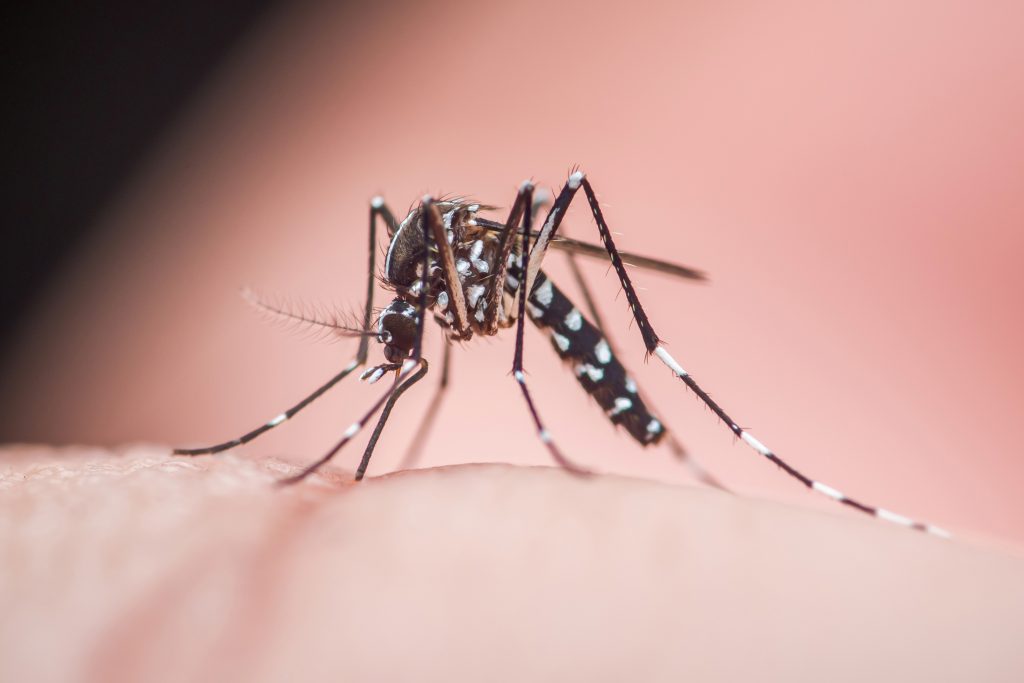
The Asian tiger mosquito has a dark body, white-banded legs, and one straight white stripe running down the center of its upper back. That stripe is the most useful feature for separating it from its common California look-alike.
The insect is smaller than many online images make it appear. You may see only a dark speck moving around your shoes or lower legs. The white bands on the legs are often easier to notice than the marking on the back.
| Feature | Asian Tiger Mosquito | Common California Look-Alike |
| General color | Black with white markings | Black with white markings |
| Marking on the back | One straight white stripe | Several curved pale lines |
| Legs | White bands | White bands |
| Common biting period | Daytime | Daytime |
| Typical setting | Shaded yards and small containers | Homes, yards, and small containers |
| California range | Limited | Widespread |
Behavior Offers Useful Clues
A visual match does not tell the whole story. Daytime biting near irrigated plants, covered patios, and dense landscaping points toward an invasive mosquito problem even when the exact species has not been confirmed.
Pay attention to where the bites occur. Repeated activity near one garden bed may indicate an adult resting area. Bites beside a back door may lead you to a plant saucer, drain, or watering can a few feet away.
The most useful inspection question is not simply, “What species is this?” It is, “What on this property is allowing mosquitoes to breed or rest here?”
Why Small Water Sources Keep Mosquitoes Breeding
Asian tiger mosquitoes are container-breeding mosquitoes. They do not need a pond or neglected swimming pool. A bottle cap, flowerpot saucer, toy, bucket, clogged gutter, or fold in a tarp may hold enough water for developing larvae.
Females place eggs along the inside wall of a container, just above the waterline. Rain, irrigation, or a garden hose can raise the water and cover those eggs. Once wet, they may hatch and begin the next stage of development.
The Centers for Disease Control and Prevention (CDC) life-cycle guide for invasive mosquitoes reports that development from egg to adult can take about 7 to 10 days. It also states that eggs may survive dry conditions for up to eight months while attached to container walls.
That is why dumping standing water once may not solve the problem. Larvae leave with the water, but eggs can remain on the sides. Scrubbing washable containers helps remove them before the next refill.
Check These Mosquito Breeding Sites Every Week
Begin near patios, doors, garden beds, and play areas. Then move along side yards, behind storage sheds, and beneath decks. These less visible areas often stay shaded and hold moisture longer.
| Area | What to Look For | What to Do |
| Plant saucers | Water and residue beneath pots | Empty and scrub them |
| Birdbaths | Stagnant water and buildup at the waterline | Refill and brush the basin |
| Pet bowls | Water left outdoors for several days | Wash and replace the water |
| Buckets and toys | Rainwater or sprinkler water | Empty and store upside down |
| Gutters | Leaves and blocked drainage | Clear debris and restore flow |
| Irrigation zones | Leaks, overspray, and low spots | Repair leaks and adjust sprinkler heads |
| Tarps and covers | Sagging folds | Tighten, drain, or store them |
| Fountains | Weak circulation or stopped pumps | Restore circulation and clean the basin |
A weekly yard check can interrupt the mosquito life cycle before adults emerge. It also makes the work manageable. Ten minutes spent checking likely water sources is more useful than waiting for biting activity to become severe.
What the Health Risk Means for Your Household
Most Asian tiger mosquito bites cause itching, redness, or temporary swelling. Reactions vary, so one person may develop a raised welt while someone else has only a small mark. Scratching can break the skin and extend the irritation.
The species also receives attention because it can transmit certain viruses under the right conditions. A mosquito must first bite an infected person, allow the virus to develop inside its body, and then bite someone else. Finding the species does not prove that disease is spreading in your neighborhood.
The California Department of Public Health invasive mosquito guide identifies dengue, chikungunya, and Zika among the viruses associated with invasive day-biting mosquitoes. State and county health notices remain the best source for current local disease information.
Practical Mosquito Bite Prevention
Removing standing water reduces future mosquito development, but it does not remove adults already resting in the yard. Use an EPA-registered mosquito repellent according to the label when daytime mosquito bites are common.
Clothing that covers the arms and lower legs can reduce exposed skin. Check window and door screens for tears, loose edges, and gaps. A fan near a patio table may also help because moving air makes it harder for mosquitoes to approach and land.
Each step handles a separate part of the problem. Water removal limits reproduction. Screens and clothing create physical barriers. Repellent reduces the chance of a bite from an adult mosquito that is already active.
Taking Back Your Yard From Day-Biting Mosquitoes
Home mosquito control in California starts with the property itself. You need to find the water, shade, and sheltered areas that allow mosquitoes to develop or rest. In many yards, those conditions sit within a few feet of the patio or back door.
Weekly cleanup can make a noticeable difference, but some problems continue after every visible container has been emptied. Water may be trapped inside a drain extension, beneath dense plants, behind stored equipment, or on a neighboring property. Adult mosquitoes may also be resting in vegetation that routine cleanup does not address.
When DIY Cleanup Stops Working
Persistent daytime bites are a sign that the source may be hidden or spread across several parts of the yard. A professional inspection can review irrigation, drainage, plant density, shade, containers, and the exact places where people are being bitten. Round the Clock Pest Services uses property inspection, treatment of adult resting areas, and breeding-cycle management as part of its mosquito-control approach. That gives the technician a reason for each treatment instead of applying material across open lawn areas without a clear target.
No outdoor mosquito service can prevent every insect from entering from another property. The value comes from finding conditions homeowners commonly miss, treating active resting areas, and building a plan for water sources that keep returning. The Asian tiger mosquito has changed when and where California homeowners encounter bites. Once daytime activity begins around your patio, garden, or play area, waiting for cooler evenings will not solve it.
When you have emptied and scrubbed containers but the biting continues, contact Round the Clock Pest Services and schedule professional mosquito control. A technician can inspect the full property, identify overlooked breeding and resting areas, and recommend a plan based on how your yard is built and used.