
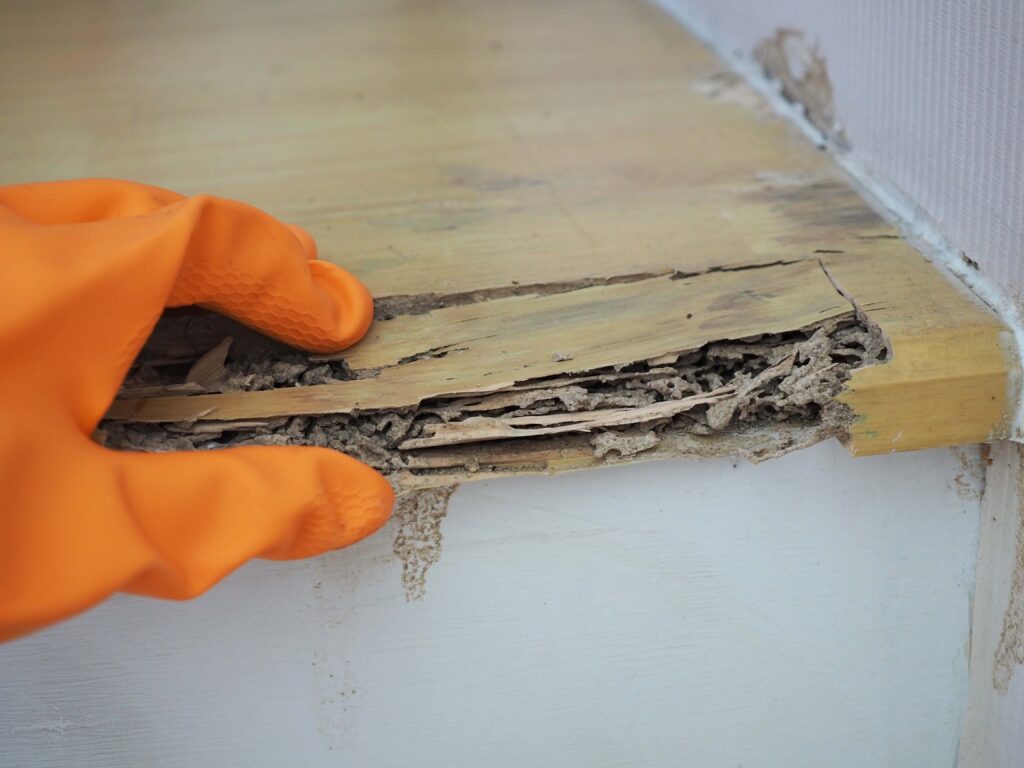
You press your hand against a soft spot on the baseboard and the wood gives more than it should. Nearby, the paint is bubbling, a faint stain runs down the wall, and the floor trim looks slightly warped. It could be moisture from a leak, but in Los Angeles County homes, termites can leave damage that looks similar from the outside.
When comparing termite damage vs water damage, the key difference is the source. Water damage usually follows moisture, staining, swelling, or mold, while termite damage often comes with hollow wood, mud tubes, frass, or hidden tunneling. This guide explains how to tell the signs apart, what each type of damage can mean, and when to schedule an inspection before the problem spreads.
Key Takeaways
- Termite damage often leaves hollow wood, mud tubes, or frass, while water damage is more likely to cause staining, swelling, or mold.
- Soft or damaged wood does not automatically mean termites, so looking for multiple signs is important before drawing conclusions.
- When the cause of the damage is unclear, a professional inspection can help determine whether termites, moisture, or both are involved.
How to Identify Termite Damage vs. Water Damage
Telling termite damage apart from water damage can be tricky because both leave wood looking soft, discolored, or warped. However, each problem leaves distinct signs when you know what to look for. Knowing what signs to look for can help you narrow down the cause before scheduling an inspection.
How to Tell Termite Damage and Water Damage Apart
Subterranean termite feeding generally follows the grain of the wood. These termites attack the softer summerwood and leave the harder summerwood behind, creating a layered, channeled pattern inside the timber. According to UC IPM, this distinctive pattern of wood damage alone can often distinguish subterranean termite activity from other causes.
Water damage, by contrast, tends to warp or swell wood without producing internal channeling. When you probe termite-damaged wood with a sharp instrument, the material will feel soft, channeled, and unsound. Water-damaged wood may feel spongy, but it typically lacks the hollow galleries termites leave behind.
How to Spot Signs of Termite or Water Damage
One of the clearest signs of termite activity is the presence of irregular earthen tubes constructed across interior surfaces. These mud tubes run along walls, floors, and foundation elements. If you break a tube open, you may see live workers and soldiers moving through it.
Some termite species also deposit light-brown excrement within wood cavities, which is another sign that separates termite damage from moisture issues. Water damage may produce staining or mold growth, but it will not leave mud tubes or frass deposits inside the wood.
Where Termite and Water Damage Show Up
Look for signs of termite infestation along your foundation, where earthen tubes often appear first. According to the University of Tennessee Extension, probing timbers with a sharp instrument and using a moisture meter can help you evaluate whether the damage is from termites, water, or both.
Both problems can occur in the same areas, which makes careful inspection important. Damaged wood that is soft and channeled on the inside points toward termites, while swelling and surface discoloration without internal galleries may indicate water as the cause.
Why Termite and Water Damage Develop
Termite damage and water damage develop under different conditions. Both problems often begin out of sight, but identifying the source can help you choose the right response before damage becomes more extensive.
Outdoor Conditions That Lead to Termite or Water Damage
Subterranean termites live in the soil and forage outward to reach wood inside structures. They excavate galleries as they consume wood, sometimes leaving only a thin wooden exterior behind. Their colonies stay rooted in the ground, which means the surrounding soil is always a potential staging area.
Drywood termites take a different approach. They require no soil contact or liquid moisture, getting all the water they need from wood itself and metabolic processes. Water damage, by contrast, originates wherever moisture collects, such as around roofing, plumbing, or exterior walls exposed to rain.
In Los Angeles County, leaking irrigation systems, poor drainage, plumbing leaks, and wood-to-soil contact are common conditions that can contribute to termite activity or moisture-related damage.
Food and Shelter Sources That Attract Termites and Moisture
Because subterranean termites rely on soil, any wood in contact with or close to the ground can become a food source. Wood that stays damp for long periods can attract subterranean termites and make existing damage harder to detect. Moisture issues and termite activity sometimes occur in the same area, which is why both possibilities should be considered during an inspection.
How Termite and Water Damage Spread Through Homes
Termite damage spreads as colonies continue feeding on wood and other cellulose materials inside a structure. Water damage spreads when moisture moves through building materials, often following leaks, drainage problems, or condensation.
Water damage often spreads through building materials as moisture follows leaks, collects in low areas, or moves into porous surfaces. Both issues can worsen over months without visible signs.
Entry Points That Lead to Termite or Water Damage
Termites build irregular earthen tubes across exterior foundation walls to move between the soil and the wood they feed on. These tubes are one of the most visible signs of termite presence on the outside of your home. Spotting them early gives you a clearer picture of the situation before structural concerns grow.
Water damage on exterior surfaces often follows drainage paths or areas where moisture collects. When you are unsure whether the signs point to termites or water, a professional review can help separate the two and guide the right next step.
Risks From Termite Damage vs. Water Damage
Both termite damage and water damage can compromise your home, but the risks they pose differ in visibility, timeline, and scope. These differences can help you determine which problem may be present and whether a professional inspection is warranted.
Structural Risks From Termite and Water Damage
Termites invade and consume wood and other cellulose material, causing extensive damage in the structural parts of a building. According to the University of Tennessee Extension, their presence may not be discovered until they swarm, sometimes years after infesting a structure. Water damage often leaves visible stains, warping, or mold growth that alerts you sooner, though slow leaks behind walls can also go unnoticed for extended periods. Termite damage usually begins inside the wood and may not be visible immediately, while water damage often produces visible warning signs such as staining, bubbling paint, or warped materials.
The structural concern with termite damage is that these pests feed on wood framing and other cellulose components over time. Water damage can weaken those same materials through rot, but it typically produces moisture cues you can detect with routine attention.
Hidden Termite Damage in Homes
In many cases, homeowners first discover termite damage while investigating a soft baseboard, warped trim, or unexplained damage around windows and doors. Termite workers build earth-hardened tubes using saliva mixed with soil and bits of wood or even drywall, allowing them to travel undetected between the ground and the wood they feed on.
As UC IPM notes, careful inspection is needed to detect and contain termite damage and colonies, especially for drywood termites. Without a trained inspection, the full scope of an infestation may go unrecognized for months or years.
Belongings and Moisture Risks From Termite or Water Damage
Termites target cellulose material, so any wood-based items in your home can be at risk from these pests. Water damage, on the other hand, can affect a broader range of belongings and surfaces through moisture exposure. Both issues can overlap when excess moisture attracts pests or when leaks create conditions that make cellulose materials more accessible.
When a Termite or Water Damage Problem Needs Action
If you notice soft or channeled wood, unexplained mud tubes, or swarming insects, a professional inspection is warranted. Early detection through careful inspection remains the most reliable way to limit damage. Water damage deserves prompt attention too, but the visible cues it produces typically make it easier to catch before structural integrity is deeply compromised.
Professional Pest Control for Termites
Whether the soft spot in your wall comes from termites or a slow leak, the next step matters. Knowing when you can handle a repair yourself and when you need a trained professional can save you from overlooking an active termite infestation hidden behind water-stained surfaces.
How to Reduce Conditions That Cause Termite Damage
You can replace termite-damaged wood and correct conditions that are conducive to subterranean termite infestation on your own. Addressing moisture problems that mimic or overlap with termite damage is a practical first step. Removing damaged wood also helps reduce conditions that attract termites in the first place.
For drywood termite infestations, wood removal is the one step homeowners can handle on their own. According to UC IPM, beyond removing affected wood, homeowners should seek help from pest control professionals for drywood termite infestations. Correcting moisture sources and replacing compromised wood are worthwhile, but they do not address a live termite colony.
Why Termite Control Starts With Inspection
Distinguishing termite damage from water damage often requires a trained eye. According to Oregon State University, pest control professionals have special training to inspect your home for insect signs and damage that homeowners may overlook. Finding live termites foraging within wood is a sure sign of an active infestation, something a routine home check may miss entirely.
Shelter tubes are the most commonly seen evidence of a subterranean termite infestation and look nothing like typical water staining. A professional inspection helps determine whether the damage you see points to moisture, termites, or both.
What to Expect During Professional Termite Treatment
A professional will look for signs of active infestation and assess the scope of any structural concerns. As UC IPM notes, applications of registered products for termite control are highly regulated and require a licensed pest control professional to carry out the inspection and control program.
This means a do-it-yourself approach has clear limits. You can swap out damaged wood and manage moisture, but the treatment portion of a termite infestation belongs in trained hands. Round the Clock Pest Services helps homeowners determine whether damage is caused by termites, moisture, or a combination of both before recommending a treatment plan.
What to Expect From a Termite Control Plan
A control plan starts with confirming whether termites are present. A trained inspector can separate cosmetic water issues from an active termite problem, ensuring the right approach from the beginning.
Once the inspection is complete, your pest control professional will outline the next steps based on what they find. If live termites are foraging within the wood, that confirms an active infestation requiring a structured control program. Round the Clock Pest Services develops treatment recommendations based on inspection findings and helps homeowners understand whether termites, moisture issues, or both are contributing to the damage.
Termite Damage vs. Water Damage: Bottom Line
Telling termite damage apart from water damage matters because each problem calls for a different response. Water damage typically stems from leaks, condensation, or drainage issues and can often be traced to a visible moisture source. Termite damage may look similar on the surface but involves internal wood destruction that can go unnoticed until structural integrity is compromised. Because the two problems can also overlap, a thorough inspection is the smartest first step.
Contact Round the Clock Pest Services to have your home assessed by a trained professional who can identify the true source of the damage.
Frequently Asked Questions
Can termite damage and water damage occur at the same time?
Yes. Moisture problems can create conditions that are favorable for certain termite species, so both types of damage may be present in the same area of a home. Addressing the moisture source is an important part of any overall repair strategy.
Should I call a professional or handle the inspection myself?
A trained inspector can identify hidden activity and help you understand the full scope of any issue. While you can check for obvious clues like mud tubes or soft wood, a professional evaluation is more likely to reveal concealed damage.
What happens if I ignore the damage?
Ignoring termite damage can allow termites to continue feeding on structural wood. Ignoring water damage can lead to rot, mold growth, and additional deterioration. In either case, delays often increase repair costs.
Do all termite types need moisture to survive?
Not all of them. Some termite species require no soil contact or liquid moisture and can obtain the water they need from the wood itself. This means termite damage can appear in areas with no obvious moisture problem, which is one reason professional inspections are valuable.