
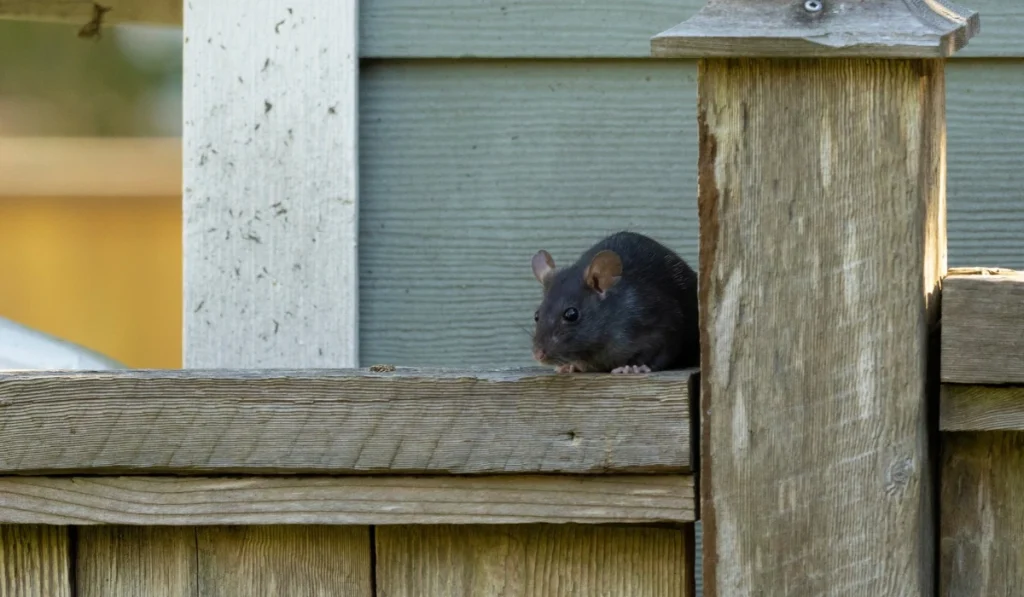
Roof rats in California are climbing rodents that often nest in attics, trees, and other elevated spaces, making them harder to find than rats that burrow near foundations. You might hear scratching above your bedroom ceiling at midnight, then find no sign of an animal the next morning. These rats use branches, fences, and overhead wires to reach buildings, where small gaps along the roofline can give them access.
Knowing how roof rats travel, what attracts them, and where they enter helps you recognize an infestation before the damage spreads. The most effective approach combines identifying the warning signs, reducing food and shelter, sealing entry points, and controlling rats already inside.
Key Takeaways
- Roof rats are skilled climbers. They commonly nest in trees, attics, and ceiling voids, using branches, fences, and utility lines to move between properties.
- Attic noises and damaged fruit are common warning signs. Roof rats also leave droppings, greasy rub marks, and gnaw damage that can affect wiring, insulation, and stored belongings.
- Lasting control requires more than trapping. Removing food sources, limiting overhead access, sealing openings, and using a professional trapping and exclusion plan help prevent repeat infestations.
What Are Roof Rats in California?
Roof rats have slender bodies, pointed noses, large ears, and long tails that help them balance while climbing. Adults generally weigh between 5 and 10 ounces. They’re mostly active after dark, which explains why homeowners often hear them without seeing them.
Unlike Norway rats, roof rats prefer elevated nesting areas. You’ll find them in attics, ceiling voids, trees, and dense vegetation, although they occasionally nest closer to the ground. Recognizing these habits can help you determine where to look for an infestation.
Roof Rat vs. Norway Rat vs. Mouse
Roof rats are easy to confuse with Norway rats or large mice, particularly when you only catch a quick glimpse. Their size, tails, and nesting habits offer useful clues.
| Feature | Roof Rat | Norway Rat | House Mouse |
| Adult weight | 5 to 10 ounces | 7 to 18 ounces | Usually less than 1 ounce |
| Body | Slender with pointed nose | Stocky with blunt nose | Small with pointed nose |
| Tail | Longer than head and body combined | Shorter than head and body combined | Long and thin |
| Common nesting areas | Attics, trees, ceiling voids | Burrows, foundations, lower floors | Cabinets, walls, storage spaces |
| Typical movement | Excellent climber, often travels overhead | Usually travels near ground level | Climbs and uses narrow openings |
Nesting location alone isn’t enough to confirm the species. Norway rats sometimes enter upper floors, and roof rats can occupy ground-level spaces.
Where Roof Rats Live and What Attracts Them
Roof rats are widespread in California’s cities and residential neighborhoods. Properties with mature trees, dense vegetation, and accessible food give them favorable conditions. In San Diego, Los Angeles, and the San Francisco Bay Area, citrus trees, palms, and ornamental landscaping can provide feeding areas and sheltered nesting sites.
According to the University of California Statewide Integrated Pest Management Program, roof rats routinely travel 300 feet or more searching for food. They generally produce 3 to 5 litters, with up to eight offspring per litter. That means a rat feeding in your yard may live several properties away, and an established population can grow when conditions remain favorable.
Fruit trees are a particular attraction. Roof rats feed on oranges, lemons, avocados, and nuts, sometimes hollowing out fruit while it’s still attached to the branch. Birdseed, outdoor pet food, and unsecured garbage provide additional meals, while ivy and thick shrubs offer places to hide.
How to Recognize Roof Rats in Your Attic
The first signs of roof rats in attic spaces often appear after sunset. You might hear quick footsteps above the ceiling, scratching near a wall, or movement along the rafters. These sounds can seem to come from different rooms as rats move through the structure.
Noise alone won’t identify the animal. Look for physical evidence in safely accessible areas, especially near attic vents, roof edges, and stored belongings. Finding several signs in the same location provides a stronger indication of roof rat activity.
Signs of a Roof Rat Infestation
| Warning Sign | What You Might Notice |
| Nighttime noises | Scratching or scurrying above ceilings and inside walls |
| Roof rat droppings | Dark, elongated pellets near nesting and travel areas |
| Greasy rub marks | Smudges along frequently used beams and openings |
| Gnaw marks | Chewed wood, storage boxes, or electrical cable coverings |
| Disturbed insulation | Shredded or displaced material around nesting sites |
| Chewed fruit | Hollowed citrus or bite marks on fruit still hanging from trees |
| Outdoor activity | Rats crossing fences, branches, or utility lines after dark |
Roof rat droppings typically measure around half an inch long and have pointed ends. Mouse droppings are smaller, while Norway rat droppings tend to be larger and more blunt-ended. Fresh droppings appearing after proper cleanup can help establish whether activity is continuing, but they won’t tell you exactly how many rats are present.
How Roof Rats Enter Through Rooflines and Vents
Once a roof rat reaches your house, it looks for an opening. Damaged attic vent screens, gaps near eaves, loose soffits, and spaces around utility penetrations can provide access to enclosed areas. These openings are easy to miss during a normal walk around the property.
Tree branches offer a direct route to roof edges, while fences and overhead wires help rats move between buildings. Palms and climbing vegetation can provide cover close to upper walls. Rats also climb rough exterior surfaces, so trimming a tree won’t necessarily eliminate every route.
Comprehensive rodent-proofing should address openings larger than one-quarter inch using suitable chew-resistant materials. Metal screening, sheet metal, and properly installed structural repairs provide more dependable protection than foam or ordinary caulk alone. Have a professional assess active entry points before sealing them to avoid trapping rodents inside.
What Damage Can Roof Rats Cause?
A roof rat infestation can develop above the living areas without anyone seeing a rat indoors. Meanwhile, gnawing and nesting activity may damage materials hidden behind ceilings and walls. The longer the animals remain, the more opportunities they have to contaminate storage areas and insulation.
Electrical Damage and Contamination
Roof rats gnaw on wood, packaging, and electrical cable coverings. Damaged wiring can create short circuits and fire hazards, particularly when conductors become exposed. If you discover chewed wires, avoid touching them and arrange an inspection with a qualified electrician.
Droppings and urine can contaminate attic insulation, stored clothing, cardboard boxes, and other belongings. Rodents may also carry pathogens that affect human health, although you can’t determine whether an individual rat carries a disease by looking at it.
How to Clean Up After Roof Rats Safely
The Centers for Disease Control and Prevention (CDC) advises homeowners not to sweep or vacuum untreated rodent droppings. Disturbing the waste can release contaminated particles into the air.
For limited waste on hard surfaces, wear gloves, thoroughly wet the material with an appropriate disinfectant, and follow the product’s contact time before wiping. The CDC specifies five minutes when using its recommended bleach solution, or the time stated on the disinfectant label. Extensive contamination and heavily soiled insulation may require professional cleanup with additional protective equipment.
How to Prevent Roof Rats and Avoid Common DIY Mistakes
Roof rat prevention starts with the areas surrounding your home. A well-maintained yard can still attract rodents when ripe fruit hangs from branches, birdseed collects beneath feeders, or vegetation provides concealed access to the roof.
Reducing these conditions makes your property less attractive and allows you to notice fresh activity more easily. Prevention also needs to address openings in the building itself, since rats already nesting indoors won’t leave simply because you’ve cleaned the yard.
Practical Roof Rat Prevention Measures
| Area | What to Do | Why It Helps |
| Trees | Keep branches at least three feet from the roof where practical | Reduces direct access to roof edges |
| Palm trees | Remove dead fronds and excess nesting cover | Limits sheltered nesting locations |
| Fruit trees | Harvest ripe fruit and collect fallen fruit | Removes accessible food |
| Bird feeders | Clean spilled seed and limit overnight access | Reduces predictable feeding opportunities |
| Pet food and garbage | Bring pet food indoors and use secure trash lids | Makes food harder to reach |
| Attic vents and soffits | Repair damaged screens and seal suitable openings | Helps prevent entry into enclosed spaces |
Why DIY Traps and Poisons Often Fail
Roof rats follow established travel routes, frequently along beams, ledges, and other elevated surfaces. A trap placed in the middle of an attic floor may never intercept them. Rats are also cautious around unfamiliar objects, making placement and monitoring especially important.
Poison creates different problems. Rodents may die inside inaccessible wall cavities, leaving homeowners with odors and difficult cleanup. Improper use can also expose pets and wildlife to harmful substances.
California restricts several anticoagulants. The California Department of Pesticide Regulation confirms that most uses of chlorophacinone and warfarin became prohibited on January 1, 2025. Other anticoagulants face restrictions, with specific legal exemptions. These rules make it especially important to confirm which treatment options are permitted for residential use.
What Professional Trapping and Exclusion Include
A professional roof rat control plan begins by identifying the species, locating active travel routes, and checking where rodents enter the building. Technicians inspect likely access points around attic vents, rooflines, and exterior gaps before recommending treatment.
Targeted trapping addresses rodents already present. Exclusion work closes entry points with suitable materials after active occupancy has been assessed, while follow-up monitoring checks for continuing activity. Landscaping and food-source recommendations help address conditions that could attract new rats.
Get Professional Roof Rat Control in California
Finding a rat in your attic tells you where the problem has reached, but not necessarily where it started. The opening may be on the opposite side of the roof, while the food attracting the animal could be in a neighboring yard. Effective roof rat control needs to account for the rats already inside, the routes they use to enter, and the conditions drawing them to the property.
That’s where Round the Clock Pest Services can help. Our technicians inspect rodent entry points, including attics and roof vents, and develop treatment plans around the activity they find. The company’s approach combines targeted rodent control, sealing accessible openings with durable materials, and monitoring for new activity. For homeowners dealing with hidden roofline gaps, that coordinated process offers a more practical solution than repeatedly placing traps without knowing how rats are getting inside.
If you’re hearing scratching overhead, finding droppings, or spotting rats near your roof, contact Round the Clock Pest Services to schedule a rodent inspection. Identifying the entry points and choosing the right treatment plan can help you keep roof rats out of your California home.
Roof Rats in California: FAQs
Are roof rats common in California?
Yes. Roof rats are widespread throughout California, particularly in urban and suburban areas with mature trees, dense landscaping, and accessible food. They are found in coastal communities and inland neighborhoods. Both roof rats and Norway rats occur across the state, although their relative numbers vary by location and habitat.
How do I know if I have roof rats in my attic?
Common signs include scratching or scurrying after dark, droppings near rafters, greasy rub marks, gnawed materials, and disturbed insulation. You may also notice rats moving along your roof or nearby branches at night. A professional inspection can help confirm the species and locate nesting areas or entry points.
Can roof rats climb walls and enter through the roof?
Yes. Roof rats can climb rough exterior walls, pipes, vegetation, and other surfaces. They also use branches, fences, and overhead wires to reach roofs. Once there, damaged vents, loose soffits, and openings around utility connections may allow them inside. Keeping vegetation away from buildings and sealing entry points helps reduce access.
Do roof rats leave the attic during the day?
Roof rats are mostly nocturnal, so they generally remain hidden during daylight and become more active after sunset. They may leave an attic at night to search for food or water. Daytime sightings can occur, however, and do not necessarily indicate a particular infestation size or severity.
What is the most effective way to get rid of roof rats?
Effective control combines properly placed traps, identification and sealing of entry points, removal of accessible food, and follow-up monitoring. Trapping alone may reduce the existing population without preventing new rats from entering. A professional inspection helps determine where the rats travel and what exclusion work the property needs.