
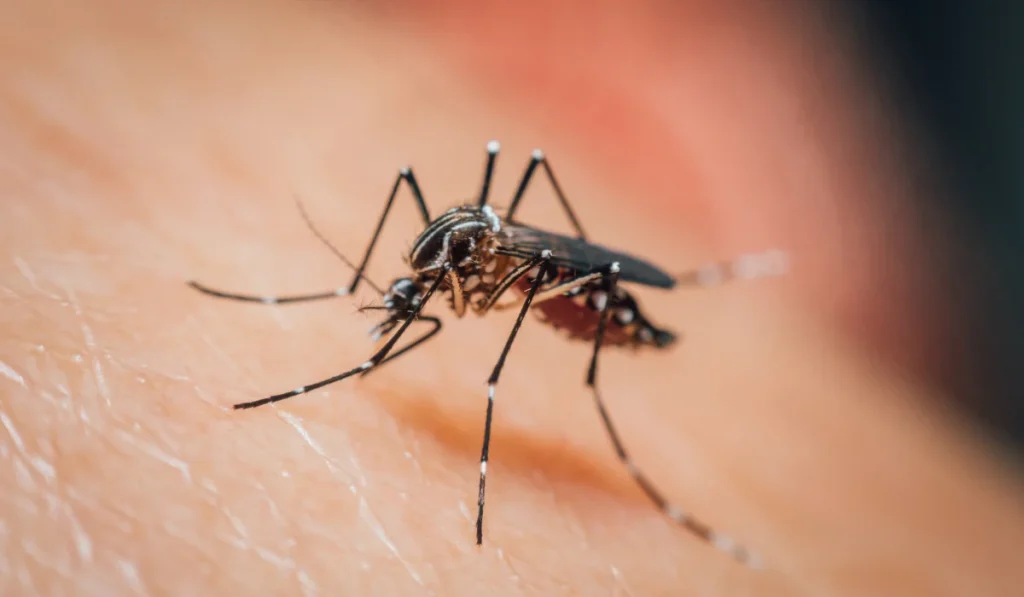
You step outside to water the plants and feel a bite near your ankle. Before you finish with the hose, another one shows up. Mosquitoes in California include familiar evening biters and invasive mosquitoes that stay active during the day, live close to homes, and can reproduce in very small pockets of standing water.
You do not need to identify every mosquito you see. It helps to know which types are common, when they bite, where mosquito breeding happens around a home, and what actually reduces the problem. Here is what California homeowners should know.
What Mosquitoes in California Are You Most Likely to See?
California supports far more mosquitoes than most people realize. The UC Statewide Integrated Pest Management Program (IPM) reports that more than 50 mosquito species occur across the state, from low desert areas to mountain meadows above 10,000 feet.
Most of those mosquito species in California never become a regular backyard problem. Around homes, the useful distinction is usually between invasive daytime mosquitoes and the more familiar Culex mosquitoes associated with evening activity and West Nile virus.
| Mosquito Type | When You May Notice Bites | Common Breeding Areas | Why It Matters |
|---|---|---|---|
| Yellow fever mosquito | Mainly during the day | Plant saucers, buckets, toys, and small containers | Aggressive biting around people and homes |
| Asian tiger mosquito | Mainly during the day | Small containers and shaded water sources | Invasive mosquito that adapts well to residential areas |
| Culex mosquitoes | Often near dusk, overnight, and around dawn | Drains, neglected pools, standing water, and larger water sources | Main mosquito group involved in West Nile virus transmission in California |
Why People Call Some Mosquitoes “Ankle Biters”
You may be pulling weeds, grilling, or standing beside the patio when several mosquito bites appear around your socks. The small invasive mosquitoes behind many daytime complaints are often called “ankle biters” because bites commonly show up around the feet and lower legs.
Ankle biter is a nickname, not a separate type of mosquito. The yellow fever mosquito is one common culprit. These mosquitoes are dark with noticeable white markings and are comfortable living close to people.
They also do not need much room to reproduce. Containers scattered around a yard can give them the water they need, which means the mosquitoes biting you may have developed only a short distance from the patio.
What About Evening Mosquitoes?
If your mosquito problem starts when you sit outside for dinner or take the dog out after sunset, you may be seeing Culex mosquitoes.
These mosquitoes tend to be more active around dusk, dawn, and nighttime. They also matter because several members of this group are responsible for most West Nile virus transmission in California.
Why Invasive Mosquitoes Are Showing Up in More California Communities
Daytime mosquitoes have changed what mosquito season feels like in many neighborhoods. You may remember mosquitoes becoming noticeable after sunset and now find yourself swatting them away in the middle of the afternoon.
The California Department of Public Health’s invasive mosquito detection records, updated May 1, 2026, document yellow fever mosquitoes in many parts of the state. Listed counties include Los Angeles, San Diego, Contra Costa, Alameda, Santa Clara, Orange, Riverside, Sacramento, San Bernardino, and Ventura.
| California Area | Yellow Fever Mosquito Recorded by CDPH? | Example in State Records |
|---|---|---|
| Los Angeles County | Yes | Numerous communities across the county |
| San Diego County | Yes | Carlsbad, Chula Vista, Coronado, El Cajon, and others |
| Contra Costa County | Yes | Antioch |
| Alameda County | Yes | Livermore |
| Santa Clara County | Yes | San Jose |
A county detection does not mean every block has the same mosquito pressure. One property may have open, dry landscaping, while another nearby has thick foliage, frequent irrigation, and several small containers that stay wet.
That is why California mosquitoes can feel like a hyperlocal problem. Mosquitoes may be breeding in your yard, next door, or in another nearby spot you cannot easily see.
Where Mosquitoes Breed Around California Homes
You finish watering and the patio looks dry. Beneath a flowerpot, however, water is still sitting in the saucer. A toy left beside the lawn holds another shallow puddle. Leaves in a gutter have trapped enough water to keep the bottom wet.
Those small spots matter because mosquito larvae live in water. Eggs hatch, larvae develop, pupae form, and adult mosquitoes eventually fly away from the breeding source. Under warm conditions, that cycle can move quickly.
Standing Water Can Be Easy to Miss
A mosquito breeding site does not need to resemble a pond. UC IPM notes that some invasive mosquitoes can develop in extremely small amounts of standing water, including an amount as small as what may collect in a bottle cap.
That makes ordinary yards full of potential breeding sites. The most useful mosquito prevention step is to find the water before mosquito larvae have time to become adults.
| Check This Spot | What May Be Happening | What to Do |
|---|---|---|
| Flowerpots and saucers | Irrigation leaves water behind | Empty excess water and clean the saucer |
| Buckets and containers | Rain or sprinklers slowly fill them | Store empty containers upside down |
| Bird baths | Water sits for several days | Replace the water regularly |
| Children’s toys | Curves and recesses collect water | Drain them after watering or rain |
| Gutters | Leaves prevent full drainage | Clear debris and check downspouts |
| Rain barrels | Mosquitoes can reach stored water | Keep openings screened |
| Tarps and covers | Folds create shallow pools | Pull covers tight and remove water |
| Irrigation areas | Leaks or overwatering create puddles | Repair leaks and adjust watering |
Dry Weather Does Not Rule Out Mosquito Breeding
California yards can provide water even when rain has not fallen for weeks. Irrigation is often enough.
Look around hose fittings, sprinkler heads, frequently watered plants, low sections of concrete, and drains that do not empty completely. If the same area becomes wet every morning, mosquitoes may not need rain at all.
When Is Mosquito Season in California?
There is no single start and finish date for mosquito season in California. The state includes cool coastal communities, hot inland valleys, deserts, mountains, and areas with very different rainfall patterns.
Temperature and water availability have a major influence on mosquito activity. Warmer conditions usually support faster development, while irrigation can keep breeding sites available long after seasonal rain has stopped.
Daytime Mosquitoes Follow a Different Schedule
Getting bitten at 2 p.m. does not mean you are imagining things. Yellow fever mosquitoes and Asian tiger mosquitoes can bite during daylight hours.
That matters when you plan mosquito protection. If you wait until an evening barbecue to use mosquito repellent, you may already have spent several hours exposed while gardening, playing with your kids, or working outside.
Culex mosquitoes tend to become more active later in the day. Bite timing will not identify a mosquito with certainty, but it gives you a useful clue about the type of activity happening around your property.
What Health Risks Come With California Mosquitoes?
Most mosquito bites leave a small itchy bump and nothing more. The larger concern is that some mosquito species can transmit viruses after becoming infected.
Seeing a mosquito that is capable of transmitting disease does not mean that individual insect carries a virus. It first has to acquire the pathogen from an infected host before it can pass it along.
West Nile Virus Is California’s Main Established Mosquito-Borne Disease
West Nile virus remains the most established mosquito-borne disease concern in the state. Culex mosquitoes are the primary vectors, while birds play an important role in the natural transmission cycle.
California’s official West Nile Virus surveillance program reported the following figures as of August 21, 2026:
| 2026 California West Nile Virus Activity | Reported Count |
|---|---|
| Human cases | 46 |
| Counties with human cases | 14 |
| Positive mosquito samples | 2,644 |
| Counties with positive mosquito samples | 29 |
| Positive dead birds | 437 |
| Reported West Nile-related fatalities | 4 |
Those numbers change as mosquito surveillance continues. The longer history puts the risk in better context. California has recorded more than 8,000 human West Nile virus cases and more than 400 deaths since 2003.
What About Dengue, Zika, and Chikungunya?
Some invasive mosquitoes can transmit dengue, Zika, and chikungunya when the right conditions exist. That ability is one reason California public health agencies and local vector control districts monitor invasive mosquito populations closely.
You should not assume that a daytime mosquito bite means you were exposed to one of these diseases. The practical steps are much less dramatic: limit mosquito bites, remove breeding water, and pay attention when activity around your home becomes unusually heavy.
How to Prevent Mosquitoes and Reduce Bites Around Your Home
Start with a short walk around your property. Do not scan only the lawn for obvious puddles. Look beneath pots, behind outdoor furniture, around drains, beside the hose, near trash cans, and anywhere sprinklers can reach.
Dump water that does not need to stay. Keep gutters clear, repair irrigation leaks, screen stored-water containers, and check the yard again after rain or watering. Effective mosquito control in California often begins with this kind of source reduction rather than simply treating the adult mosquitoes you can see.
Make Yourself Harder to Bite
Use mosquito repellent according to the label when mosquitoes are active. With daytime mosquitoes, that may mean putting it on before you garden or spend an afternoon outside instead of waiting until dusk.
Repair damaged door and window screens, and cover exposed skin when it makes sense for the weather. A fan can also help around a small patio because mosquitoes are weak fliers and have more trouble reaching you in steady moving air.
These steps help with bites, but they do not replace mosquito breeding control. Repellent protects the person. Removing standing water reduces the next generation.
Getting Your Yard Back From Mosquitoes
You can empty a bucket, clear a gutter, and fix a dripping sprinkler on your own. The harder problem starts when mosquitoes keep coming back even after you have removed the obvious standing water. They may be resting deep in vegetation, breeding in a hidden source, or moving onto your property from nearby yards.
Professional mosquito control can help when that happens because the service goes beyond swatting adults or treating one puddle. Round the Clock Pest Services can inspect the property, identify conditions that may be supporting mosquito activity, and use a treatment plan designed for the yard rather than relying on a single DIY fix.
If mosquito bites are keeping you from using your patio, lawn, or garden, contact Round the Clock Pest Services to schedule mosquito control. The goal is not to make unrealistic promises about eliminating every mosquito. It is to reduce the conditions and activity that keep turning your outdoor space into a feeding area.