
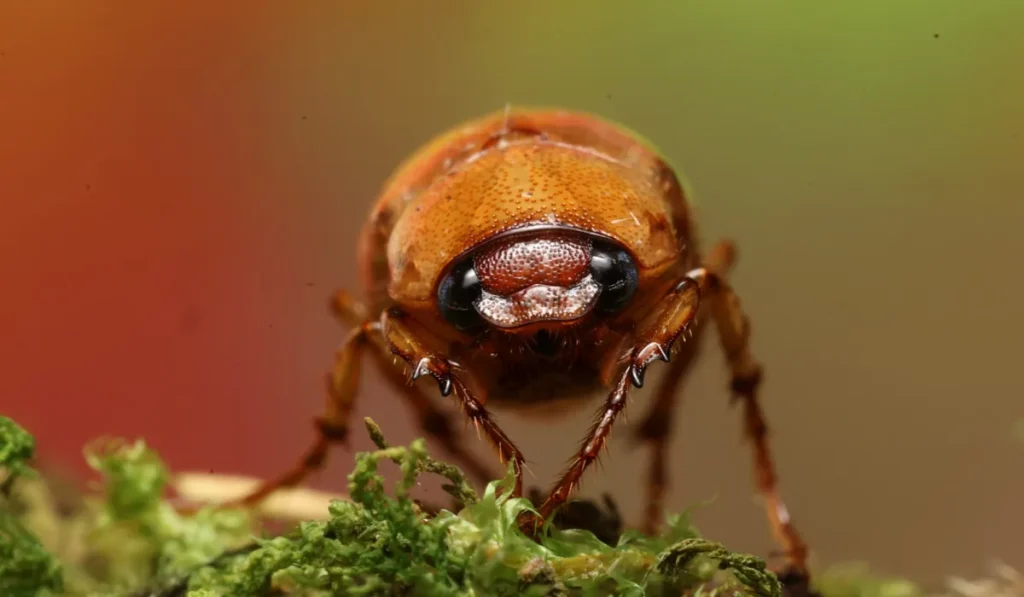
June bugs in California are mostly harmless beetles that appear around outdoor lights during late spring and summer. But some species have root-feeding larvae that can damage lawns, leaving brown patches even when the grass gets enough water.
You might notice the adults after one makes a noisy crash landing against your porch screen, or discover their C-shaped grubs while digging in the yard. Either way, identifying the beetle and knowing when it’s active will help you decide whether to leave it alone, adjust your lawn care, or look into treatment.
Key Takeaways
- Adult June bugs are usually more annoying than harmful. They don’t sting, and most encounters around porch lights don’t require pest control.
- Some June bug grubs can damage lawns. Root-feeding larvae may cause irregular brown patches, spongy turf, and grass that pulls away from the soil.
- Identification and timing matter more than immediate treatment. Managing outdoor lights, maintaining healthy turf, and checking for grub damage can prevent unnecessary treatments.
What Are June Bugs in California?
June bug is a common name for several beetles belonging to the scarab family. Some are brown and active at night, while others are metallic green and spend their time around gardens and fruit trees.
California has several beetles that homeowners may call June bugs. Their differences matter because the beetle flying around your porch isn’t necessarily the one responsible for damaged grass.
Common June Beetles and Look-Alikes
| Beetle Type | What It Looks Like | Where You Might Find It |
| Ten-lined June beetle | About 1 inch long, brown with pale stripes along its back | Around trees and outdoor lights during summer evenings |
| Masked chafer | Golden-brown body with a darker head | Near exterior lights, lawns, and landscaped areas |
| Figeater beetle | Large, metallic green with tan edges and a loud buzzing flight | Around ripe fruit, gardens, and compost |
| Other May and June beetles | Rounded, brown or reddish-brown beetles | Near trees, shrubs, and outdoor lights after dark |
Figeater beetles are easy to recognize by their shiny green bodies. You may spot one buzzing around a fig tree in Los Angeles or flying across a garden in Walnut Creek.
Masked chafers are less noticeable, but their larvae deserve attention if you maintain a lawn. They’re among the California scarab beetles associated with turfgrass root damage.
When Is June Bug Season in California?
June bugs don’t follow a strict calendar. Many start appearing as temperatures warm in late spring, but their activity depends on the species and local conditions.
Masked chafer males are especially active from mid-June through July, while ten-lined June beetles may emerge from late June through September. That explains why you can still encounter these insects well after June ends.
California June Bug Seasonal Timeline
| Season | What Homeowners May Notice |
| Spring | Some beetles begin emerging as the weather warms. Others remain underground as larvae or pupae. |
| June and July | Masked chafers become more active around outdoor lights, especially after dark. |
| July through September | Ten-lined June beetles and figeaters may appear near trees, gardens, and landscaped yards. |
| Late summer and fall | Root-feeding grubs can cause visible turf damage as affected grass loses its ability to absorb water. |
| Winter | Adult sightings become uncommon, although some species continue developing underground. |
These seasonal patterns aren’t identical across California. A warm inland property in the San Fernando Valley may experience different beetle activity than a cooler coastal neighborhood in San Francisco.
Why Are June Bugs Attracted to Light?
If you’ve watched a June beetle circle the same porch bulb several times, you know they aren’t particularly graceful flyers. Many nocturnal beetles respond to artificial lighting, which can interfere with their movement after dark.
Bright fixtures near doors and windows attract attention from passing beetles. They may bump against screens, land on the porch, or slip inside when someone opens the door. Turning off unnecessary lights can reduce these encounters without requiring any pest treatment.
Are June Bugs Harmful to People, Pets, and Plants?
June beetles look more intimidating than they are. Most aren’t aggressive, and the typical June bugs encountered around California homes don’t bite or sting people.
Plants are a different story. Certain adults feed on foliage or fruit, while some larvae feed underground on roots. The kind of damage depends on which beetle is present.
| Concern | What You Should Know |
| People | June beetles don’t attack people. Their clumsy flight may cause accidental collisions. |
| Dogs and cats | Pets sometimes chase or swallow beetles, which can cause stomach upset. |
| Trees and shrubs | Some adults chew leaves. Heavy feeding may affect young or vulnerable plants. |
| Fruit trees | Figeater beetles can feed on ripe figs, peaches, grapes, and other soft fruit. |
| Lawns | Certain beetle larvae feed on grass roots and may cause damage when their numbers increase. |
Not Every White Grub Damages Your Lawn
A curled white grub found in soil isn’t automatically eating your grass. Some beetle larvae feed on decaying material instead of living roots.
According to the UC Statewide IPM Program, figeater larvae develop in decomposing organic matter and don’t damage living plants. Adults, however, sometimes feed on ripe fruit.
This distinction matters if you find large grubs in compost or under accumulated grass clippings. Their presence alone doesn’t establish a lawn infestation.
How June Bugs Develop and Damage Lawns
June beetles pass through four life stages: egg, larva, pupa, and adult. Much of their development happens underground, where homeowners rarely notice them.
The time required to mature varies. Masked chafers typically complete one generation per year, while ten-lined June beetles need approximately two years to develop into adults.
The June Bug Life Cycle
| Stage | What Happens |
| Egg | Female beetles lay eggs in suitable soil or organic material, depending on the species. |
| Larva | Eggs hatch into C-shaped grubs that feed on roots or decomposing matter. |
| Pupa | Mature larvae change into pupae underground as their adult bodies develop. |
| Adult | Beetles emerge, mate, and produce another generation. |
Signs of June Bug Grub Damage
Root-feeding grubs can weaken grass by damaging the roots that absorb water and nutrients. The first symptoms often resemble drought stress, which makes the problem easy to overlook.
You may notice a brown patch that doesn’t improve after watering. In more heavily affected areas, the turf can feel loose because its roots no longer hold it firmly in place.
| Warning Sign | What to Look For |
| Irregular brown patches | Sections of grass turn brown despite receiving adequate water. |
| Spongy turf | The ground feels unusually soft where roots have been damaged. |
| Grass lifting easily | Affected turf pulls away from the soil like a loose carpet. |
| Birds or raccoons digging | Wildlife may be searching for grubs beneath the lawn. |
| C-shaped white grubs | Pale larvae with brown heads and small legs appear around grass roots. |
How Many Grubs Are Too Many?
The UC Statewide IPM Program reports that ordinary turfgrass can generally tolerate up to six grubs per square foot. Highly maintained golf greens have a much lower threshold of more than one grub per square foot.
These figures aren’t automatic treatment rules. The beetle species, condition of the grass, and amount of visible damage all influence whether control is necessary.
To investigate, carefully lift a small section of turf near a damaged patch and inspect the soil around the roots. Check several spots. If you find few grubs and healthy roots, look for other causes, including uneven irrigation or lawn disease.
How to Prevent June Bugs Around Your California Home
You don’t need to treat every beetle that appears during summer. For most homeowners, preventing unwanted encounters starts with outdoor lighting and basic yard maintenance.
Lawn prevention requires a different approach. Healthy grass can better tolerate limited root feeding, while regular inspections help you catch developing problems before large areas become damaged.
Reduce Outdoor Lighting That Attracts Beetles
A brightly lit porch can draw beetles toward your home. A few changes can make your entrance less attractive without leaving walkways completely dark.
| Prevention Method | How It Helps |
| Turn off unused lights | Reduces unnecessary lighting that may attract flying beetles. |
| Install motion sensors | Keeps exterior fixtures off when nobody needs them. |
| Choose warm-colored bulbs | Some insects respond less strongly to warmer lighting than cool-colored light. |
| Direct fixtures downward | Limits light spreading toward nearby trees, shrubs, and windows. |
| Repair window screens | Helps keep wandering beetles outside. |
Maintain Healthy Grass and Manage Moisture
Grass that’s already stressed by poor watering or mowing has a harder time recovering from root damage. Water according to your grass type, soil conditions, and local restrictions rather than keeping the ground constantly wet.
Inspect sprinkler coverage for dry corners and areas receiving too much water. Mow at the recommended height for your turf and avoid overfertilizing, which can create additional lawn stress. These habits won’t eliminate grubs, but they can improve your lawn’s ability to tolerate some feeding.
Remove Conditions That Attract Fruit-Feeding Beetles
If green figeaters keep gathering around your fruit trees, pick ripe fruit promptly and remove fallen fruit from the ground. Avoid leaving large piles of decaying grass clippings or unmanaged compost near fruit trees.
Ten-lined June beetles present a different concern. The UC IPM ten-lined June beetle guidelines describe larvae that can feed on tree roots and remain deep underground. Their development takes approximately two years.
That difference is why identifying the beetle matters before choosing a treatment. A method intended for turfgrass grubs may not address beetles developing around tree roots.
When to Call Round the Clock Pest Services
A few June beetles flying around your porch usually don’t require professional treatment. However, recurring brown patches, loose turf, or large numbers of root-feeding grubs deserve a closer look. An inspection can help identify the cause before you spend money on treatments that may not be necessary.
Round the Clock Pest Services provides general pest control services for homeowners throughout Los Angeles, the San Fernando Valley, and the San Francisco Bay Area, including Walnut Creek. Our technicians can inspect affected areas, identify pest activity, and recommend appropriate next steps based on the conditions they find.
Getting ahead of June bug problems in California starts with knowing what you’re dealing with. If unexplained lawn damage keeps returning or beetle activity has become difficult to manage, contact Round the Clock Pest Services to request a quote and discuss a yard pest inspection.
Frequently Asked Questions About June Bugs in California
Do June bugs bite or sting?
Typical June beetles don’t bite or sting people. Although their size and noisy flight can be startling, they aren’t aggressive insects. Most encounters happen when a beetle accidentally flies into someone or lands nearby. You can usually leave it alone or gently move it outdoors.
Why are June bugs attracted to my porch light?
Many June beetles are nocturnal and respond to artificial light. Bright outdoor fixtures can draw them toward windows, doors, and porches, where they may repeatedly circle or collide with surfaces. Turning off unnecessary lights, using motion sensors, and choosing warmer lighting can help reduce these nighttime visitors.
Can June bugs fly into my house?
Yes. Adult June beetles sometimes enter through open doors, windows, or damaged screens, especially when indoor lighting is visible from outside. Finding one indoors doesn’t mean you have an infestation. You can collect the beetle in a container, release it outside, and check nearby screens for gaps.
How do I get rid of June bug grubs in my lawn?
Start by confirming that root-feeding grubs are causing the damage. Inspect the soil beneath affected turf and look for C-shaped larvae around the roots. Not every grub requires treatment. If damage continues or grub numbers are high, a pest control professional can identify the species and recommend appropriate management.