
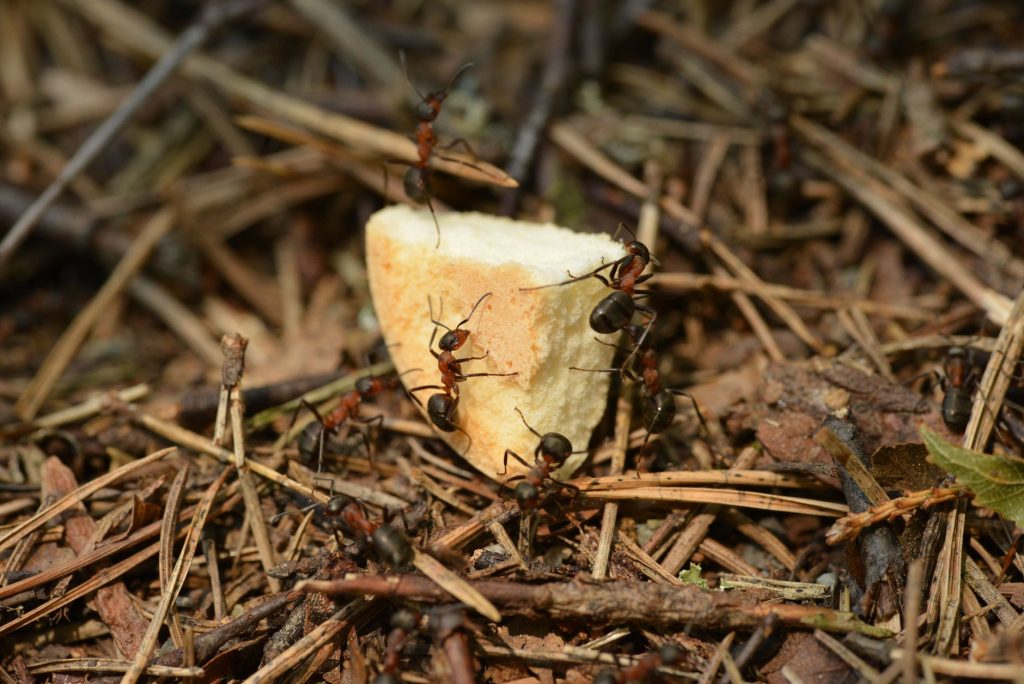
Carpernter ants can cause costly problems. Learn the signs, risks, how to get rid of carpenter ants, and when to call Round the Clock Pest Serv.
Key Takeaways
- Carpenter ants nest in wood but do not feed on it, so the signs of an infestation can look different from what you might expect with other wood-damaging insects.
- Moisture and decaying wood around your house can attract carpenter ants, making inspection and moisture control important first steps.
- A colony may include a parent nest outdoors and satellite nests indoors, so addressing only the ants you see inside may not resolve the problem.
- When a nest cannot be physically removed, working with a professional is often the practical next step for treating carpenter ants in your home.
How to Identify Carpenter Ants
Before you can figure out how to get rid of carpenter ants, you need to confirm what you’re dealing with. Knowing the species, recognizing the signs of a nest, and understanding where these ants tend to show up will help you focus your inspection in the right places.
How to Tell Ant Types Apart
Carpenter ants are not the only ant species that nest in wood. According to Texas A&M AgriLife Extension, the acrobat ant (Crematogaster sp.) also nests in stumps, dead wood, and under stones, and it occasionally invades homes. Because these species can look similar at a glance, accurate identification matters before choosing next steps.
Look closely at body shape and nesting behavior. Acrobat ants may also make nests in trees, so the nest location alone is not always enough to tell species apart. If you are unsure which ant you are seeing, a service professional can help confirm the species.
How to Spot Carpenter Ant Activity Inside Your Home
Indoors, carpenter ant colonies are often located in cracks between structural timbers. The ants can also tunnel into structural wood to form nesting galleries, though according to Texas A&M AgriLife Extension, this tunneling behavior is rare with some species. They may prefer moist or decaying wood, wood with dry rot, or old termite galleries.
Watch for small piles of wood shavings near baseboards, door frames, or other timber joints. Foraging workers moving along consistent trails inside your home can also point to a nest nearby.
Where Carpenter Ant Activity Shows Up Around Homes
The parent nest is usually found outdoors. According to the University of Minnesota Extension, these nests are typically in decaying wood in trees, tree roots, tree stumps, and logs or boards lying on or buried in the ground. Checking these areas around your property is a practical first step in any inspection.
Because carpenter ants may prefer wood that is already moist or deteriorating, pay attention to areas where moisture collects near your home’s exterior.
Exterior Entry Points Carpenter Ants Use
Carpenter ants follow consistent paths between outdoor nest sites and indoor food sources. Look for foraging trails along the foundation, near where branches or decaying wood contact your home’s structure, and around areas where moisture has softened wood over time.
Logs, boards, and stumps close to the foundation can serve as a parent nest site and a launching point for ants entering your home. Removing or relocating decaying wood away from the structure can reduce the chance of ants finding their way inside.
Why Carpenter Ant Problems Develop
Understanding why carpenter ants show up in and around your home is the first step toward addressing the problem. These ants follow predictable patterns when nesting, foraging, and expanding their territory. Knowing where they come from and how they move can help you focus your inspection efforts in the right places.
Outdoor Nesting Areas for Carpenter Ants
Carpenter ant problems typically start outside. According to UC IPM, the nests they construct indoors are typically satellites of a larger, parent nest located outside in a live or dead tree, a woodpile, or landscaping materials. That parent colony is the source, and indoor activity often traces back to it.
A single parent nest can support several satellite colonies. The queen or queens reside in the parent nest, while satellite nests are typically composed of workers, pupae, and mature larvae. This network structure means treating only what you see indoors may not address the full problem.
Food and Shelter That Attract Carpenter Ants
Worker ants from outside or inside nests may forage for food and water inside your home. Foraging workers of some species secrete pheromone trails to lead other ants to food and water sources. Once a trail is established, ants take food back to the colony and share it with other ants, including the queen and brood.
Because carpenter ants are nocturnal, you may not notice foraging activity during the day. Black carpenter ants are the largest of Georgia’s pest ants, ranging from 1/4 to 5/8 inch, which can make them easier to spot when they do appear at night.
How Carpenter Ants Move Around Homes
Often, carpenter ant nests found indoors are satellite nests that can be traced back to a parent colony outdoors. Parent colonies sometimes establish one or more satellite nests in nearby indoor or outdoor sites, and workers move frequently between the satellite and parent locations.
According to UC IPM, several satellite nests can be associated with a single parent nest. In the case of C. vicinus, a single nest can have as many as 40 queens, which illustrates how complex these colony networks can become.
Trails and Entry Points Carpenter Ants Use
Foraging workers follow pheromone trails between nesting sites and food or water sources. These trails can reveal the paths carpenter ants use to enter your home. Watching for ant movement along consistent routes, especially after dark, can help you identify likely entry points and trace activity back toward the parent colony outdoors.
Risks From Carpenter Ants
Health Risks Linked to Carpenter Ants
Carpenter ants do not sting, but they can bite. According to the Mississippi State University Extension, black carpenter ants can also spray formic acid when disturbed. While these pests are not disease carriers, a bite paired with formic acid can be uncomfortable, especially if you accidentally contact a nest during a DIY removal attempt.
Understanding this distinction matters when you decide how to handle these pests. Rushing into an untreated wall void or pulling apart damp wood without preparation may expose you to defensive bites from workers protecting the colony.
Property Damage From Carpenter Ants
Carpenter ant workers do not eat wood. Instead, they excavate smooth galleries inside it to raise their young. According to the University of Tennessee Extension, piles of coarse sawdust or splintered wood near wooden structures indicate a nest nearby. Over time, this tunneling weakens the wood from the inside, even though the surface may still look intact.
Nests in buildings are usually located in moist or decaying wood, though these pests can occasionally tunnel into sound, dry wood as well. Indoor infestations often point to some type of moisture problem resulting from structural or plumbing leaks. That means the damage you see from carpenter ants may be layered on top of an existing moisture issue that also needs attention.
Food Areas and Carpenter Ant Activity
Foraging worker ants leave the nest and seek foods such as insects, decaying fruit, and honeydew. When these foraging workers enter your home, they can become a nuisance in kitchens and other food-preparation areas. Keeping food sources managed is one way to reduce the draw for these pests, though foraging alone does not confirm a nest is inside your home.
When to Look Closer at Carpenter Ant Activity
Dead insects falling from a wooden porch may indicate a carpenter ant nest above. Sawdust piles near baseboards, door frames, or other wood elements are another sign worth investigating. These pests usually nest in damp wood, so areas around plumbing or past leaks deserve close attention.
Winged male and female reproductives may swarm from a colony at certain times. Seeing winged carpenter ants indoors suggests an established nest nearby. Rather than assuming the problem is limited to one spot, a thorough look at moisture-prone wood throughout your home can help you understand how far these pests have spread.
Professional Pest Control for Carpenter Ants
Carpenter ants do not consume wood the way termites do. Instead, they hollow it out to form nests. While usually not as serious as termites, carpenter ants can weaken building structures over time, according to Purdue Extension. That makes locating and addressing the nest a priority for any homeowner dealing with these ants.
How to Reduce Attractants for Carpenter Ants
Moisture problems and decayed wood are two conditions that draw carpenter ants indoors. Replacing damaged or decayed wood and addressing moisture issues are key parts of long-term carpenter ant control. Without removing the conditions that attracted the colony in the first place, the problem is likely to return.
Houses built on concrete slabs often have serious ant problems. Ants can nest under the slabs and enter through cracks, heating ducts, and utility openings. Sealing those entry points helps reduce the chances of carpenter ants moving inside your home.
Why Carpenter Ant Control Starts With Inspection
To address carpenter ants nesting indoors, you need to locate and destroy their nest. This is often challenging because nests are hidden and not easily discovered. Careful observation of worker ants can help you find the nest. As the University of Minnesota Extension notes, watching worker ants between sunset and midnight during spring and summer months is a practical way to trace their path back to the colony.
Tracking ant activity takes patience, and results are not always immediate. If you cannot pinpoint the nest through observation alone, a trained service professional can help narrow the search.
What to Expect During Professional Carpenter Ant Treatment
One approach is to try removing the wood that contains the parent colony. When that is not possible, a professional can treat the carpenter ant nest directly. Professional pest control may be needed for carpenter ants, especially in homes built on concrete slabs where nests can be difficult to reach beneath the foundation.
According to the University of Minnesota Extension, the best way to control carpenter ants is to locate and destroy the nest, replace damaged or decayed wood, and address any moisture problems. A professional inspection helps confirm the nest location before treatment begins.
What to Expect From a Carpenter Ant Control Plan
Round the Clock Pest Services is a woman-owned and operated company focused on quality, communication, and customer satisfaction. Before arriving at your home, a team member contacts you so you know what to expect and when.
A thorough carpenter ant control plan pairs nest removal with the conditions that led to the problem. That means identifying moisture sources, replacing decayed wood, and monitoring for returning activity. Because carpenter ant nests are often hidden, ongoing observation is an important part of keeping your home protected.
How to Get Rid of Carpenter Ants: Bottom Line
Getting rid of carpenter ants comes down to finding and addressing the nest, fixing moisture issues, and replacing any damaged wood. Careful observation of worker ant activity can help you trace their path back to the nest, but because nests are often hidden and hard to reach, many homeowners find that professional help is the practical next step. If you are dealing with carpenter ants in your home, contact Round the Clock Pest Services for a thorough assessment.
Frequently Asked Questions
Why Is It So Hard to Find the Nest?
Carpenter ant nests are often concealed inside structural wood or other hidden areas, making them difficult to discover without careful inspection. Watching where worker ants travel, especially during evening hours, can provide clues about the nest location.
Do Carpenter Ants Eat Wood?
No. Carpenter ants hollow out wood to create nesting space, but they do not consume it. While they are usually not as destructive as termites, they can weaken building structures over time.
Can Carpenter Ants Come From Trees Near My Home?
Yes. Carpenter ants may use knots, cracks, holes, and old insect tunnels to enter weakened or decayed parts of trees. If colonies in nearby trees are producing ants that move indoors, controlling the outdoor source is an important part of the process.
When Should I Call a Professional?
If you cannot locate or access the nest on your own, a pest management professional can help. Homes built on concrete slabs, for example, may have ants nesting beneath the slab and entering through cracks or utility openings, which can require professional-level treatment.