
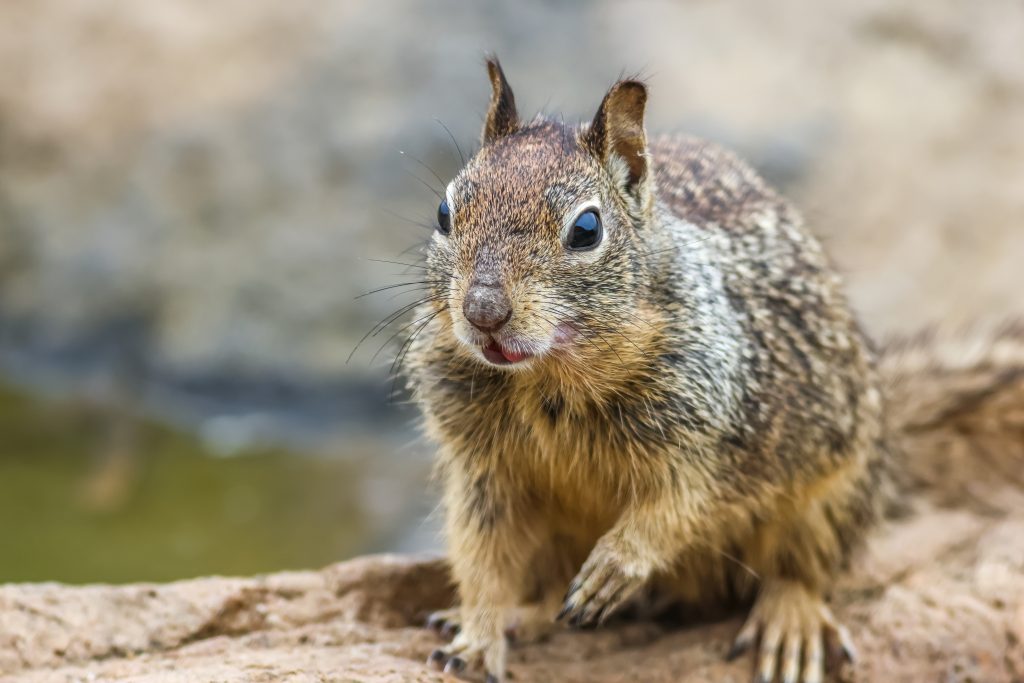
You walk out to the yard and notice a fan of loose dirt piled next to a wide burrow opening. A moment later, something bolts across the grass and drops out of sight, not up into a tree, just gone underground. That’s usually a ground squirrel in California, a common sight from the Central Valley to coastal hillside neighborhoods.
A ground squirrel rarely shows up alone. These rodents dig connected tunnel systems that can run several feet underground, and where conditions are right, entire colonies settle into a single stretch of yard, hillside, or open lot. One visible opening can connect to a larger network, especially alongside fresh soil, repeated daytime activity, or nearby entrances. Not every hole in the yard signals a colony, but it’s worth a second look before assuming a single visitor.
This guide covers what a ground squirrel in California does through the seasons, the clearest field signs of an active colony, how to tell one apart from a tree squirrel or gopher, and when a burrow has grown past what sealing and cleanup alone can fix.
Key Takeaways
- Fan-shaped dirt mounds, several connected burrow openings, and daytime sightings near open ground point to an active colony rather than a single passing squirrel.
- Squirrels stay busiest from spring through fall and can carry fleas linked to plague in parts of California, so leave burrows unhandled.
- Chewed irrigation lines, gnawed plants, and repeated soil disturbance may continue until the active animals and the conditions attracting them are addressed.
- A property-wide inspection can identify more signs of activity than focusing on one visible opening alone.
Ground Squirrel Habits and Seasonal Activity in California
Ground squirrel activity in California follows a rhythm shaped by heat, daylight, and location, which matters if you’re trying to figure out whether a burrow is currently active. A yard that looks quiet in December can show fresh digging again within weeks once temperatures rise, while inland activity often slows for stretches during peak summer heat. Knowing the pattern for your part of the state helps with timing an inspection: catching a colony early is easier than dealing with one that has already spread.
Activity by Region
Along the coast and in Southern California, ground squirrels can stay active nearly year-round. Inland, where summers run hotter and winters cooler, they go dormant twice a year: once during the driest part of summer, and again through winter, usually re-emerging as temperatures rise in January.
These animals are active only during daylight hours, basking in the morning or afternoon sun during spring and summer before retreating below ground once midday heat sets in.
This timing matters when deciding whether a burrow is still in use. Fresh mounds in a coastal or Southern California yard in the middle of winter aren’t unusual because these populations stay above ground through the cooler months. Inland, a burrow that was active over summer and then goes quiet isn’t necessarily abandoned; it could just as easily reflect a seasonal dormancy period, with activity likely to resume as the weather warms.
Breeding and Growth
Females have one litter a year, with an average of eight young, in spring. Young squirrels leave the burrow at about six weeks old and stay active through summer, even in areas where adults have gone dormant. Diet shifts with the seasons, too: squirrels eat green grasses and herbaceous plants early in the year, then move to seeds, nuts, and fruit as vegetation dries out.
This breeding cycle explains why a small, manageable burrow in spring can turn into a larger cluster by midsummer. Once young squirrels leave the nest around six weeks old, they commonly dig entrances near the original burrow instead of moving far away, which is why a colony can expand outward over a single season rather than staying limited to one hole.
Signs of a Ground Squirrel Problem
Some signs point to a single passing visitor, while others suggest an established colony that’s likely to keep growing. Reading these signs correctly helps you decide whether to simply monitor the situation or look into it sooner rather than later.
Signs Around the Yard
The clearest sign is a burrow opening surrounded by loose, fan-shaped soil, commonly found along fence lines, slopes, or the edges of garden beds. A single opening with freshly scattered dirt in front of it usually indicates a recently active entrance: the fresher and larger that soil pile, the more likely squirrels are still digging there, because a spot that keeps working for them gets reused.
Beyond the burrow itself, look for gnaw marks on irrigation lines, sprinkler heads, or wooden structures close to the ground, along with damaged plants such as vegetables, fruit, or ornamental bulbs pulled or chewed at soil level. Spotting a squirrel out in the open during the morning or late afternoon is common, too, as that’s when they feel safest foraging away from the burrow.
Signs of an Established Colony
A single burrow opening is different from a cluster of several entrances connected by visible runways or repeated soil disturbance nearby. Multiple burrow entrances grouped together, along with regular daytime activity across more than one spot in the yard, points to more than one animal using the area rather than a lone visitor passing through.
That distinction matters in practice: a colony spread across several connected entrances calls for a different approach than sealing or filling a single, isolated burrow. Confirming how many entrances are actually connected, rather than assuming based on what’s visible from the surface, is the more reliable next step.
What the California Ground Squirrel Looks Like
Ground squirrels are frequently mistaken for tree squirrels or gophers, but a few physical and behavioral details make the three easy to tell apart.
Size and Coloring
The ground squirrel found across California is a stocky, ground-dwelling rodent, not a tree squirrel. It has a mottled brown-and-gray coat, a bushy but flatter tail than a tree squirrel, and a body built for digging rather than climbing. Adults are typically 9 to 11 inches long, not counting the tail, and carry food in cheek pouches back to their burrows.
The easiest way to confirm identification from a distance is behavior rather than color alone: a startled ground squirrel will retreat into a burrow, while a tree squirrel in the same situation will usually run up the nearest tree or fence post. If you consistently see the animal disappear underground rather than upward, that’s a reliable sign you’re dealing with a ground squirrel rather than another species.
How Ground Squirrels Live in Colonies
California ground squirrels commonly live near others, developing connected or neighboring burrow systems rather than digging in isolation. Individual burrows run 5 to 30 feet long and reach several feet underground, with each system usually having more than one entrance and scattered soil fanned out in front of each opening.
This social pattern is part of why a burrow rarely stays a single-entrance problem for long. New animals from the same litter, or from a nearby colony, often extend an existing system rather than starting one from scratch, which is why burrow clusters grow in a particular part of a yard rather than appearing randomly across the property.
Why Ground Squirrels Are a Concern in California Properties
Beyond torn-up lawns, ground squirrel colonies can affect a property in ways that aren’t always obvious right away, from landscape wear to a public health angle that’s easy to overlook.
Property and Landscape Damage
Ground squirrel burrows are known to contribute to soil erosion and chewed irrigation lines. Extensive burrowing near patios, retaining walls, slopes, or foundations can disturb the surrounding soil and is worth inspecting before the network expands, though a single small burrow at a distance from a structure isn’t necessarily an active threat.
Beyond the yard, chewed irrigation components can waste water and add repair costs, and an unaddressed colony makes a property harder to maintain over time: new burrows can appear faster than existing ones get filled in.
Health Considerations
Ground squirrels are among the wild rodents the California Department of Public Health lists as occasional carriers of fleas linked to plague, most often documented in rural and mountain parts of the state rather than dense urban settings. Human cases remain rare statewide, and a single residential burrow isn’t the same as an active outbreak area. The agency’s core guidance is straightforward: avoid direct contact with wild rodents and their burrows rather than handling or feeding them.
A 2015 case cluster near Yosemite, documented in the CDC’s Emerging Infectious Diseases journal, traced exposure back to ground squirrels that had grown accustomed to being fed by visitors in a recreational area, a different situation from a typical backyard burrow. It’s still a useful reminder: wild rodents shouldn’t be fed or handled, even when they seem tame.
If burrows are already close to your foundation or a play area, have them looked at to confirm how far the colony has spread before deciding on next steps.
How to Prevent a Ground Squirrel Problem
A few habits around the yard can make a property less appealing to a growing colony, and the UC Statewide IPM Program’s quick-reference guide covers many of the same basics homeowners can start with on their own.
Reducing easy food and cover is the first step. Storing bird seed, pet food, and fallen fruit in closed containers removes one of the biggest draws for a growing colony, and keeping brush, woodpiles, and dense ground cover trimmed back from the yard’s edge takes away the shelter squirrels favor near their burrows.
Sealing small gaps under sheds and decks before squirrels settle in helps keep new colonies from starting in those spots, but confirm a burrow is inactive before sealing it. Closing off an entrance that’s still in use can trap an animal inside or simply push it to dig a new opening nearby, so check for fresh soil or recent activity first.
Colonies don’t recognize property lines, so it’s also worth checking burrow activity along shared fence lines with neighbors. A colony that starts next door can expand onto an adjoining property regardless of what prevention steps are in place on just one side.
When to Call a Professional About Ground Squirrels
Small burrows are sometimes manageable without outside help, but colonies rarely stay small for long, and knowing when DIY steps have reached their limit can save time and repeated effort.
Why DIY Has Limits
Once a colony has multiple connected entrances, addressing only the openings visible from the surface leaves the underlying system intact, because squirrels can simply use or dig another entrance nearby. A trained technician can inspect the yard for active openings, fresh soil, damage, and other signs that show how widely the activity is spread across the property.
If sealing gaps, clearing cover, and monitoring activity haven’t slowed things down after a reasonable stretch of time, that’s a sign the colony has grown past what surface-level fixes can handle. A professional inspection confirms the actual scope of the problem before more time or money goes into a partial fix.
Licensing and Regulations
Homeowners can manage ground squirrels on their own property without a license. The UC Statewide IPM Program notes that a trapping license from the state’s wildlife agency is only required for anyone trapping squirrels for hire or profit, a distinction that matters if you’re weighing DIY trapping against bringing in outside help.
That licensing requirement is one reason many homeowners choose to work with a trained pest professional once a colony grows past a burrow or two. A professional wildlife or pest control provider can explain which regulations apply to the property and control method.
What a Professional Visit Involves
Round The Clock Pest Services handles squirrel, raccoon, and opossum activity through cage trapping and relocation. The process begins with a phone screening, followed by an inspection when the information suggests professional help is needed. A technician checks the yard and other accessible areas of the property for animal activity, damage, and possible entry points.
Depending on the home, the inspection may include the slab or crawl space, eaves, roofline, interior rooms, and attic. The inspection generally takes 1.5 to 2 hours. Afterward, the technician presents the findings and a quote. When a cage trap is placed, the homeowner checks it and contacts Round The Clock Pest Services after an animal is caught.
Ground Squirrel in California: Bottom Line
A ground squirrel in California is rarely a one-animal problem for long. Between the burrow openings, the seasonal activity, and the flea risk tied to their colonies, these signs show up together more often than not, and once a colony has multiple nearby entrances, sealing gaps and clearing brush on your own may not be enough to stop it from spreading further.
Round The Clock Pest Services offers raccoon, squirrel, and opossum control. A technician inspects the yard for burrow activity along with the slab or crawl space, the eaves, and the interior of the home, then documents the findings, presents the evidence, and provides a quote. We provide squirrel and nuisance-wildlife services in select California service areas.
If you’re seeing fresh mounds, damaged plants, or burrowing activity near your foundation, schedule an inspection with us to find out exactly what’s living in your yard and what it will take to remove it.
Frequently Asked Questions
How do I tell a ground squirrel apart from a gopher?
Ground squirrels are active above ground during the day and leave fan-shaped piles of loose soil at each burrow entrance. Gophers rarely surface at all and instead push up crescent- or horseshoe-shaped mounds as they tunnel below ground. If you regularly see the animal itself out in the open near the burrow, it’s more likely a ground squirrel than a gopher.
Is it safe to fill in a ground squirrel burrow myself?
Filling an inactive burrow is fine once you’ve confirmed nothing is using it. Active burrows can still hold squirrels, other wildlife, or fleas, so watch for fresh digging or daytime activity before assuming it’s empty. A professional inspection can confirm whether a burrow is still in use before you fill it in yourself.
Can ground squirrels damage my home’s foundation?
Burrowing near foundations, patios, retaining walls, or slopes can disturb the surrounding soil, particularly where multiple connected entrances are present in the same area. This doesn’t mean every nearby burrow is actively damaging a structure, but extensive or long-term burrowing close to a foundation is worth having inspected rather than assumed to be harmless.