
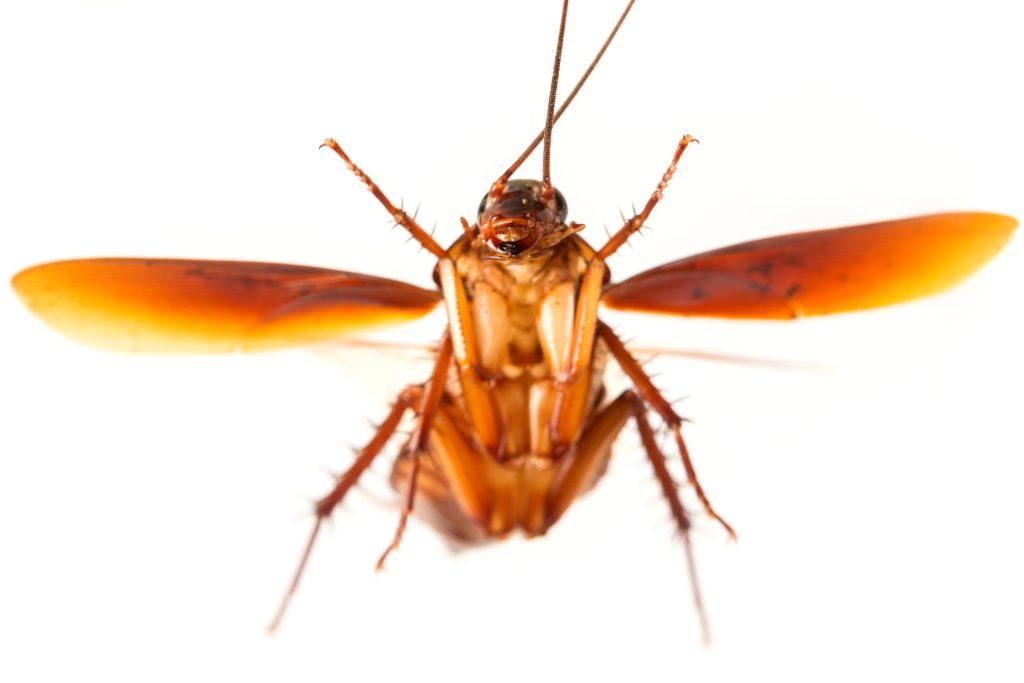
The patio finally cools down after a hot California afternoon. You open the back door, switch on the light, and see a large cockroach move across the wall. Then it opens its wings.
Flying cockroaches in California become easier to notice on warm evenings because outdoor roaches are active after dark. At the same time, homeowners open windows, garages, and patio doors to release heat. That creates a direct path from the yard into the house.
One flying cockroach does not always mean there is an infestation inside. Repeated sightings, young roaches, droppings, and egg cases provide much stronger evidence. Understanding flying cockroaches in California starts with knowing which species can fly and where they usually live.
Why Flying Cockroaches in California Appear on Hot Nights
Cockroaches spend daylight hours inside drains, cracks, meter boxes, sewers, crawl spaces, and dense landscaping. They usually come out after sunset to search for food, water, shelter, and mates.
Warm weather increases insect activity. The UC Statewide Integrated Pest Management Program explains that some adult cockroach species can fly short distances or glide on warm nights. There is no single temperature that causes every cockroach to fly. Species, sex, humidity, wind, and access to shelter all affect movement.
Dry conditions also change where outdoor roaches travel. Irrigated lawns, leaking hose connections, pet bowls, drains, and damp foundations provide water after surrounding soil and pavement have dried. On the hottest nights, those moisture sources may bring outdoor cockroaches closer to doors and garages.
| Hot-Weather Condition | How It Affects Cockroach Activity |
| Dry soil and leaf litter | Outdoor roaches travel farther in search of moisture |
| Evening irrigation | Damp valve boxes and soil create shelter |
| Warm garages | Stored items, drains, and pet food offer food and hiding space |
| Open doors and windows | Roaches gain direct access to indoor areas |
| Exterior lighting | Flying males become easier to notice near entryways |
Which California Cockroaches Can Fly?
Cockroaches that fly in California do not all behave the same way. Some make short flights, some glide from raised surfaces, and some have wings that are rarely used.
| Cockroach Species | Typical Appearance | Flight Ability | Common Location |
| American cockroach | Large and reddish brown with a pale border behind the head | Short flight or gliding | Sewers, drains, crawl spaces, and utility areas |
| Turkestan cockroach | Males are tan with long wings; females are dark with short wings | Males can fly; females fly poorly | Meter boxes, irrigation boxes, debris, and pavement cracks |
| Brownbanded cockroach | Small and brown with pale bands | Adult males may fly when disturbed | Furniture, cabinets, electronics, and warm rooms |
| German cockroach | Small and light brown with two dark stripes | Has wings but rarely flies | Kitchens, bathrooms, and appliances |
| Oriental cockroach | Broad and dark brown to nearly black | Does not fly | Damp soil, drains, crawl spaces, and lower floors |
American Cockroaches
American cockroaches are among the largest California cockroaches. Adults can approach 2 inches in length, which makes even a short glide look dramatic. Their reddish-brown color and pale marking behind the head help separate them from darker species.
These roaches prefer warm, moist locations. Common sources include sewers, floor drains, crawl spaces, water meter boxes, and utility areas. Their flight is usually brief and poorly controlled. An American cockroach may glide from a wall, fence, tree, or roof edge rather than flying around a room.
Repeated sightings near a bathroom, drain, or crawl-space opening may point to a plumbing route or a nearby outdoor population. One large roach near an open door is more likely to be an accidental visitor.
Turkestan Cockroaches
Turkestan cockroaches are now common in many California yards. Adult males are tan with long wings, while females are dark brown or nearly black with much shorter wings.
The UC IPM identifies water meter boxes, irrigation boxes, compost, leaf litter, cracks in concrete, potted plants, and sewer systems as common habitats of Turkestan cockroaches. Males are the flying roaches in California that homeowners often see around garages and exterior lights.
Females and young roaches usually stay closer to protected ground-level areas. Finding several dark females or small wingless roaches near a valve box or foundation crack can reveal an outdoor breeding site.
How Flying Roaches Get Inside California Homes
A porch light makes a flying cockroach visible, but lighting is only part of the story. Homes offer shade, moisture, food smells, and small gaps where roaches can hide.
Evening routines create easy entry opportunities. A garage may stay open while the house cools down. Patio doors remain open while food is carried outside. Bright lights sit directly beside those openings.
| Entry Point | Why Roaches Use It | Practical Correction |
| Gap below an exterior door | Creates a direct ground-level route | Install a door sweep that touches the threshold |
| Damaged garage seal | Leaves a long opening across the floor | Replace worn bottom and side seals |
| Torn screen | Allows flying insects through after dark | Repair the mesh and inspect the frame |
| Opening around pipes or cables | Connects outdoor areas with wall voids | Seal the gap with suitable building material |
| Plants touching the house | Provide shade and covered travel routes | Trim branches and ground cover away |
| Irrigation leak | Supplies water during dry weather | Repair the leak and remove wet debris |
Keeping doors closed when nearby lights are on reduces the chance of entry. Screens and door sweeps also stop crawling roaches, which remain more common than airborne ones.
Outdoor lighting can be moved farther from frequently used doors where practical. The goal is not to darken the property. It is to avoid gathering insects directly beside an open entrance.
Does a Flying Cockroach Mean You Have an Infestation?
A single flying cockroach beside an open patio door does not prove that roaches are breeding indoors. Outdoor American and Turkestan cockroaches may enter through a gap and fail to establish themselves inside.
A cockroach infestation leaves more evidence. Adults and small wingless roaches found in the same room suggest reproduction nearby. Egg cases, shed skins, dark droppings, and repeated activity behind appliances also call for closer inspection.
Location helps clarify the problem. Small German cockroaches around a refrigerator require a different response than Turkestan cockroaches living inside an irrigation box. Correct identification prevents unnecessary treatment in areas where the roaches are not breeding.
Sticky traps can help show where activity is concentrated. Place them against walls, under appliances, beside drains, and near exterior doors. Cockroaches tend to follow edges, so traps placed in the middle of a room are less useful.
Why Indoor Cockroach Activity Needs Attention
The ability to fly is not the main health concern. Problems develop when cockroaches remain indoors and leave droppings, shed skins, saliva, and body fragments in occupied areas.
The U.S. Environmental Protection Agency (EPA) identifies cockroach droppings and body parts as indoor asthma triggers. This matters most when roaches remain near kitchens, bedrooms, upholstered furniture, or ventilation pathways.
Cockroaches also cross drains, garbage, damp utility areas, and decaying material before reaching counters or cabinets. Clean food-preparation surfaces, store dry goods in sealed containers, and remove pet food before bedtime.
Broad aerosol spraying does not solve the source of the problem. It will not repair a door gap, dry a leaking irrigation box, or remove food behind an appliance. Cockroach control works better when identification, sanitation, moisture correction, exclusion, and targeted treatment work together.
How to Prevent Flying Cockroaches Around Your Home
Cockroach prevention starts where the activity is most visible. Inspect nearby doors, screens, garage seals, vents, pipe openings, and foundation gaps. A worn threshold beside the problem area matters more than a small crack on the opposite side of the property.
Next, look for moisture. Check irrigation boxes, hose connections, downspouts, outdoor drains, condensate lines, and pet-water areas. Remove leaf litter and damp debris from utility boxes when it is safe to do so.
Clear cardboard, firewood, stacked lumber, and dense ground cover away from exterior walls. Keep trash lids closed, bring pet food inside, and clean patios after outdoor meals. These steps reduce the food and shelter that support outdoor cockroach populations.
Flying cockroaches in California are easier to manage when the species and source are identified first. Round the Clock Pest Services can inspect drains, landscaping, utility areas, and entry routes before recommending treatment. Schedule professional cockroach control when repeated sightings show that the problem is more than one roach passing through.