
Different types of wasps can cause costly problems when early signs are missed. Learn the signs, risks, and when to call Round the Clock Pest Services.
Key Takeaways About Different Types Of Wasps
- Wasps fall into two broad groups: social wasps that live in large colonies with elaborate nests and solitary wasps where a single female tends a small nest or burrow on her own.
- Telling them apart starts with nest style and behavior. Social species are active in numbers around a visible nest, while solitary wasps work alone and generally do not defend their nesting site.
- Correct identification matters because social and solitary wasps call for different responses. Some wasps nesting away from high-traffic areas can be left alone, while others may need attention when they settle near your home.
- Proactive exclusion around your home’s exterior is the most reliable way to keep wasps from establishing nests in unwanted spots.
How to Identify Different Types Of Wasps
Telling wasp species apart starts with looking at the nest and watching how the insects behave around it. According to Mississippi State University Extension, some wasp species are more aggressive than others and may fly several feet to sting someone near the nest site. Others, like paper wasps, tend to be less confrontational unless their nest is in a high-traffic spot. Knowing what to look for helps you decide how cautious you need to be.
How to Tell Wasp Types Apart
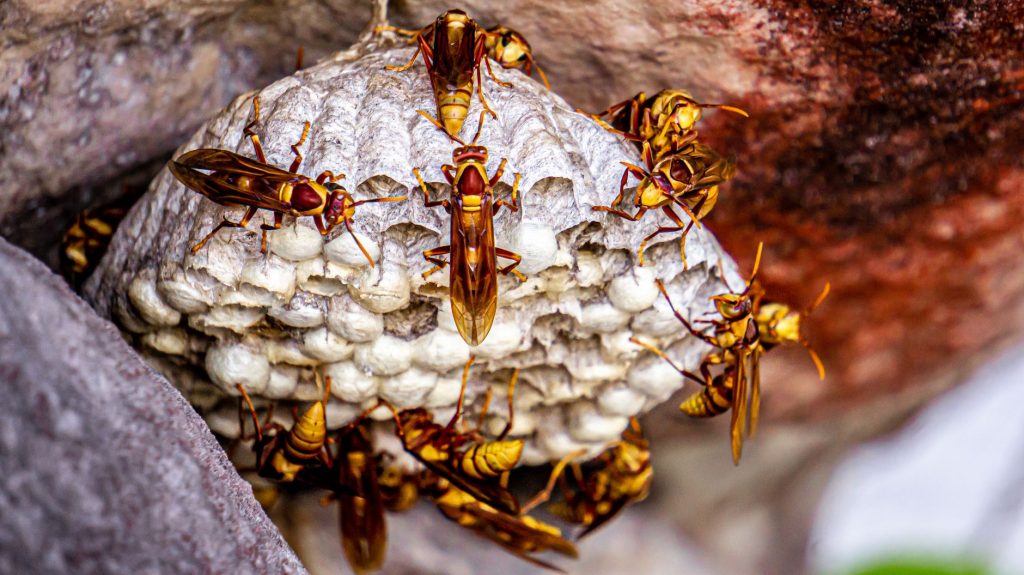
One of the clearest clues is nest size. Paper wasp nests rarely exceed the size of an outstretched hand, and their populations vary between 15 and 200 individuals, as UC IPM notes. If you see a small, open-celled nest with a modest number of wasps, you are likely looking at paper wasps. Other social wasp species may build larger nests or establish colonies just below the soil surface or beneath leaf litter, making them harder to spot before you accidentally disturb them.
How to Spot Wasp Activity Inside Your Home
Wasps that get indoors are usually following light or searching for a nest site near sheltered spaces. You may notice a single wasp buzzing at a window or a small paper wasp nest tucked under an interior overhang in a garage or attic. Paper wasp nests do not typically require treatment unless they are near people, according to UC IPM. If you are seeing repeated wasp activity inside, it may mean a nest is closer than you realize.
Where Wasp Activity Shows Up Around Homes
Stay alert for wasp nests around your home. Paper wasp nests built in the wrong place, where they are likely to cause stings, should be addressed proactively. Ground-nesting species can establish colonies just below the soil surface, and these can be very easily disturbed or stepped into. Walk carefully around areas where you notice wasp traffic.
Exterior Entry Points Wasps Use
Wasps look for sheltered spots that offer overhead cover near a nest site. Eaves, porch ceilings, and open gaps along rooflines can all attract paper wasps and other wasp species. Regularly scanning these areas helps you catch a wasp nest while it is still small. Trapping is not suggested for most social wasp species, so early detection and careful nest management remain your best first steps.
Why Wasp Problems Develop
Wasp activity around your home is rarely random. Different types of wasps seek out specific nesting sites, food sources, and entry points. Understanding what draws them helps you recognize why encounters happen and which species may be involved.
Outdoor Nesting Areas for Wasps
Many types of wasps build paper and mud nests around homes, in the ground, or in shrubs. Social wasps form populous colonies tied to a paper nest, which includes an egg-laying queen and many sterile female workers. According to the Mississippi State University Extension, paper wasp nests last only one season, regardless of species. Social wasp colonies are also annual, meaning each nest is used only during the season it is built.
Mud daubers take a different approach. The black and yellow type constructs a series of cylindrical mud cells, eventually plastered over with mud to form a smooth nest about the size of a fist. These solitary builders can appear on walls, under eaves, and in sheltered spots around your property.
Food and Shelter That Attract Wasps
Paper wasps are beneficial caterpillar predators, so yards with garden activity can draw them in. Sheltered overhangs, porch ceilings, and other protected structures offer the conditions wasps look for when starting a colony each season. Because colonies are annual, new queens search for fresh nesting sites every year, which keeps wasp pressure recurring.
How Wasps Move Around Homes
Proximity to nesting sites often creates unexpected encounters with people. According to the University of Minnesota Extension, social wasps sting to defend their colony, and some yellow jacket species can also become aggressive during late summer and fall, sometimes stinging unprovoked. These late-season behavior shifts can increase run-ins around doorways and outdoor living spaces.
Cicada killers, by contrast, are typically active for only about two to three weeks per year and are not aggressive. Their brief window of activity means they may appear suddenly and then disappear just as quickly.
Trails and Entry Points Wasps Use
Wasps follow predictable paths between their nests and food sources. Ground-nesting species like some yellow jackets may use openings in lawns or garden beds, while paper wasps and mud daubers favor structural gaps near rooflines and soffits. Recognizing these travel routes helps you identify where nests may be forming before repeated encounters occur.
Risks From Different Types Of Wasps
Not all wasps pose the same level of concern. Understanding which types rarely sting and which can deliver painful stings helps you gauge the actual risk when you spot activity around your home.
Health Risks Linked to Wasps
Many solitary wasps very rarely sting, and then only if mishandled. According to Purdue Extension, solitary wasps that reside in or around homes, yards, and gardens often cause anxiety, but the sting risk from these species is minimal under normal circumstances.
Paper wasps are much less defensive and rarely sting humans. Mud daubers also rarely sting. When stings do happen, the experience can vary. Most people who have experienced both agree that red wasp stings are more painful than Guinea wasp stings. Some wasps deliver a sting that is arguably more painful than a red wasp sting.
Property Damage From Wasp Activity
While wasps are not typically associated with structural damage, social wasp colonies located in or around structures and areas of human activity create situations where stings can occur. According to Purdue Extension, removal of these colonies is warranted when they are positioned near high-traffic areas of your property.
Food Areas and Different Types Of Wasp Activity
Social wasps capture insects such as flies, caterpillars, and beetle larvae, which makes them beneficial in many settings. However, that same foraging behavior can bring them close to outdoor food areas. When colonies are near spaces where your family gathers, the probability of an unwanted encounter increases.
When to Look Closer at Different Types Of Wasp Activity
Because solitary wasps rarely sting and do not defend their nests, they generally pose little concern. The greater risk comes from social wasps nesting near doorways, eaves, or gathering spaces. If you notice repeated wasp traffic in a concentrated area, it may indicate a colony worth investigating further.
Identifying the type of wasp you are dealing with is a practical first step. Solitary species can often be left alone, while social wasp colonies near your living spaces may need closer attention to reduce the chance of stings.
Professional Pest Control for Different Types Of Wasps
Identifying the type of wasp around your home is only the first step. Once you know what you are dealing with, the next priority is managing the nest safely and preventing future activity. Different Types Of Wasps call for different approaches, and many situations benefit from professional pest control expertise.
How to Reduce Attractants for Wasps
Keeping wasps from settling into your home starts with proactive exclusion. According to Mississippi State University Extension, the only way to prevent large numbers of overwintering wasps in the attic or other building locations is to practice good, proactive exclusion. Sealing gaps around rooflines, vents, and eaves before wasps move in can make a meaningful difference.
Because different types of wasps choose different nesting sites, your exclusion approach should cover both high and low entry points. Routine checks of your home’s exterior can help you spot openings before they become access routes for colony-building wasps.
Why Wasp Control Starts With Inspection
Wasp colonies can be very large and are often located far from the entrance hole, deep into the structure. That means the nest you see from the outside may only hint at the full scope of the problem. A thorough inspection helps locate the actual colony and determine the best path forward.
Above-ground and nearly all structural colonies require professional assessment, as Purdue Extension notes. Small, early-season colonies and most underground colonies may be more manageable on your own, but structural nests risk disturbing a large, hidden colony without proper equipment and technique.
What to Expect During Professional Wasp Treatment
Late summer colonies may be quite large, sometimes consisting of nearly a thousand workers. According to Purdue Extension, most nests should be left alone; however, if control is warranted, professional treatment is recommended. Protective gear and quick, precise application are both important during treatment.
A pest control professional can evaluate the nest location, colony size, and wasp type before choosing an approach. This is especially important for colonies built inside walls or other hard-to-reach areas where the entrance may be far from the nest itself.
What to Expect From a Wasp Control Plan
A complete wasp control plan pairs treatment with prevention. After a colony is addressed, exclusion work helps keep new wasps from moving into the same space. Ongoing attention to potential entry points around your home can reduce the chance of future nesting.
Round the Clock Pest Services is a woman-owned and operated company that prioritizes communication and customer experience. Your service professional will contact you before arrival to discuss the situation. If you are dealing with honey bees rather than wasps, keep in mind that in Georgia, a person licensed in Honey Bee Removal and Control must be contacted through the Georgia Department of Agriculture.
Different Types of Wasps: Bottom Line
Identifying the different types of wasps around your property starts with observing body shape, nesting style, and behavior. Some wasps are solitary and build individual mud cells, while others form large social colonies with many active workers near a shared nest. Recognizing whether you are dealing with a solitary species or a social one helps you gauge how cautious you need to be. Large or hard-to-reach colonies, especially those built inside structures, call for professional treatment rather than a DIY approach.
If you are unsure what type of wasp you are seeing or need help with a nest, contact Round the Clock Pest Services for guidance.
Frequently Asked Questions
How Can I Tell Whether a Wasp Is Solitary or Social?
Watch the nest site. Social wasps tend to have many individuals flying in and out of a single entrance, and their nests can grow quite large over a season. Solitary wasps typically have just one female tending a small nest or burrow. The level of activity around the nest is one of the quickest ways to distinguish between the two groups.
Are All Wasps Aggressive?
No. Behavior varies widely among different types of wasps. Some solitary species are not aggressive and rarely sting unless directly handled. Certain social species, however, can be more defensive, especially near their nests. The risk depends on the species and how close you are to their nesting area.
Should I Remove a Wasp Nest Myself?
However, above-ground nests, structural colonies, and late-summer nests with many workers should be left to a professional. Protective gear and proper technique are important for low-risk removal.
How Can I Keep Wasps From Nesting in My Home?
Good, proactive exclusion is the primary way to prevent wasps from establishing nests in attics or other areas of your home. Sealing gaps, screening vents, and closing off potential entry points before wasps begin scouting for nest sites can reduce the chance of a colony forming indoors.