
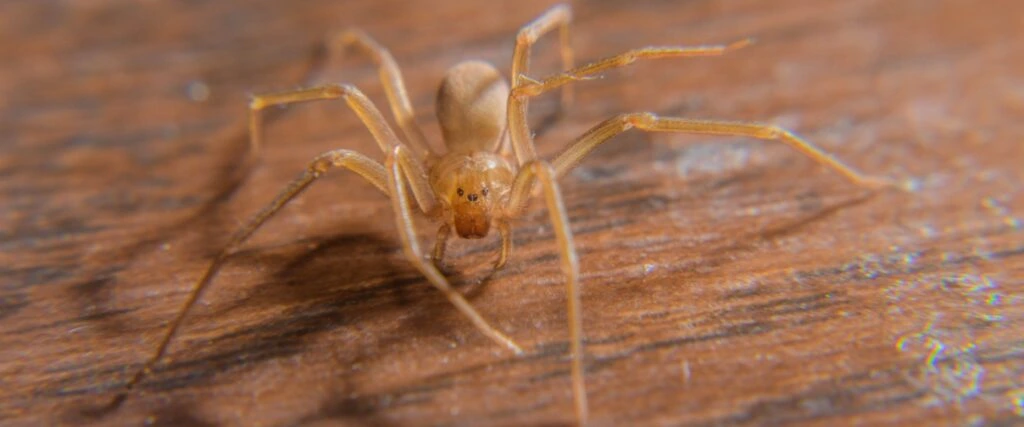
Living in Los Angeles, many homeowners encounter spiders in their homessome harmless, some less so. At Round the Clock Pest Services, we’ve seen our fair share of eight-legged visitors. Knowing which common spiders you might find, how to identify them, and when to call in experts can help keep your family and home safe.
Here is an easy-to-read table that shows you the different spider types found in LA.
| Spider Type | Key Features | Significance |
| Common House Spider | Bulbous abdomen, messy webs | Harmless, beneficial |
| Black Widow | Shiny black, red hourglass on abdomen | Venomous, requires caution |
| Brown Recluse | Brown, violin marking on cephalothorax | Potentially dangerous |
| Wolf Spider | Large, fast, sturdy legs, mottled brown | Non-threatening, startling |
| Cellar Spider | Long legs, small body, webs in damp areas | Mostly harmless |
| Jumping Spider | Small, stout body, large eyes, jumpiness | Harmless and curious |
1. The Common House Spider (Parasteatoda tepidariorum)
Probably the most frequently encountered, the common house spider is usually small (about ¼-½ inch in body length) with a bulbous abdomen marked by a pale, wheat-brown pattern. These gentle creatures often build messy sheet-like webs in corners, behind furniture, or in seldom-used rooms. Though spooky, they’re not dangerousthey prey on nuisance insects.
2. Black Widow (Latrodectus spp.)
Angel’s food black widow spiders are among the most notorious spiders found around L.A. homes. Females are shiny black, approximately 1½ inches (including legs), and are recognizable by the red hourglass marking on the underside of their round abdomen. Males are smaller and less likely to bite. These bites can be medically seriousif you suspect a common spider might actually be a black widow, it’s time to call Round the Clock Pest Services to safely inspect and remove it.
3. Brown Recluse (Loxosceles reclusa)
Though less common in Southern California than in the Midwest or Southeast, a few brown recluses do appear in Los Angeles homes. They’re typically ¼–½ inch long with long legs and vary from tan to dark brown. Their most distinct feature: a dark violin-shaped mark on the cephalothorax (the body region behind the head). Brown recluse bites can cause painful necrotic lesions, so if you suspect this common spider, immediate removal and medical attention are essential.
4. Wolf Spider (Family Lycosidae)
Wolf spiders are large, fast, and often seen roamingnot web-spinningon the floor at night. They vary in size from ½ to 1¼ inches in body length, with long, sturdy legs and a mottled brown coloration. You might catch these active spiders under furniture or in garages. Their bite is painful but generally not dangerous. Still, if you’d rather not share your home with them, Round the Clock Pest Services can help keep them at bay.
5. Cellar Spider (Pholcidae)“Daddy Long-Legs”
Often mistaken for other long-legged insects, cellar spiders are small-bodied with disproportionately long, thin legs. They typically build web networks in dark, damp areasthink basements, garages, and under sinks. Don’t confuse them with daddy long-legs harvestmen (which aren’t true spiders). Thankfully, cellar spiders are harmless and even prey on other spiders. Still, if their webs become excessive, a deep clean or pest-management intervention from Round the Clock Pest Services may be warranted.
6. Jumping Spider (Family Salticidae)
These miniature acrobats are delightful to observe. Usually less than ½ inch, they have stout bodies and large, forward-facing eyesperfect for their nimble jumps and hunting style. Their coloration can vary widely, often with iridescent or patterned bodies. Because they don’t spin traditional webs and are overall non-aggressive, they’re among the most benign common spiders you’ll find.
Tips to Identify and Respond Safely
Common spiders in Los Angeles homes
Most spiders you meet indoors pose no real threat, but a couple call for care. Here is how to tell which is which.
Visual Clues
- Web type: Messy webs often signal house spiders; dense funnel-shaped webs might point to black widows.
- Body shape and size: Bulbous vs. flat abdomen, long legs vs. sturdy legseach tells a story.
- Unique markings: Look for hourglass shapes (black widow) or violin patterns (brown recluse).
Behavioral Observations
- Active movement: Spiders darting around (like wolf or jumping spiders) are likely harmless visitors.
- Web dwellers: Stationary web spinners could indicate house spiders or, in rare cases, more concerning species.
Location Preferences
- Dark, secluded spaces: Ideal for recluses and cellar spiders.
- Corners and cluttered rooms: Common house spiders set up shop here.
- Garages, outdoor entries: Hotspots for wolf spiders or wandering species.
When to Call In the Professionals
If you suspect the presence of a dangerous spiderespecially a black widow or brown recluseor you’ve seen multiple, persistent sightings, it’s time to call Round the Clock Pest Services. Our team knows how to safely identify, inspect, and eradicate these unwelcome guests. Your safetyand peace of mindare our priority. Understanding the common spiders that roam your Los Angeles home is the first step to feeling safe and informed. Whether you’re dealing with harmless visitors or potential threats, Round the Clock Pest Services is here to help. Reach out today for professional spider identification, control, and peace of mind.