
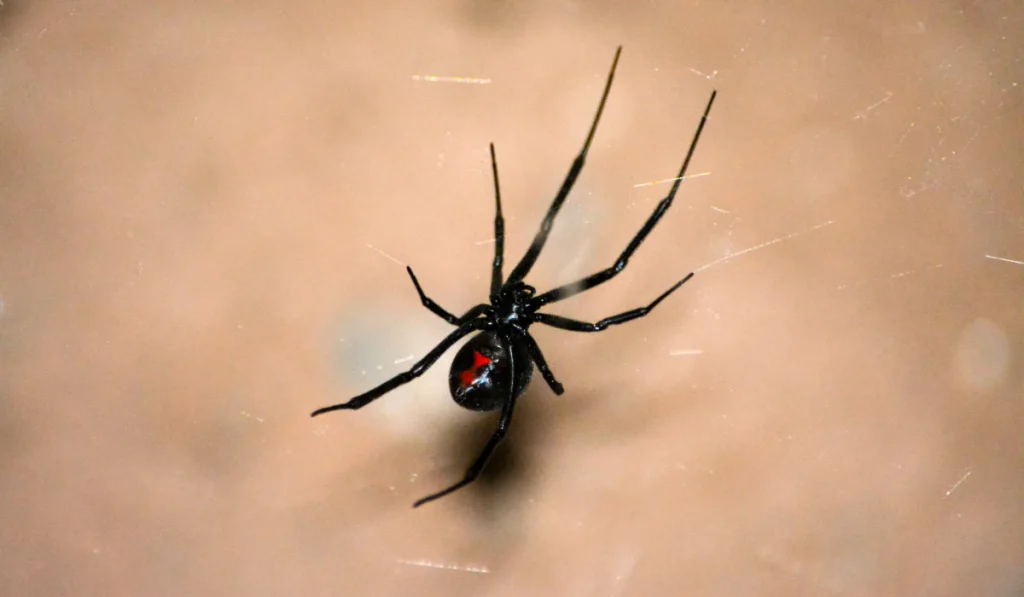
California spiders are often judged by size or color, but those clues do not tell the whole story. Where the spider lives, what kind of web it makes, and how it moves can provide much better information. Most spiders around California homes are predators of insects and create little risk for people, while a smaller group deserves more caution.
This guide explains the common spiders in California homes, which ones deserve more caution, why brown recluse reports are often wrong, and what you can do when spiders keep settling in the same places.
What California Homeowners Should Know About Spiders
Spiders go where they can find prey and shelter. A garage with small pest insects, stacked boxes, and quiet corners can give them both. Outdoor lights can create another good hunting spot because moths and other insects gather near walls, doors, and windows after dark.
The UC Statewide Integrated Pest Management Program describes most spiders as useful predators and identifies the western black widow as the California spider of greatest medical concern around homes.
Size is a poor shortcut for judging risk. A large wolf spider can race across a garage floor and look alarming, while a black widow spider may stay almost invisible beneath shelving. California spider identification also gets easier when you look beyond color.
| What You See | What It Can Suggest |
|---|---|
| A large circular web between plants or structures | Often an orb weaver |
| A flat sheet of web leading into a tunnel | Often a funnel weaver |
| A spider running across soil or concrete | Often a hunting spider such as a wolf spider |
| A small spider making quick jumps on a wall or fence | Often a jumping spider |
| Tough, irregular spider webs in a sheltered corner | Can point to a widow or another cobweb spider |
| A pale round egg sac with pointed projections | Strong clue for brown widow activity |
Brown, gray, tan, and black appear across many types of spiders in California. Web shape, hiding place, movement, and egg sacs usually give you better clues than body color alone.
Which California Spiders Deserve a Closer Look?
People searching for dangerous spiders in California often expect a long list. The practical list for homeowners is much shorter. Western black widows deserve the most caution, while brown widows are also worth recognizing because they frequently use outdoor objects around Southern California properties.
Other house spiders in California may look dramatic without carrying the same level of concern. Wolf spiders, jumping spiders, cellar spiders, orb weavers, funnel weavers, and yellow sac spiders can all turn up around residential properties.
| Spider | Where You May Find It | Typical Concern | Helpful Clue |
|---|---|---|---|
| Western black widow | Garages, sheds, woodpiles, utility areas, outdoor storage | Higher | Mature females are glossy black with a red or orange hourglass underneath |
| Brown widow | Patio furniture, pots, fences, trash containers, outdoor equipment | Moderate | Spiky egg sacs beneath protected surfaces |
| Wolf spider | Garages, mulch, soil, doorways | Low | Runs after prey instead of waiting in a large web |
| Jumping spider | Walls, windows, fences, sunny surfaces | Low | Compact body and short jumps |
| Cellar spider | Ceiling corners, garages, crawl spaces | Low | Very long, thin legs |
| Orb weaver | Gardens, shrubs, gates, fences | Low | Large circular web |
| Funnel weaver | Lawns, landscaping, foundation edges | Low | Flat web ending in a sheltered funnel |
| Yellow sac spider | Walls, ceilings, corners, vegetation | Generally low | Makes a small silk retreat rather than a large capture web |
Western Black Widows
Western black widows favor dry, protected places that are rarely disturbed. You might find one behind boxes that have been sitting for months, beneath outdoor equipment, inside a shed, or among stacked firewood. Their webs are usually irregular and stronger than they look.
Spider bites are uncommon compared with spider sightings, but accidental contact matters with widows. You can put a hand directly into a hiding place while lifting stored materials or reaching underneath shelving. Gloves are sensible when you cannot see the surface you are about to touch.
Brown Widows
Brown widows often settle on objects you handle outdoors. The underside of patio furniture, the rim of a planter, a fence support, playground equipment, or the recessed handle of a trash container can provide enough shelter.
Their coloring varies, so a brown body is not a dependable identification clue. Their egg sacs are much more distinctive. The silk surface has pointed projections and can look like a tiny cream-colored burr.
Large Spiders Are Not Automatically Dangerous
Wolf spiders often get noticed because they are fast and fairly large. They chase insects on foot, so one may suddenly cross concrete or appear near an open doorway without leaving a large web behind.
Orb weavers stand out for the opposite reason. Their circular webs can stretch across shrubs, gates, and walkways. Walking into one is unpleasant, but these spiders are usually hunting flying insects rather than creating the same contact risk as a widow tucked beneath something you regularly touch.
What Brown Widow Research Shows Around Southern California Homes
Brown widows have adapted well to man-made outdoor structures. Knowing where researchers actually found them gives you a much better inspection strategy than searching every dark corner around the property.
A field study published in the Journal of Medical Entomology surveyed 72 Southern California locations during nearly 97 hours of collecting. Brown widows appeared frequently around outdoor urban structures, with several ordinary household objects accounting for a large share of retreat and egg-sac locations.
| Brown Widow Retreat or Egg-Sac Location | Share Recorded in the Study |
|---|---|
| Under picnic and patio tables | 19.0% |
| Beneath wooden fence supports or wall caps | 13.9% |
| Under patio chairs | 12.1% |
| Under playground equipment | 6.5% |
| Under trash containers or inside recessed handles | 6.2% |
| In curled edges of potted plants | 4.0% |
| Garages or sheds | About 2% |
Those locations are easy to picture in daily use. You slide your fingers beneath a chair to move it. You lift a planter by the rim. A child reaches beneath playground equipment, or you grab a trash-bin handle without checking the recessed area first.
The study found a much stronger brown widow pattern around exterior structures than inside living areas. In Southern California, checking the undersides of frequently handled outdoor objects can therefore be more useful than searching ordinary rooms for hidden widows.
Do Brown Recluse Spiders Live in California?
You find a tan spider inside and notice a dark patch near the front of its body. A quick image search can make “brown recluse” feel like an obvious answer. For most homeowners wondering about a brown recluse in California, that identification is unlikely to be correct.
The UC IPM reports that California has no established brown recluse population. Fewer than 20 verified specimens had been collected in the state over several decades. Individual spiders can arrive in boxes, furniture, vehicles, or shipments without creating a breeding population.
Hundreds of Suspected Recluses Produced One Confirmed Spider
In a study conducted from 2000 through 2005, experts received nearly 600 California spiders submitted as suspected brown recluses. Only one was confirmed. It came from a home occupied by a family that had moved from Missouri, and investigators found no additional brown recluses in the house.
Seventeen submitted spiders were desert recluses, all from southeastern California desert regions where that species occurs. California does have native recluse spiders, but their range does not make the brown recluse a routine household spider across Los Angeles, San Diego, San Francisco, or Walnut Creek.
Why the Violin Mark Causes Confusion
Many harmless spiders have brown bodies or darker markings. Lighting, viewing angle, and immature coloration make visual guesses even less dependable.
The familiar violin-shaped mark is not enough to identify a recluse. Specialists examine several traits together. If identification matters, take a clear photo from a safe distance rather than trying to inspect or catch an unknown spider by hand.
Why Spiders Keep Returning to the Same Places
You remove a web beside the porch light, then find another in almost the same spot two nights later. The light is likely part of the reason. Flying insects gather there after dark, giving a web-building spider a convenient place to feed.
Garages create their own version of the same setup. Cardboard boxes leave cracks and crevices that stay dark. Shelves can remain untouched for months, while an open garage door lets insects enter regularly. Spiders do well where prey and protected hiding spaces overlap.
Start With Food and Shelter
If you are trying to figure out how to get rid of spiders that keep returning, start with the conditions around them. Vacuum accessible indoor webs and clean areas that have remained untouched. Closed storage containers leave fewer protected gaps than piles of loose cardboard, and moving stored items away from walls makes corners easier to inspect.
Outside, look beneath chairs, tables, flowerpots, play equipment, and trash containers before grabbing them. Keep woodpiles and long-term storage from sitting directly against the house. Vegetation touching siding can hold insects close to the structure, so trimming it back may reduce activity along that edge.
Look for a Pattern, Not Just One Spider
One wolf spider wandering into a garage does not necessarily indicate a spider infestation. Several widow egg sacs under the same patio set are much more meaningful. Spider webs that return quickly in one storage area also suggest the location continues to provide useful shelter or prey.
That pattern helps you decide what comes next. Occasional outdoor spider activity is normal. Recurring widow activity in places you regularly reach, sit, store items, or play deserves closer attention.
When Professional Spider Control Makes Sense
Professional spider control is most useful when the activity keeps returning or involves species that deserve more caution. Repeated western black widow sightings, multiple widow egg sacs, or spiders living beneath frequently handled furniture and equipment are stronger reasons to act than a single garden spider outdoors.
A recurring problem can also signal activity from other pests. Insects may be gathering around lights, entering through gaps, or living in protected parts of the garage or exterior. Removing spider webs without addressing the prey and shelter around them can leave the same location attractive to the next spider.
Round the Clock Pest Services can inspect the areas where spiders keep returning and identify what is supporting the activity. If you are finding widows, egg sacs, or recurring webs around spaces your household uses often, contact us and schedule a professional spider control inspection to address the spider activity and the conditions helping it continue.