
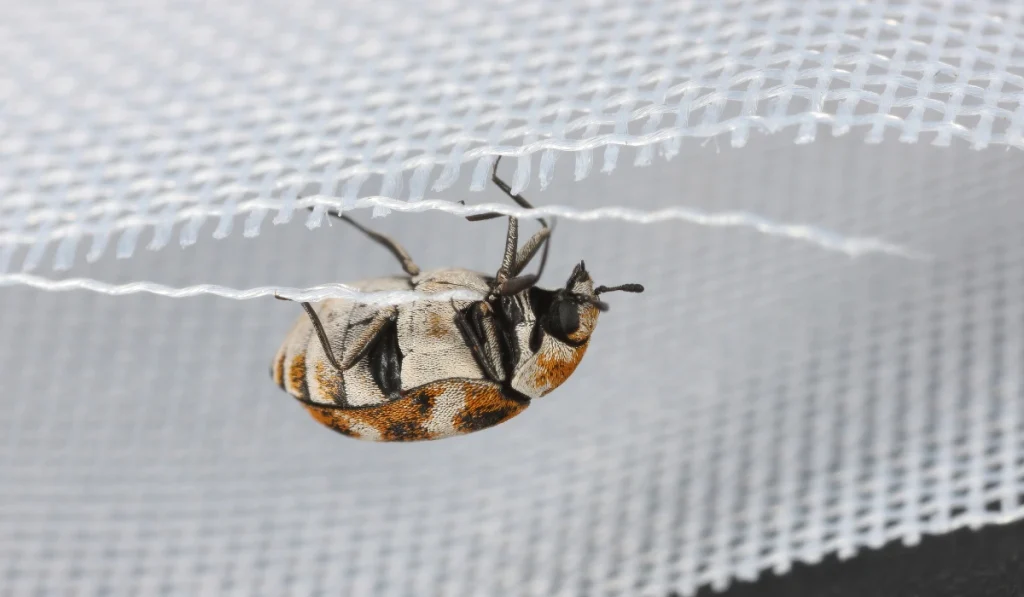
California beetles become household pests when they infest fabrics, stored food, or wooden materials. Carpet beetle larvae feed on wool and other animal-derived fibers, pantry beetles contaminate dry goods, and certain wood-boring beetles damage furniture and lumber. Most beetles found indoors aren’t an immediate threat, but larvae, damaged belongings, or recurring beetle activity deserve attention. Identifying the affected material and checking for active feeding helps you decide whether to clean up the source or arrange a professional inspection.
Where California Beetles Appear and What They Mean
California has many beetle species, most of which live outdoors. The household pests covered here are associated with specific materials that provide food or suitable places for their young to develop.
Where you find a beetle is a useful starting point. Insects among wool clothing suggest a fabric pest, while beetles inside flour or cereal point toward a stored-product infestation. Small holes in hardwood flooring require a different investigation because the insects may have developed inside the wood.
Match the Location With the Evidence
| Where You Find Beetles | Possible Pest | What to Look For |
| Closets, carpets, or upholstery | Carpet beetles | Hairy larvae, shed skins, damage to wool or animal-derived materials |
| Pantry shelves or food packages | Stored-product beetles | Adults or larvae in dry goods, damaged packaging |
| Furniture, flooring, or lumber | Wood-boring beetles | Round exit holes, powdery frass, repeated emergence |
Finding one adult beetle doesn’t establish that your home is infested. Evidence of larvae feeding, insects breeding in food, or new activity in wood gives you more reason to investigate.
Carpet Beetles in California Closets and Furniture
Carpet beetles are a common problem in California homes, particularly where wool rugs, stored clothing, upholstered furniture, or other animal-derived materials provide food for their larvae.
The University of California Statewide Integrated Pest Management Program’s carpet beetle guide identifies three species that cause significant damage in California: varied carpet beetles, furniture carpet beetles, and black carpet beetles. Their appearance and feeding habits differ, so the name “carpet beetle” doesn’t describe every material they may infest.
How to Identify Adults and Larvae
Adult varied carpet beetles have small, rounded bodies with mottled white, brown, and yellowish markings. Black carpet beetles are darker, more elongated, and can reach about 3/16 inch long.
Larvae are often elongated and covered in hairs or bristles. Depending on the species, they may be brown, striped, or nearly black, with distinct tufts of hairs toward one end.
Adults commonly visit flowers for pollen and nectar and may enter homes through open windows or with cut flowers. Finding an adult on a windowsill without larvae or fabric damage doesn’t necessarily call for treatment.
Where Carpet Beetles Cause Damage
Larvae feed on suitable animal-derived materials, including wool, fur, feathers, silk, and pet hair. Wool rugs, coats, blankets, upholstered furniture, and stored natural-fiber belongings may develop irregular holes or worn patches.
The insects prefer dark, undisturbed places. Check beneath heavy furniture, along carpet edges, behind baseboards, and inside storage containers. Shed larval skins can reveal where beetles have been feeding, even when live larvae aren’t immediately visible.
Black carpet beetles deserve a broader search. In California, they can be more troublesome in stored grain products than fabrics, so activity near dry goods should not automatically be attributed to typical pantry beetles.
How to Address a Carpet Beetle Infestation
Inspect vulnerable belongings and remove badly infested materials when cleaning cannot restore them. Vacuum closets, upholstery, carpet edges, and other concealed spaces to remove larvae, eggs, hair, lint, and dead insects.
Wash affected items according to their care labels or have suitable fabrics dry-cleaned. Once clean and free of insects, store vulnerable seasonal clothing in sealed containers.
If damage continues, look beyond the first affected garment. Carpet beetles can breed in hidden accumulations of animal hair, dead insects, or other suitable material, so finding the food source matters more than spraying the adult beetles you see.
Pantry Beetles in California Kitchens
Pantry beetles commonly enter homes in packaged foods and can spread through stored dry goods. Their presence doesn’t necessarily reflect poor cleaning habits; an infestation may begin in a product that was already affected before purchase.
These pests can contaminate flour, cereal, grain products, spices, dried foods, and pet food. Once beetles appear in a cupboard, inspect nearby packages rather than treating the entire kitchen as the source.
Common Stored-Product Beetles
Sawtoothed grain beetles are small, flattened insects associated with processed grain products and other stored foods. Their narrow bodies allow them to move through small gaps in packaging.
Red and confused flour beetles infest flour and related grain products. Drugstore beetles feed on a wider range of dried materials, including some spices and packaged foods.
Many of these insects are small and brown, making identification difficult without examining an actual specimen. The food involved and evidence of larvae can narrow the possibilities, but appearance alone isn’t always conclusive.
Find the Infested Food First
Check opened and unopened packages, especially flour, cereal, pasta, rice, baking ingredients, spices, and pet food. Look for live insects, larvae, unusual debris, or holes in packaging.
Pay attention to products stored at the back of cabinets. A forgotten bag of flour or rarely used baking ingredient can support an infestation while beetles spread to nearby packages.
Once you find affected food, seal it in a bag and remove it from the home. Inspect neighboring products before putting anything back on the shelves.
Clean and Prevent Reinfestation
The University of California IPM guidance on pantry pests recommends removing infested food, vacuuming storage areas, and using containers with tight-fitting lids. Insecticide sprays aren’t recommended for routine pantry pest management.
Vacuum cupboard corners, shelf joints, and crevices, then wash the shelves with soap and water. Clean old storage containers before refilling them, and don’t mix remaining food from an older package with newly purchased products.
Continue checking the pantry after cleanup. Some stored-product pests can survive for weeks without food, so a few insects may remain visible after the breeding source has been removed. Repeated activity should prompt another search for overlooked products.
Wood-Boring Beetles in Floors, Furniture, and Lumber
Wood-boring beetles differ from fabric and pantry pests because their larvae develop inside wood. Feeding damage may remain hidden until adults emerge and leave holes in the surface.
Some species infest furniture, hardwood flooring, paneling, or structural wood. The extent of damage depends on the species, affected material, and whether feeding continues. Existing holes are evidence of emergence, not automatic proof of an active infestation.
Powderpost, Deathwatch, and False Powderpost Beetles
The University of California IPM guide to wood-boring beetles in homes identifies three important groups: true powderpost beetles, deathwatch beetles, and false powderpost beetles.
True powderpost beetles are associated with susceptible hardwoods, including flooring and furniture. Their larvae tunnel through the wood and produce very fine powder as they feed.
Deathwatch and false powderpost beetles have different wood preferences and feeding requirements. Identifying the group helps determine which materials are at risk and whether further treatment or monitoring is necessary.
Exit Holes and Frass
Adult wood-boring beetles chew rounded holes through the wood surface when they emerge. Hole size and shape provide identification clues, although they don’t reveal the full extent of internal damage.
Frass is the waste and wood debris produced during insect activity. True powderpost beetle frass may resemble fine flour, while other wood borers produce coarser or grittier material.
Homeowners may find powder beneath furniture, along hardwood flooring, or near wooden trim. Similar debris can come from different insects or ordinary woodworking activity. The texture of termite droppings and other wood debris can provide clues, but the material and surrounding damage need to be examined together.
Does an Exit Hole Mean the Beetles Are Still Active?
Not necessarily. Exit holes remain visible after adults emerge, even when the infestation has ended. Old furniture or flooring may retain these marks for years.
New holes, recurring accumulations of frass, or repeated adult emergence are stronger reasons to investigate. Recording where the material appears and whether it returns after cleaning can help an inspector assess the activity.
Some beetles develop slowly. UC IPM reports that the California black Polycaon, a false powderpost beetle, can take up to 20 years to complete development. Beetles from this species may emerge long after the wood was installed, which makes proper identification especially useful.
When Wood Damage Requires Inspection
Arrange an inspection when you notice new holes or recurring powder around floors, cabinetry, furniture, or structural lumber. An inspector can assess the type of wood, identify the suspected beetle, and examine evidence of continuing activity.
An inspection also helps distinguish damage caused by beetles from other wood problems. A powdery deposit alone doesn’t establish which insect is responsible or whether treatment is needed.
For structural materials, identifying the source before repairs can prevent unnecessary work while ensuring that confirmed active damage receives appropriate attention.
Which Beetle Sightings Need Attention?
A beetle on a windowsill and larvae feeding inside stored clothing call for different responses. The most useful distinction is whether the insect is simply present or has established a food source and breeding site inside the home.
Evidence of repeated feeding or emergence is more significant than the number of adult beetles visible at one moment.
When You Can Start With Cleaning and Monitoring
An occasional adult carpet beetle near a window may have flown inside from outdoor flowers. If you find no larvae, shed skins, or damaged materials, removing the insect and checking nearby screens may be sufficient.
A few unidentified outdoor beetles may also enter through gaps beneath doors or damaged window screens. Watch for repeated appearances before assuming they’ve established an indoor population.
When the Signs Suggest an Established Infestation
Carpet beetle larvae, shed skins, and fresh fabric damage point toward feeding indoors. Repeated beetles inside food packages indicate a stored-product source that needs removal.
New emergence holes and recurring frass in wood warrant closer examination because larvae can remain hidden within the material. Avoid covering holes or applying treatments before the insect has been identified.
How Professional Beetle Control Addresses the Problem
Professional assistance is most useful when beetles remain unidentified, activity continues after cleanup, or wood damage appears to be ongoing. The goal is to locate the source and determine whether sanitation, exclusion, monitoring, or pest treatment is appropriate.
Each beetle group requires a different response, so treating every infestation with a general spray can miss the cause.
Finding the Source of the Infestation
For carpet beetles, an inspection may involve stored fabrics, upholstery, carpet edges, and hidden accumulations of animal-derived material. Pantry inspections focus on food packages, storage containers, and overlooked dry goods.
Wood-boring beetle inspections examine exit holes, frass, wood type, and signs of continued emergence. These details help determine which insect is responsible and where damage may extend beyond the visible surface.
Choosing the Appropriate Treatment
Carpet beetle management generally begins with removing infested materials and cleaning areas where larvae feed. Targeted treatment may be useful if insects persist in concealed locations.
Pantry beetle problems usually call for disposal of affected food and thorough sanitation, rather than pesticide applications near food.
Wood-boring beetle treatment depends on the species, wood condition, and activity level. Some situations call for monitoring, while others may require targeted treatment or removal of affected materials. An inspection helps establish which response is justified.
Round The Clock Pest Services handles carpet beetles, outdoor beetles, and wood-destroying beetle concerns such as powderpost beetles. Suspected wood-destroying beetle problems are assessed through inspection before a treatment approach is selected.
Preventing Beetles in California Homes
Preventive habits should match the material at risk. Keeping vulnerable fabrics clean, inspecting stored foods, and checking wooden materials address different problems without relying on unnecessary pesticide applications.
Protect Clothing and Upholstery
Clean wool garments, blankets, and other susceptible belongings before long-term storage. Vacuum carpets, closets, furniture edges, and spaces where pet hair or dead insects accumulate.
Keep clean seasonal fabrics in sealed storage containers. Inspect belongings periodically so larval activity isn’t left unnoticed for months.
Protect Dry Goods
Inspect packages before bringing them into the pantry, and avoid purchasing visibly damaged food containers. Transfer vulnerable dry goods to storage containers with tight-fitting lids.
Use older products before newer ones, clean spills promptly, and check seldom-used ingredients. Keeping cupboards clean makes it easier to find the first affected package.
Inspect Wood and Control Moisture
Check furniture, hardwood flooring, and stored lumber for new holes or powdery deposits. Pay particular attention to materials recently brought indoors or kept in storage for extended periods.
Address leaks and damp conditions around wooden structures. If suspicious damage appears, identify the cause before sanding, sealing, or replacing the wood.
Getting Ahead of California Beetles Before Damage Spreads
Carpet beetles, pantry beetles, and wood-boring beetles cause different problems. Larvae in fabrics, insects in food packages, and holes in wooden materials each point toward a different source and management approach.
Cleaning and removing infested materials can resolve many fabric and pantry pest problems. Suspected wood-boring activity deserves closer inspection, especially when fresh holes or frass continue appearing.
If beetles keep returning or you’re concerned about damaged wood, Round The Clock Pest Services provides residential beetle control for homeowners in the greater Los Angeles area, San Fernando Valley, and San Francisco Bay Area, including Walnut Creek. Contact Round The Clock Pest Services to request a quote and discuss an inspection or treatment for the affected area.