
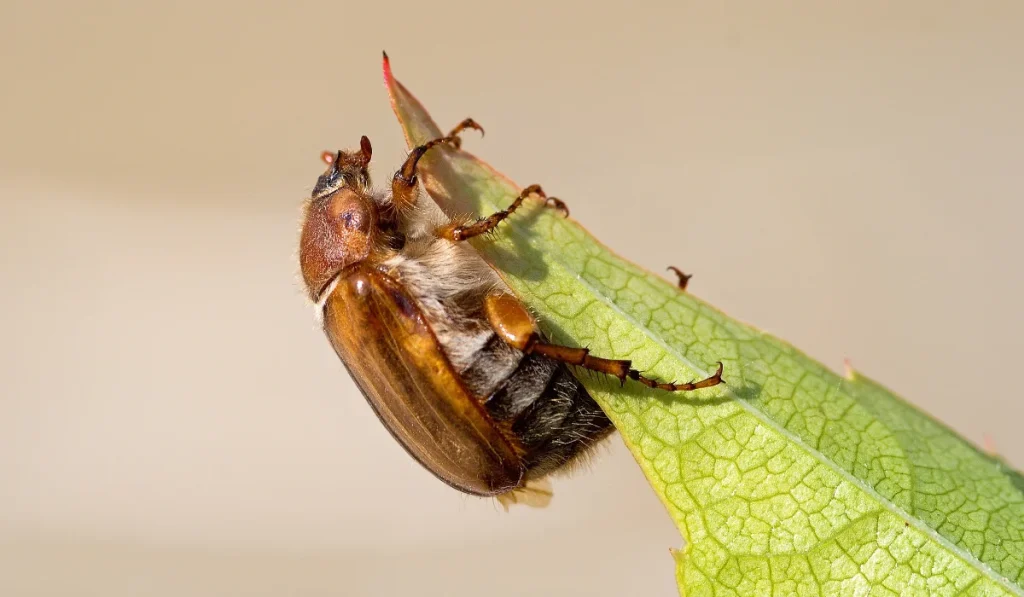
A dark insect races across the garage when you move a cardboard box. You see a brown or black body and long legs for a second before it slips out of sight. Calling it a cockroach feels reasonable, but several bugs create the same first impression.
Ground beetles, darkling beetles, June beetles, and crickets can all resemble roaches from a distance. California also has outdoor cockroach species that sometimes enter garages or homes without establishing the same kind of indoor population associated with German cockroaches. That makes bugs that look like cockroaches in California a little harder to identify from color alone.
Good cockroach identification starts with details you can actually see. Check the body shape, antennae, wings, legs, movement, and location. Those clues help separate harmless outdoor visitors from cockroach lookalikes and from insects that may point to a developing cockroach problem.
How to Identify Bugs That Look Like Cockroaches in California
Most bugs that look like cockroaches in California share one or two roach-like traits, such as dark coloring, long antennae, or quick movement. The resemblance usually weakens once you compare the whole insect instead of focusing on a single feature.
Cockroaches have broad, flattened bodies and long, thin antennae. Their legs have visible spines and are built for quick running. Young cockroaches, called a cockroach nymph or nymphs, resemble smaller versions of adults but do not have fully developed wings.
Beetles give you another clear comparison point. Adults have hardened front wings that form protective covers over the back. These covers often meet along a visible seam through the center. Cockroaches do not have the same rigid shell-like structure.
| Feature | Cockroach | Beetle | Cricket |
| Body | Broad and flattened | Usually firmer, rounded, or elongated | Narrower with large rear legs |
| Antennae | Long and thin | Length varies | Long and thin |
| Back | No hard shell-like wing covers | Hard wing covers with a center seam | Wings may lie along the back |
| Legs | Spiny and built for fast running | Built for walking or running | Large hind legs for jumping |
| Escape behavior | Runs rapidly toward shelter | Runs, crawls, or sometimes flies | Often jumps |
| Best clue | Flat profile and long antennae | Hardened wing covers | Oversized rear legs |
The UC Statewide IPM Program identifies five cockroach species commonly regarded as pests in California: German, brownbanded, Oriental, American, and Turkestan cockroaches. It also notes that identifying the species matters because cockroach control methods vary by species.
Beetles That Look Like Cockroaches
Several beetles that look like cockroaches live around California homes and landscapes. Many are dark, active around ground level, and quick enough to disappear before you get a close look. Garages, patios, landscaped areas, and gaps around exterior doors are common places for these encounters.
The cockroach vs beetle question is easiest to answer when you can see the insect’s back. A beetle generally looks harder and more rigid, with obvious wing covers. A cockroach has a flatter profile, longer threadlike antennae, and a body that looks less shell-like.
Movement can support the identification, but it should not be your only clue. Both groups contain fast runners. Body structure gives you a more reliable answer than speed.
Ground Beetles
Ground beetles can look like black roaches when they run across concrete or a garage floor. Many species are brown or black and stay close to soil, plants, mulch, leaf litter, and other outdoor cover.
Their hard wing covers separate them from cockroaches at close range. They also play a useful role outdoors because many prey on other insects and small organisms.
The UC IPM reports at least 800 species of predaceous ground beetles in California. Adults are primarily active at night and many are fast runners, two traits that help explain why homeowners sometimes mistake them for cockroaches.
Darkling Beetles
Darkling beetles are another dark-bodied group that may trigger a roach concern. Their coloring can range from brown to nearly black, and their hard outer body often becomes obvious once you see one under good lighting.
Check for a rigid back and the seam between the wing covers. Darkling beetles also tend to look thicker from the side than a flattened cockroach. Finding one close to a patio, garage door, or landscaped area supports the possibility that it simply wandered indoors.
June Beetles
June beetles, sometimes called June bugs, are more rounded and robust than most household cockroaches. Brown coloring causes much of the confusion, especially if one flies through an open door or appears near an outside light after dark.
Their body provides the answer at close range. June beetles have hard wing covers and a much chunkier profile. A cockroach generally looks flatter and has proportionally longer antennae.
Crickets and Other Common Cockroach Lookalikes
Crickets are among the more convincing bugs that look like roaches because they combine a dark body with long antennae. A cricket sitting along the edge of a dim garage can resemble a cockroach until it moves.
The rear legs usually settle the identification. Crickets have large hind legs made for jumping. Cockroach legs are more similar in proportion and better suited to running into cracks and crevices.
The UC IPM’s cricket pest guide describes adult crickets as black or brown and about 0.6 to 1 inch long. That size overlaps with several cockroach species, so size alone is not enough for a reliable identification.
Water Bugs and Oriental Cockroaches
The term water bug causes a lot of confusion because people use it for different insects. In California pest conversations, someone describing a dark “water bug” may actually be talking about an Oriental cockroach.
Oriental cockroaches are dark brown to nearly black and favor cool, damp locations. Garages, drains, water meter boxes, and areas around vegetation are common habitats. Their dark color can also cause people to call them black beetles even though they are true cockroaches.
Small Bugs and Baby Cockroaches
A small brown insect raises a different identification problem. A baby cockroach, more accurately called a cockroach nymph, does not have fully developed wings. That can make young roaches look less familiar than adults.
Look at the antennae and body proportions. Cockroach nymphs still have the broad body, long antennae, and running legs typical of roaches. If several sizes appear around the same kitchen or bathroom area, that pattern deserves more attention than a single unidentified small bug.
Which Cockroaches Live Around California Homes?
There are several cockroaches in California, but they do not all live the same way. German and brownbanded cockroaches can establish indoor populations. American cockroaches, Oriental cockroaches, and Turkestan cockroaches are mainly outdoor species that may temporarily enter buildings.
That distinction is important for California homeowners. A large roach found once beside a garage opening can have an outdoor source. Small roaches appearing over and over around a refrigerator, sink, or dishwasher point toward a different kind of problem.
| California Cockroach | General Appearance | Common Locations | What the Sighting Can Mean |
| German cockroach | About 1/2 inch, light brown, two dark stripes behind the head | Kitchens, bathrooms, cabinets, appliances | Indoor breeding population is a concern |
| Brownbanded cockroach | About 1/2 inch with lighter bands | Furniture, appliances, closets, warmer rooms | Can live and reproduce indoors |
| Oriental cockroach | Dark brown to nearly black | Drains, garages, damp areas, water meter boxes | Often linked to outdoor or moist habitats |
| American cockroach | Large and reddish brown | Sewers, drains, utility areas, warm humid sites | May enter from nearby harborages |
| Turkestan cockroach | Females dark, males lighter with developed wings | Concrete cracks, leaf litter, compost, meter boxes, garages | Usually associated with an outdoor population |
German Cockroaches in Kitchens and Bathrooms
The German cockroach is the most common indoor species in California. Kitchens and bathrooms provide food, water, warmth, and narrow protected spaces where these roaches can hide.
Pay attention to activity behind refrigerators, dishwashers, stoves, cabinets, and plumbing. Small cockroach droppings, egg cases, shed material, and nymphs can add context when repeated sightings suggest a cockroach infestation rather than an insect that entered from outdoors.
Turkestan Cockroaches Around California Homes
Turkestan cockroaches have become common around outdoor residential areas, particularly in warm, dry parts of California. They use water meter boxes, concrete cracks, compost, leaf litter, potted plants, and sewer systems as shelter.
They are especially relevant in Southern California because Turkestan cockroaches have been displacing Oriental cockroaches in that region and in other warm, dry parts of the state. One entering a garage does not automatically indicate that cockroaches are breeding throughout the home.
How to Tell an Outdoor Visitor From a Cockroach Infestation
Correct cockroach identification depends on the pattern as much as the insect itself. A single ground beetle beside a door tells you very little about the inside of the house. Several small cockroaches appearing around the same kitchen appliances over multiple nights tell you much more.
Look for evidence that shows repeated activity. Cockroach egg cases, droppings, nymphs, and adults in the same area can support the conclusion that roaches are living nearby. Cracks and crevices around cabinets, appliances, plumbing, and wall edges give indoor cockroaches protected places to hide during the day.
| What You Find | What It May Suggest | Useful Next Step |
| One hard-backed beetle near an exterior door | Outdoor beetle wandered inside | Check door sweeps and nearby gaps |
| Cricket in the garage | Outdoor insect gained entry | Inspect weather stripping and perimeter openings |
| Several small roaches near kitchen appliances | Possible indoor cockroach population | Inspect likely hiding areas and arrange identification |
| Adults and cockroach nymphs together | More than one life stage is present | Check nearby harborages |
| Cockroach egg cases in cabinets or cracks | Reproduction has occurred nearby | Address the population rather than individual insects |
| Repeated droppings around plumbing or appliances | Ongoing cockroach activity may be present | Inspect the surrounding area closely |
| Large roach near a drain or garage | Outdoor species may be entering | Identify the species and check the source |
Location adds another layer. German cockroaches favor indoor food preparation areas, while outdoor species are more likely to originate around drains, meter boxes, vegetation, garages, or building exteriors.
Do not rely on color alone or spray an unidentified insect simply because it resembles a roach. Effective pest control starts with knowing what is present. Sometimes improving exclusion solves the problem. An established indoor population requires a more targeted approach.
Get Help Identifying Bugs That Look Like Cockroaches in California
With bugs that look like cockroaches in California, the first sighting rarely tells the whole story. Hard wing covers point toward a beetle. Large jumping legs suggest a cricket. A flat body, long antennae, cockroach nymphs, egg cases, and repeated activity near food or water make a true roach problem more likely.
Homeowners in Los Angeles County and the San Fernando Valley, and San Francisco and the Bay Area, also encounter different combinations of indoor and outdoor pests. Knowing whether the source is inside the structure or just outside it helps determine what kind of pest control or exclusion work makes sense.
If roach-like insects keep appearing, Round the Clock Pest Services can identify the pest and recommend an approach based on what is actually present. Contact Round the Clock Pest Services to schedule an inspection rather than treating an unknown insect on a guess.