
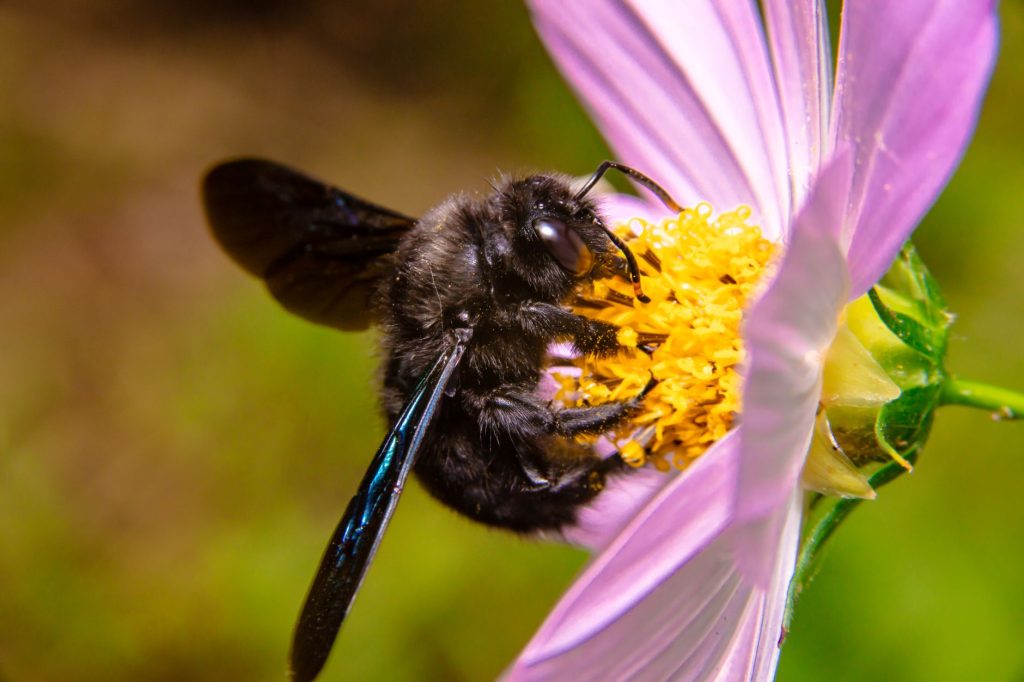
Find out: Are carpenter bees dangerous? Learn the signs, risks, and when to call Round the Clock Pest Services to avoid costly problems.
Key Takeaways About Carpenter Bee Dangers
- Carpenter bees are generally more of a nuisance than a serious danger. Males may buzz around people but cannot sting, and females only sting when provoked.
- The main concern with carpenter bees is the holes they bore into wood to create nests, which can affect wooden structures over time if left unaddressed.
- Telling carpenter bees apart from bumble bees helps you respond appropriately, since the two have different nesting habits and behavior patterns.
- A professional review can help you understand whether carpenter bee activity around your home warrants treatment or if simple preventive steps are enough.
How to Identify Carpenter Bees
Understanding what carpenter bees look like and where they build nests is the first step toward knowing whether they pose a real risk to your home. Much of the alarm around these bees comes from their territorial flight behavior rather than an actual threat to people. Recognizing the signs early helps you separate genuine structural concerns from routine nuisance activity.
How to Tell Carpenter Bee Types Apart
Carpenter bees can sometimes intimidate people because males are territorial and patrol areas where female bees may emerge in the spring. According to Purdue Extension, males buzz in front of people, giving the impression they are guarding a nest and are ready to sting. That bold hovering flight is one of the easiest ways to confirm you are dealing with carpenter bees rather than another species.
Female carpenter bees bore into sound wood, and sometimes decaying wood, to create nesting galleries. This wood-boring habit sets them apart from other bees you may encounter around your property, which typically nest in the ground or in above-ground paper-like structures.
How to Spot Carpenter Bee Activity Inside Your Home
Carpenter bees build nests in wood, creating galleries that can weaken structures but rarely cause severe damage. Inside your home, look for perfectly round entry holes in exposed wood surfaces. You may also notice small piles of sawdust-like frass below these openings, which indicate active boring.
Interior woodwork that is unpainted or unfinished can attract activity. Keep an eye on areas where bare wood is accessible from the outside, as galleries may extend inward over time.
Where Carpenter Bee Activity Shows Up Around Homes
Around the exterior of your home, carpenter bee nests typically appear in wooden elements that are exposed and easy for the bees to access. Any untreated or weathered wood on your property may be a target for nesting galleries.
You may notice males hovering near these nesting areas during spring, patrolling the zone where females are working. While their flight pattern can seem aggressive, it is a territorial display rather than a direct danger to you.
Exterior Entry Points Carpenter Bees Use
According to UC IPM, the galleries carpenter bees create rarely cause severe damage, but they can weaken structures over time. Entry holes may appear on exposed exterior wood surfaces where the wood is unprotected by paint or finish.
Even structurally solid lumber is not immune to boring activity. Watching for fresh bore holes and frass deposits around your home’s exterior woodwork is the most reliable way to catch nesting activity before galleries expand further.
Why Carpenter Bee Problems Develop
Carpenter bees are solitary insects that bore into wooden structures for their nests. Unlike social species such as bumble bees, they do not build large colonies or defend a central hive. Still, their wood-boring habit and territorial flight patterns can create ongoing concerns when nesting goes unchecked.
Outdoor Nesting Areas for Carpenter Bees
Female carpenter bees select an appropriate wooden site and begin to chew, creating tunnel entrances approximately ½ inch in diameter. According to Purdue Extension, these openings are just large enough for the bee to enter. The holes are often stained yellow or brown, making them visible on exterior wood surfaces over time.
Food and Shelter That Attract Carpenter Bees
Carpenter bees earn their name from their wood-boring behavior. They do not eat wood but tunnel into it to shelter and care for their young. The female provisions a few cells inside the tunnel where she raises the next generation. Exposed or unpainted wooden structures offer the kind of shelter these bees prefer.
How Carpenter Bees Move Around Homes
Males patrol the area around nest sites and often fly about the faces of people. This territorial behavior includes loud buzzing and dive-bombing of anyone who comes close. Despite feeling threatened, people are not at risk because males cannot sting.
Trails and Entry Points Carpenter Bees Use
Each tunnel entrance starts as a single ½-inch hole, but multiple females may bore into the same wooden structure over successive seasons. Females can sting but do so only if provoked or mishandled. They do not defend their nest the way social bees do. When you notice fresh sawdust or yellow-brown staining near round holes on exterior wood, a professional review can help you understand the scope before additional tunneling occurs.
Risks From Carpenter Bees
Health Risks Linked to Carpenter Bees
Carpenter bees pose a limited sting risk compared to many other stinging insects. Males cannot sting at all, and females sting only when provoked, grabbed, or squeezed. According to UC IPM, while their presence around buildings can be annoying or even frightening, the actual threat of being stung is low under normal circumstances.
Social bees and wasps generally sting to defend their colony. Carpenter bees, as solitary nesters, do not guard their nesting sites the way social bees do. This means you are unlikely to receive a sting simply by walking near an active area.
Property Damage From Carpenter Bees
Over time, repeated nesting in the same wood can weaken boards and trim. Abandoned nest cavities may also attract other opportunistic insects looking for ready-made nesting sites.
Certain wasps, for instance, will move into vacant cavities rather than build their own. This means a carpenter bee gallery left unaddressed could eventually host secondary pests around your home.
Food Areas and Carpenter Bee Activity
Carpenter bees do not target food sources inside your home the way some pests do. Their activity centers on wooden structures where they create nesting sites. However, their buzzing presence near outdoor eating areas, decks, and porches can feel alarming. Despite the intimidating flight patterns, the sting risk remains low for most people.
When to Look Closer at Carpenter Bee Activity
If you notice multiple round entry holes in exposed wood or see bees hovering around eaves and trim throughout the day, it may be worth having a professional take a closer look. Ongoing boring activity in the same wooden structures can compound over seasons.
Watching for sawdust-like frass beneath wooden surfaces and checking for new or reused nesting sites each year can help you stay ahead of potential concerns. A trained service professional can assess the scope of activity and recommend appropriate next steps for your home.
Professional Pest Control for Carpenter Bees
The real concern for homeowners is the cumulative damage carpenter bees cause to wood over time. They bore nesting galleries into wooden structures, collecting pollen and nectar to provision those galleries and laying eggs inside. Left unchecked, this activity can affect decks, fascia boards, and other exposed wood around your home.
How to Reduce Attractants for Carpenter Bees
Prevention starts with making your wood less inviting. According to UC IPM, you can protect wood from infestation by painting or varnishing to seal pores, cracks, and holes where these bees could lay eggs. Bare, untreated wood is more appealing to carpenter bees looking for nesting sites.
Regularly inspect wooden surfaces around your property for early signs of boring activity. Sealing existing holes and keeping wood finishes maintained can help reduce the chance that carpenter bees return to the same areas season after season.
Why Carpenter Bee Control Starts With Inspection
Proper identification is the first step. Carpenter bees are sometimes confused with bumble bees, but there are clear differences. One of the most easily observed is that the top of the abdomen of carpenter bees is slick and shiny, while bumble bees are covered with black, white, or yellow hairs. Bumble bees are social and nest in the ground, while carpenter bees bore into wood.
A trained service professional can confirm whether the activity you see is from carpenter bees and assess how far an infestation has progressed. The nesting galleries bored into wood may not be visible from the surface, making a full inspection of gallery depth and spread important.
What to Expect During Professional Carpenter Bee Treatment
During a professional visit, a service professional will locate active nesting galleries and identify all areas of infestation. Treatment needs to address existing nests directly rather than just the bees you see flying nearby.
Round the Clock Pest Services, a woman-owned and operated company, prioritizes communication throughout the process. Your service professional will contact you before arrival and walk you through any findings so you understand what is happening at your property.
What to Expect From a Carpenter Bee Control Plan
A control plan typically combines treatment of active nesting sites with preventive steps to discourage future infestation. Sealing exposed wood helps make those surfaces less suitable for egg-laying.
Round the Clock Pest Services focuses on quality and 100% satisfaction. Your service professional can point out vulnerable areas of your home and recommend maintenance steps to keep wood protected. Addressing carpenter bee activity early, before nesting galleries multiply, helps preserve the structural integrity of your wooden surfaces.
Are Carpenter Bees Dangerous: Bottom Line
Carpenter bees pose minimal risk to people but can cause meaningful wood damage over time. Female carpenter bees can sting, but they are not aggressive and typically only do so when provoked. Certain wood types, such as cedar, can be particularly susceptible to extensive damage. If you notice carpenter bee activity around your home, Round the Clock Pest Services can assess the situation and help you decide on the right next steps.
Contact us to request a professional review.
Frequently Asked Questions About Carpenter Bee Dangers
Can Carpenter Bees Sting You?
Female carpenter bees have the ability to sting, but they are not aggressive. Stinging typically only happens if the bee is provoked or handled roughly. Male carpenter bees cannot sting at all, even though their hovering behavior near people may seem intimidating.
Do Carpenter Bees Cause Property Damage?
Carpenter bees bore into wooden structures to create nesting galleries. Over time, repeated nesting in the same areas can lead to noticeable wood damage. Cedar boards are particularly susceptible to extensive damage from carpenter bee activity.
How Are Carpenter Bees Different from Bumble Bees?
Bumble bees can become aggressive when their ground nest is threatened, whereas carpenter bees are generally docile unless directly handled.
When Should You Call a Professional About Carpenter Bees?
If you see multiple holes in wooden surfaces around your home or notice bees returning to the same areas season after season, a professional review may be worthwhile. A trained service professional can evaluate the extent of nesting activity and recommend an appropriate approach for your situation.