
You pull a storage bin away from the garage wall and find a thick web attached to the handle. A dark spider drops behind the box before you get a clear look. Its color offers one clue, but the web, hiding place, movement, and egg sac can tell you much more.
The types of spiders in California homes include quiet web builders, fast ground hunters, and a few species that call for more caution. Use this field guide to compare what you saw, narrow down the spider, and decide whether simple removal or professional spider control makes sense.
How to Use This Guide to the Types of Spiders in California
California has more than 1,000 spider species across at least 54 families, according to the UC Statewide Integrated Pest Management Program (UC IPM). Most remain outdoors. This guide focuses on the spiders homeowners are more likely to find in garages, patios, sheds, closets, gardens, and living spaces.
Begin with the web. A circular web usually belongs to an orb-weaver. A flat sheet of silk ending in a tunnel points toward a funnel weaver. A spider running across the floor without a web may be a wolf spider or another active hunter.
Next, check the location and body shape. Long, delicate legs suggest a cellar spider. A rounded abdomen beneath patio furniture may belong to a widow or cobweb spider. Egg sacs can also help, especially when you are trying to identify a brown widow.
Quick California Spider Identification Chart
| Spider | What You May See | Web or Movement | Common Location | Concern Level |
| Cellar spider | Tiny body with very long legs | Loose, tangled web | Ceiling corners, garages, and utility rooms | Low |
| House cobweb spider | Small brown or gray body with a rounded abdomen | Irregular, dusty web | Closets, windows, and stored belongings | Low |
| Wolf spider | Sturdy, mottled body | Runs across floors and soil | Garages, bathrooms, doorways, and yards | Low |
| Jumping spider | Compact body with large front eyes | Moves in short jumps | Windows, patios, fences, and exterior walls | Low |
| Orb-weaver | Large or patterned abdomen | Circular wheel-shaped web | Gardens, eaves, porch posts, and walkways | Low |
| Funnel weaver | Brown body with long legs | Flat web leading to a tunnel | Lawns, shrubs, window wells, and foundations | Low |
| Yellow sac spider | Pale yellow, cream, or light green body | Hunts at night and rests in a silk pocket | Walls, curtains, ceilings, and window frames | Usually low |
| Western black widow | Glossy black female with a red or orange underside marking | Strong, tangled web | Garages, woodpiles, sheds, and crawl spaces | High caution |
| Brown widow | Tan, gray, or brown body with banded legs | Tangled web and spiky egg sac | Patio furniture, planters, fences, and fixtures | Moderate caution |
One spider near a window does not prove that you have a spider infestation. Fresh egg sacs, several webs in one area, or repeated widow sightings suggest that the property offers dependable prey and shelter.
Common House Spiders in California
The most common house spiders in California do not all behave the same way. Some remain in one web for weeks. Others enter through an open door while chasing insects. The profiles below use the same four checkpoints so you can compare each spider quickly.
Cellar Spider
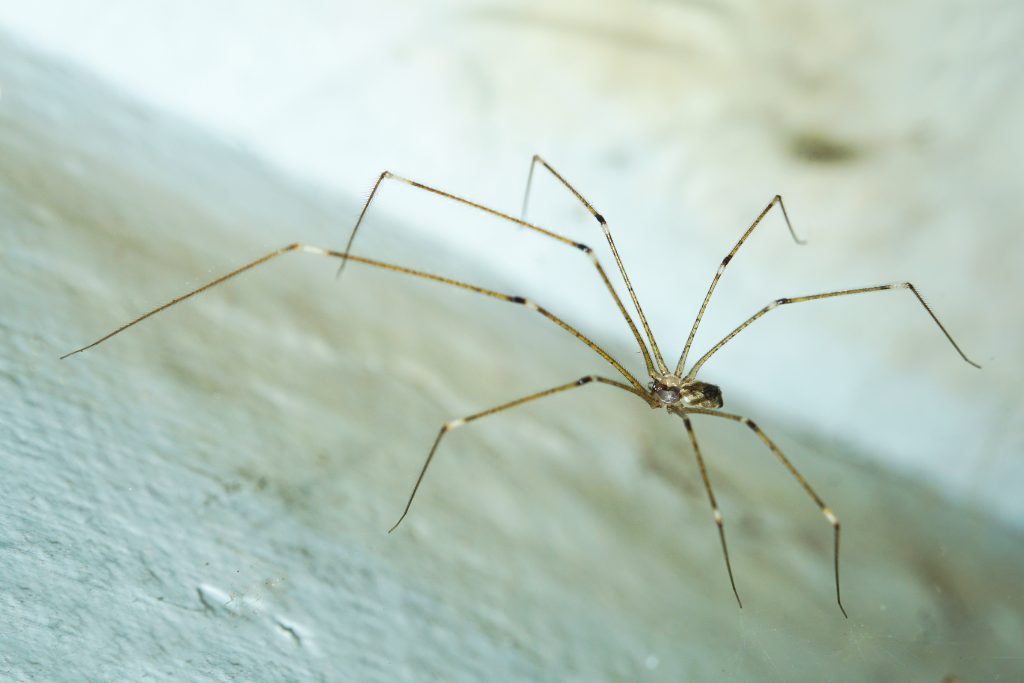
Cellar spiders are easy to miss until their legs catch the light. They often stay in one protected corner, which makes them one of the more familiar spiders in California homes.
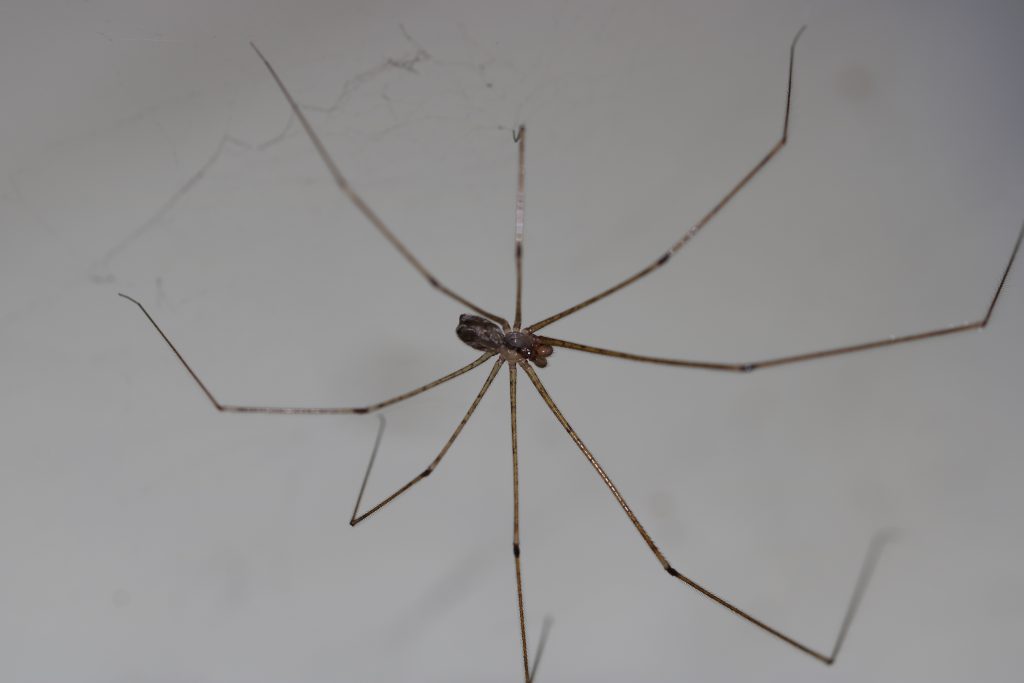
What it looks like: A cellar spider has a very small body and legs that appear unusually long and delicate. Its pale tan or gray coloring can blend into walls and ceilings.
Where it hides: Look in ceiling corners, garages, utility rooms, crawl spaces, and other protected areas that are not cleaned often.
What it does: It builds a loose, messy web and may shake rapidly when disturbed. This movement can make the spider look blurred.
What you should do: Vacuum the spider and web when it appears indoors. A new web in the same spot may indicate that small flies or other prey remain nearby.
House Cobweb Spider
This small web builder is often mistaken for a young widow because of its rounded abdomen. Its web and location usually offer better identification clues than color.
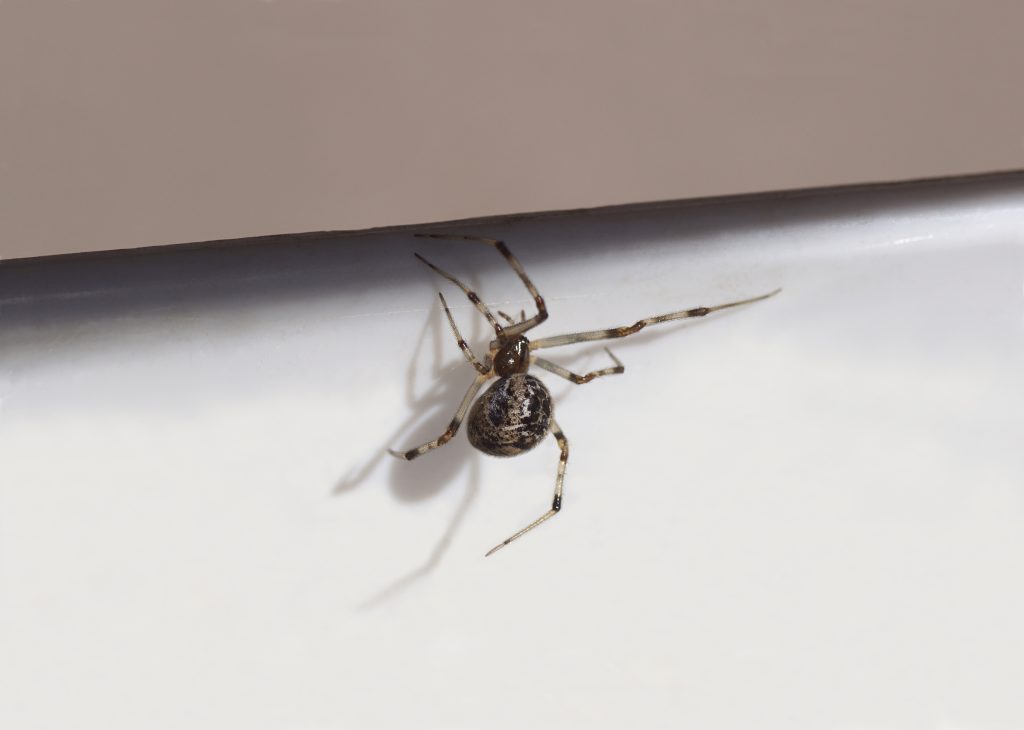
What it looks like: House cobweb spiders are small and usually brown or gray. They have rounded abdomens with faint patterns that can be difficult to see.
Where it hides: These spiders settle behind furniture, around windows, inside closets, and near boxes or shelving.
What it does: It stays near an irregular web and waits for insects to become trapped. Older webs often collect dust.
What you should do: Remove the web and inspect the area for insects. Repeated webs may point to a dependable food source.
Wolf Spider
A wolf spider is more likely to get your attention because it moves across open ground. It does not wait in a web, so homeowners often see it before they notice other common spiders in California.
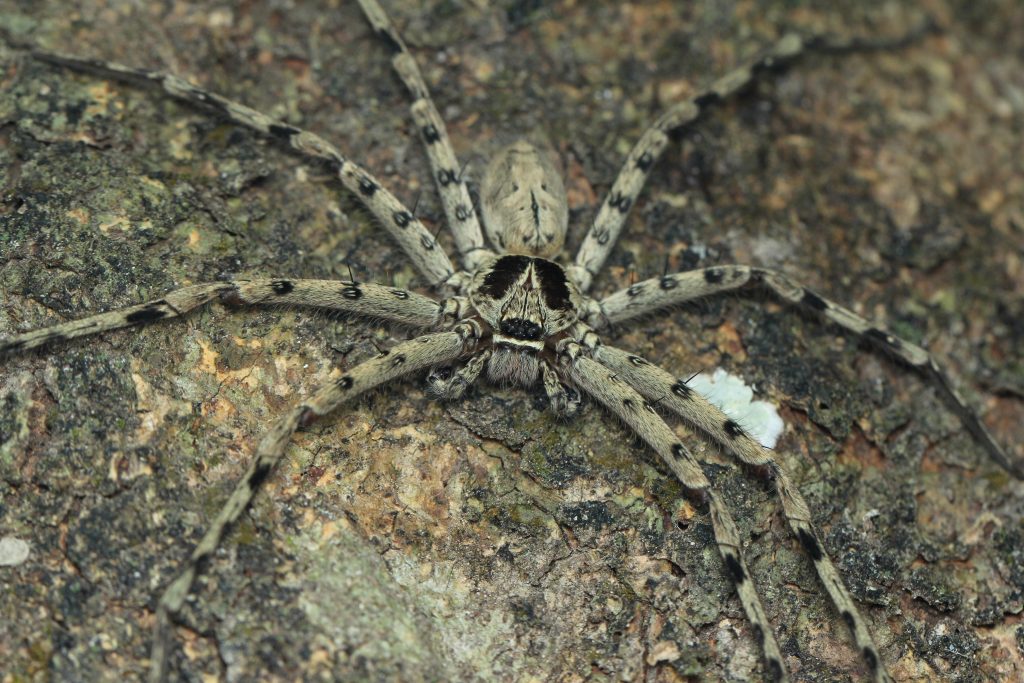
What it looks like: A wolf spider has a sturdy body, long legs, and mottled brown or gray coloring. Some appear hairy and can look larger when moving quickly.
Where it hides: You may find one on a garage floor, near an exterior door, in a bathroom, or beside the foundation.
What it does: Wolf spiders do not build capture webs. They chase insects across the ground and usually run for cover when approached.
What you should do: Remove an isolated spider and check nearby doors or screens. Frequent sightings near the same opening may reveal an entry gap.
Jumping Spider
Jumping spiders often seem alert because they turn toward movement. Their daytime hunting habits also make them easier to observe than spiders that stay hidden in webs.
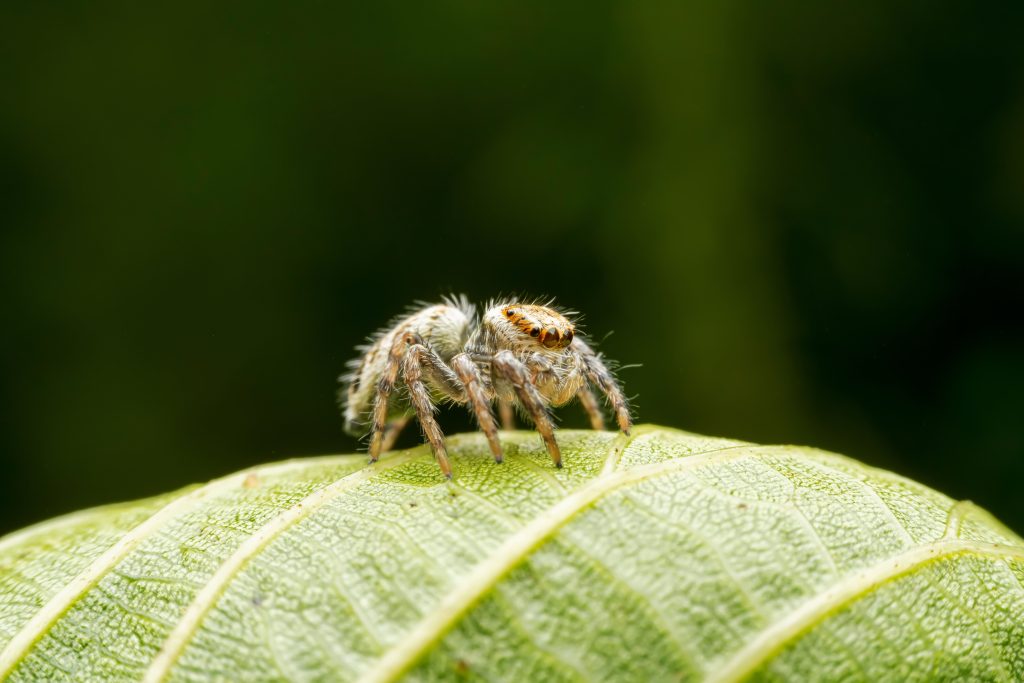
What it looks like: Jumping spiders have compact bodies and prominent forward-facing eyes. Some species have bright or iridescent markings.
Where it hides: Sunny windows, stucco walls, fences, patios, and porch railings give them good hunting areas.
What it does: It stalks prey during the day and moves in short, controlled jumps. It may turn toward movement because its vision is stronger than that of many other spiders.
What you should do: Relocate or remove the spider when necessary. Reduce insects around windows and exterior lights when sightings continue.
Orb-Weaver
Orb-weavers are usually outdoor spiders, but their large webs can stretch across walkways, porches, and spaces between landscaping. The web is often more noticeable than the spider.
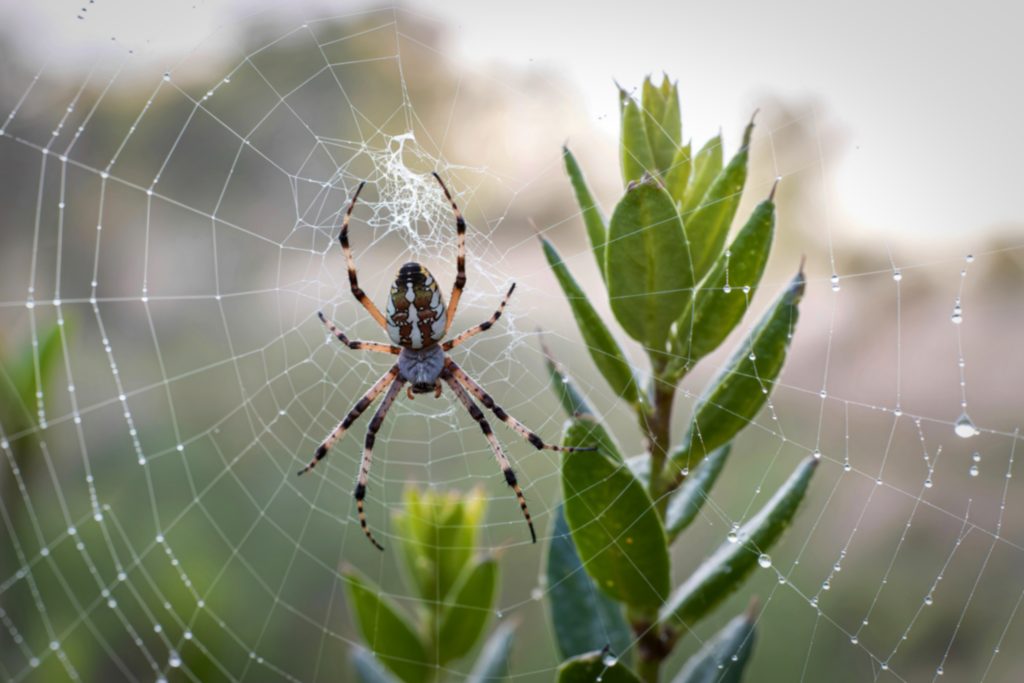
What it looks like: Orb-weavers vary widely in color and size. Many have large abdomens with stripes, spots, bumps, or bright markings.
Where it hides: They build webs between plants, porch posts, shrubs, eaves, and garden structures.
What it does: The spider waits in or near a circular web for moths, flies, and other insects. Many rebuild damaged parts of the web.
What you should do: Leave the web alone when it is out of the way. Remove it with a long-handled brush when it crosses a path or blocks an entrance.
Funnel Weaver
Funnel weavers can resemble wolf spiders when they leave the web. The flat sheet of silk and narrow tunnel are the better field marks.
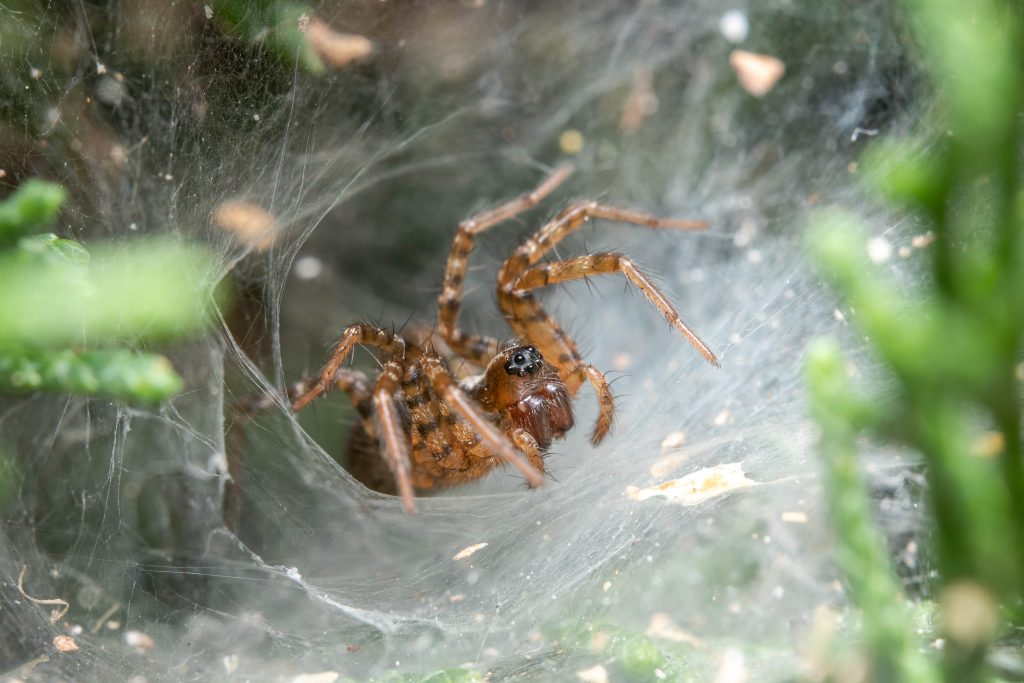
What it looks like: Funnel weavers are brown or gray and often have lengthwise markings on the body. Their appearance can resemble a wolf spider.
Where it hides: Look for their webs in grass, shrubs, foundation plantings, window wells, and low exterior corners.
What it does: It waits inside a silk tunnel connected to a flat sheet of webbing. The spider rushes out when prey touches the silk.
What you should do: Remove webs beside entrances or heavily used areas. Reduce dense ground cover when large numbers appear near the foundation.
Yellow Sac Spider
Yellow sac spiders do not leave the large, obvious webs associated with many indoor species. Their small silk retreats may be the first sign that one is active nearby.
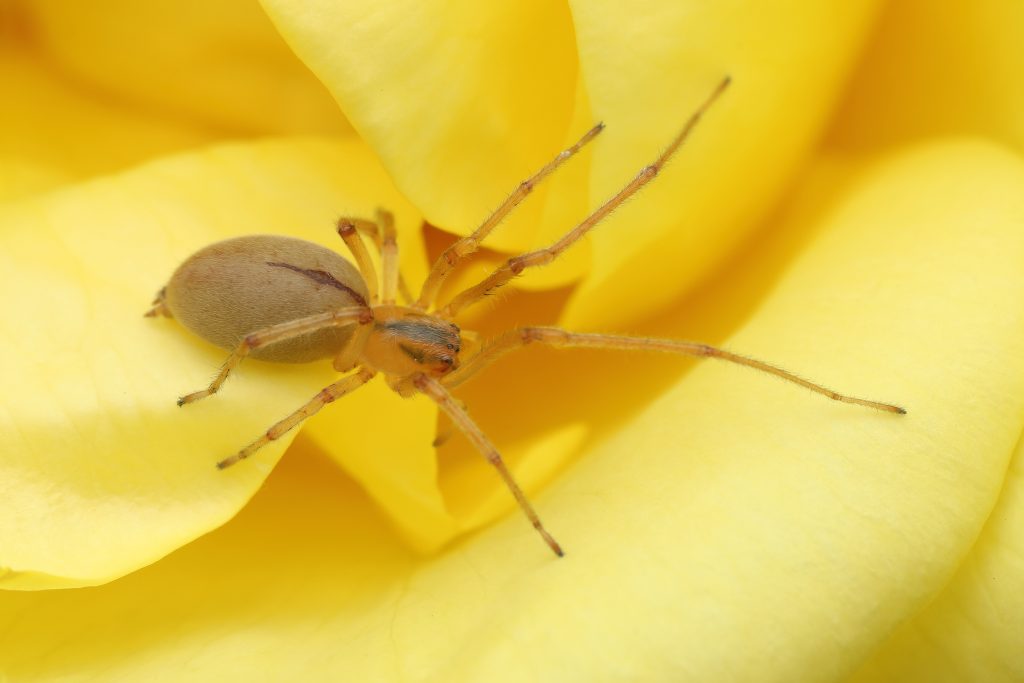
What it looks like: Yellow sac spiders are small and pale. Their bodies may be yellow, cream, beige, or light green.
Where it hides: They rest inside small silk pockets along ceilings, curtains, walls, window frames, and behind household objects.
What it does: The spider leaves its silk retreat at night to hunt. It does not make a large web for catching prey.
What you should do: Vacuum visible silk sacs and inspect nearby gaps. Wear gloves before moving curtains, stored fabric, or items that have not been disturbed.
Dangerous Types of Spiders in California
Among the types of spiders in California, widows require the most care around homes. The western black widow is the state’s main medically significant spider. Brown widows are also established, especially in Southern California.
The UC IPM widow spider guide identifies the western black widow and brown widow as California’s two established widow species.
Western Black Widow

A mature female western black widow usually has a glossy black abdomen. The familiar red or orange hourglass appears underneath, so it may not be visible while the spider rests in its web.
The web looks tangled but feels stronger than the fine silk made by many common spiders. Likely hiding places include woodpiles, meter boxes, sheds, crawl spaces, garage storage, and gaps beside foundations.
Juveniles and adult males may have lighter spots or stripes. Do not assume a spider is harmless because it lacks the solid black appearance of a mature female.
Brown Widow

Brown widow spiders range from tan to dark brown and often have light and dark bands on their legs. Their underside marking is usually orange or yellow-orange.
The egg sac is the clearest field mark. A brown widow sac has pointed silk projections that create a spiky surface. A western black widow sac is smoother.
Brown widows often hide beneath patio furniture, planter rims, mailbox housings, barbecue equipment, fence rails, and outdoor toys. Check these objects before lifting or unfolding them after long periods of storage.
Western Black Widow and Brown Widow Comparison
| Feature | Western Black Widow | Brown Widow |
| Adult female color | Usually glossy black | Tan, gray, or brown |
| Underside marking | Red or orange hourglass | Orange or yellow-orange hourglass |
| Legs | Generally dark | Often light and dark banded |
| Egg sac | Smooth or lightly textured | Covered with pointed silk projections |
| Common setting | Garages, sheds, woodpiles, and crawl spaces | Patio furniture, planters, fences, and fixtures |
| Medical concern | California’s primary medically significant spider | Venomous, with severe reactions reported less often |
Do not reach into a widow web or handle a suspected egg sac. Keep children and pets away from the area until the spider can be removed safely.
Common Spider Look-Alikes and Identification Mistakes
California spider identification becomes less reliable when you use color alone. Several harmless spiders resemble widows or recluses from a distance.
Brown Recluse Spiders in California

Brown recluse spiders are not established in California. A brown spider in a Los Angeles garage, San Diego shed, San Francisco home, or Walnut Creek closet is more likely to be another species.
The violin-shaped mark mentioned in online identification guides does not confirm a brown recluse by itself. Several unrelated spiders have dark markings in the same general area.
A few related recluse species live in limited desert regions of California. That does not make the brown recluse a routine household pest in the state’s larger communities.
Skin irritation also does not prove that a spider caused the problem. Infections, allergic reactions, and other conditions may resemble a bite. Seek medical care when a sore spreads, becomes increasingly painful, or continues to worsen.
Wolf Spiders Versus Funnel Weavers
Wolf spiders and funnel weavers can share similar brown coloring and striped bodies. The web settles the question more reliably than the markings.
A wolf spider runs across open ground and does not build a capture web. A funnel weaver stays close to a flat sheet of silk connected to a tunnel.
False Widows Versus Black Widows
False widows have rounded, dark abdomens and build tangled webs. Their bodies are usually brown or purplish rather than glossy black, and they lack the classic red hourglass of a mature western black widow.
Do not pick up a suspected look-alike to inspect it. Use a clear photograph from a safe distance or ask a pest professional for identification.
Why Spiders Keep Appearing Around Your Home
Recurring spiders in California homes usually have access to prey and shelter. Removing one visible spider does not change either condition.
Exterior lights can gather moths and flies beside doors, windows, and eaves. Irrigated landscaping may support insects along the foundation. Indoors, ants, drain flies, and pantry pests can feed both web builders and active hunters.
Clutter provides the shelter. Cardboard boxes, unused pots, stored cushions, firewood, gardening gloves, and covered equipment create dark spaces that remain still for weeks. Widows often choose these areas because their webs are less likely to be disturbed.
Openings around doors, windows, vents, utility lines, and pipes give spiders a route inside. An open garage door also allows ground hunters to wander indoors while following insects.
How to Inspect for Spider Activity
Walk around the outside of the house after dark with a flashlight. Hold the beam at an angle to reveal fresh silk around eaves, windows, lights, hose connections, planters, and stored objects.
Inside, check behind garage shelving, beneath utility sinks, around seldom-used boxes, and near doors with worn seals. Look for a pattern. Several webs in one zone mean more than one stray spider on a wall.
What to Do When You Find a Spider
Different types of spiders in California call for different responses. Use the spider, location, web, and amount of activity to choose your next step.
| What You Find | Best Next Step |
| One common house spider | Vacuum or remove it, then inspect nearby doors and screens |
| A web returning in the same corner | Remove it and check for small insects nearby |
| Several spiders around exterior lights | Reduce insect activity and adjust lighting where practical |
| A spiky egg sac | Avoid handling it and inspect the area for brown widows |
| A western black widow near a used space | Keep people and pets away and arrange safe removal |
| Repeated widow sightings | Schedule an inspection for webs, egg sacs, and hiding places |
| Bite symptoms that increase or spread | Contact Poison Control or seek medical care |
Remove accessible webs with a vacuum indoors or a long-handled brush outside. Empty the vacuum contents into a sealed outdoor trash bag. Wear gloves when moving firewood, pots, boxes, cushions, or equipment that has remained untouched.
Repair torn screens and worn door sweeps. Seal openings around pipes, utility lines, windows, and siding. Move lumber and firewood away from exterior walls, and trim plants that touch windows or eaves.
Reduce the insects that support spider activity. Address indoor fly problems, clean food residue, repair leaks, and avoid concentrating bright exterior lights directly beside doors.
A suspected black widow bite needs prompt guidance. Poison Control reports that serious bites may cause immediate pain followed by severe pain and muscle cramps within a few hours. Fatal bites are rare, but increasing pain, weakness, breathing difficulty, or spreading symptoms require medical attention.
Get Help With Spiders Around Your California Home
The types of spiders in California do not all need professional treatment. A cellar spider in a ceiling corner may require only web removal. Repeated widow sightings, fresh egg sacs, or dense webs near toys, seating, tools, or work areas call for a more thorough inspection.
A store-bought spray reaches the spider in view. It does not identify hidden egg sacs, reduce the insects feeding the spiders, or close the gaps they use to enter. Those untreated conditions allow activity to return.
Round the Clock Pest Services can identify the spider, inspect likely web sites, check for egg sacs, locate entry points, and look for the insect activity supporting the problem. That gives you a plan based on what is happening around your home rather than a temporary reaction to one spider. Contact Round the Clock Pest Services to request a free quote for spider control at your California home.