
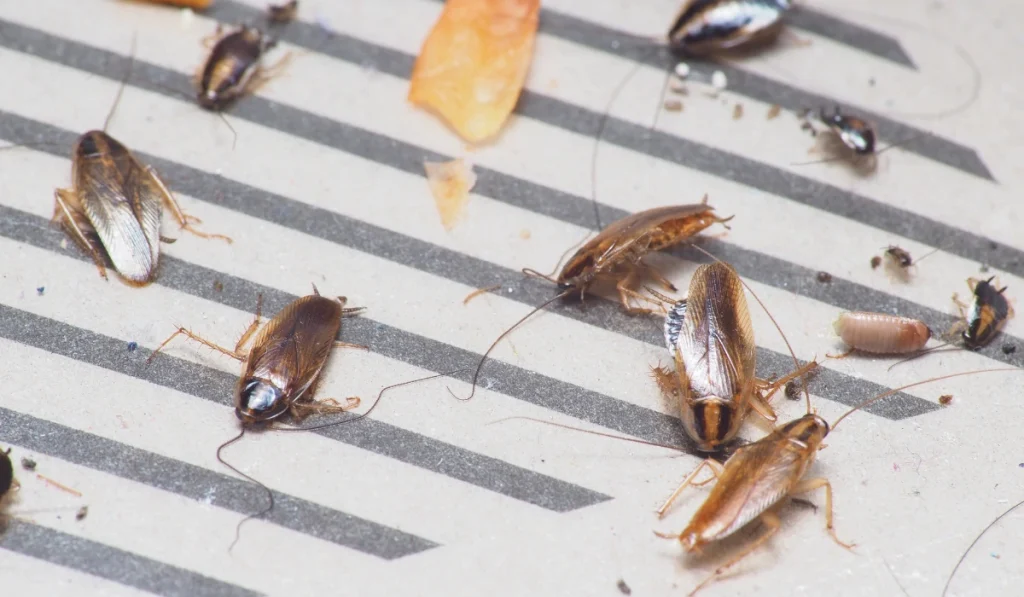
The German cockroach in California is the state’s most common indoor cockroach species. These small, tan insects reproduce quickly, hide behind kitchen appliances and bathroom fixtures, and can spread between apartments through gaps around shared plumbing. Spraying the roaches you see rarely controls an established infestation because many remain hidden, and some sprays can drive them into other areas. Getting rid of German cockroaches starts with correct identification, treatment near their hiding places, and follow-up monitoring to confirm that the population is declining.
What Does a German Cockroach in California Look Like?
An adult German cockroach measures approximately 10 to 15 millimeters long, or about 3/8 to 9/16 of an inch. Its body is tan to light brown, with two dark, parallel stripes just behind the head. The stripes are the clearest identifying feature when you’re trying to determine which cockroach species you’ve found.
Adults have long antennae, six legs, and wings, but they generally run instead of flying. Their flattened bodies help them fit into cabinet joints, appliance openings, and other narrow spaces. If you find a small brown roach near your kitchen sink, look for the stripes before assuming it’s a German cockroach.
German Cockroach Nymphs and Egg Cases
Young German cockroaches, called nymphs, are smaller and darker than adults. They don’t have developed wings, and their markings change as they grow. Finding several nymphs around a refrigerator or beneath a sink is strong evidence that cockroaches are breeding nearby.
Females carry their eggs in brown capsules called oothecae. According to the University of Florida’s German cockroach fact sheet, each egg case typically contains 30 to 40 eggs. The female carries the capsule until shortly before the young hatch, helping protect the developing offspring.
German Cockroaches vs. Other California Roaches
Several cockroach species in California can turn up around homes, but they don’t all behave alike. Some breed indoors, while others usually live outdoors and enter through accessible openings.
| Species | Identifying Features | Typical Hiding Places |
| German cockroach | Small, tan body with two dark stripes behind the head | Kitchen cabinets, appliances, and bathroom fixtures |
| American cockroach | Large, reddish-brown body | Sewers, drains, damp utility spaces, and crawl spaces |
| Brown-banded cockroach | Small body with lighter bands across the wings or abdomen | Furniture, closets, upper cabinets, and electronics |
| Oriental cockroach | Dark brown to black, with a shiny body | Damp outdoor areas, drains, basements, and crawl spaces |
The distinction affects treatment. A German cockroach population breeding behind kitchen appliances needs an indoor control plan. A large outdoor roach entering through a damaged door seal calls for a different inspection.
Why German Cockroaches Reproduce So Quickly
German cockroaches reproduce faster than other common household pest cockroaches. Females produce multiple egg cases during their lives, and several generations can live in the same building simultaneously.
Their life cycle has three stages: egg, nymph, and adult. Under favorable conditions, development from egg to adult takes roughly 100 days, although temperature, nutrition, and other factors can change that timing. Once young cockroaches mature, they can begin producing another generation.
An indoor German cockroach infestation doesn’t depend on warm summer weather. Heated buildings provide conditions that allow breeding throughout the year, including during cooler months in Los Angeles, San Francisco, and Walnut Creek.
Why Kitchens and Bathrooms Support Breeding
Kitchen appliances provide warmth and protected spaces. Grease behind a stove, crumbs beneath a refrigerator, and residue inside cabinet corners offer food without requiring roaches to travel across exposed surfaces.
Bathrooms supply moisture through plumbing fixtures, damp cabinets, and leaking connections. Even a small leak beneath a sink can support activity in an otherwise clean room.
These conditions explain why an infestation can persist despite regular countertop cleaning. The areas that support breeding often sit behind or beneath fixtures that rarely move.
Where German Cockroaches Hide and How to Spot Them
German cockroaches prefer tight, dark spaces close to food and water. In kitchens, check the areas around refrigerator motors, dishwasher openings, stove gaps, cabinet hinges, and pipes passing through walls.
In bathrooms, inspect beneath sinks, around plumbing penetrations, and inside damp vanity cabinets. Cockroaches also use cracks along baseboards and gaps where cabinetry meets the wall.
Because they are primarily active at night, you may not see many during the day. Repeated nighttime sightings or cockroaches appearing in exposed areas deserve a closer inspection.
Signs of an Established Infestation
Droppings are often easier to find than the insects themselves. German cockroach feces may appear as tiny black specks around cabinet corners, drawer joints, appliance openings, and other hiding places.
Other evidence includes shed skins, empty egg cases, and live nymphs. Finding several developmental stages in the same area suggests an established breeding population.
Sticky monitoring traps can help locate concentrated activity. Place them according to their instructions along travel routes near suspected hiding areas, then record where insects are caught. Traps provide information about activity, but they aren’t a substitute for treating the infestation.
Health Concerns Inside the Home
German cockroaches can contaminate food and kitchen surfaces with droppings and body secretions. They may also carry microorganisms between contaminated areas and places where food is stored or prepared.
Their droppings, saliva, and body fragments contain allergens that can trigger symptoms in susceptible people, particularly those with asthma. These materials can remain in the home after the insects have been killed.
Contaminated areas need careful cleaning as part of cockroach management. Killing live insects without removing accumulated debris leaves allergen sources behind.
How German Cockroaches Spread Between Apartments
Apartment infestations are difficult because German cockroaches don’t stay within individual units. They can move through openings around shared plumbing, electrical penetrations, and connected utility spaces.
A resident may reduce activity inside one apartment while cockroaches remain established nearby. If those neighboring areas aren’t addressed, the insects can move back through accessible gaps.
This is a concern in multifamily housing, where separate apartments share walls, pipes, and maintenance spaces.
Shared Walls, Plumbing, and Neighboring Units
Cockroaches don’t need a large opening to travel between connected spaces. Gaps where sink pipes enter the wall, openings around utility lines, and damaged cabinet backs can provide passageways.
Treating the apartment with the most visible activity may not resolve a problem affecting several units. Recurring cockroach problems in Los Angeles County apartments often require attention to neighboring units and shared building conditions.
Renters should document sightings and notify property management. Building managers can coordinate inspections, arrange access to affected units, and address maintenance problems that allow cockroaches to move between apartments.
How German Cockroaches Arrive in Belongings
German cockroaches can also enter through transported items. Cardboard boxes, used appliances, furniture, and stored belongings may conceal live insects or egg cases.
This is one reason a clean apartment can develop a cockroach infestation. An insect introduced in a moving box or secondhand appliance can reach suitable hiding spaces without arriving from outdoors.
Inspect used appliances and furniture before bringing them inside. Remove unnecessary cardboard packaging and pay particular attention to items stored in shared rooms or buildings with known cockroach activity.
Why Household Sprays Often Fail Against German Cockroaches
A household spray can kill exposed cockroaches, but an established population usually includes insects hidden behind appliances, beneath cabinetry, and inside narrow cracks. Killing a few visible adults doesn’t address those protected groups.
Some spray formulations also repel cockroaches. Surviving insects may avoid treated surfaces and shift into other hiding places, making the infestation harder to locate.
Repeated spraying without finding the source can therefore leave the underlying problem unresolved.
Repellent Sprays and Bug Bombs
Repellent sprays affect cockroach movement as well as exposed insects. When roaches encounter treated surfaces, they may retreat into untreated spaces instead of crossing the area.
That behavior can interfere with bait programs. If a repellent treatment prevents cockroaches from approaching bait, fewer insects will feed on it.
Total-release foggers, commonly called bug bombs, have another limitation: airborne pesticide may not adequately penetrate the cracks where German cockroaches spend much of their time. Improper fogger use also creates safety hazards, so broad room treatment shouldn’t replace a targeted inspection.
Insecticide Resistance
German cockroach populations have developed resistance to several insecticide ingredients. Resistance occurs when insects with inherited traits that help them survive exposure reproduce and pass those traits to later generations.
Resistance and repellency aren’t the same thing. Repellency changes where an insect moves. Resistance reduces the effectiveness of a particular insecticide against that population.
Neither means every spray is ineffective. The practical concern is that repeatedly using a product without checking results can leave surviving cockroaches behind. Treatment should be based on the species, the location of the infestation, and the response to the products used.
How Professional German Cockroach Treatment Works
Professional German cockroach control begins by locating active hiding places. A technician checks behind appliances, inside cabinet joints, around plumbing openings, and anywhere droppings or live insects indicate activity.
This inspection helps determine where bait or other appropriate products should be placed. It also identifies leaks, clutter, and accessible food sources that could reduce treatment effectiveness.
Gel Bait Targets Feeding Areas
Gel baits combine an attractive food formulation with an insecticide. Cockroaches encounter the bait while moving between their hiding places and feeding areas.
Placement matters more than covering large surfaces. Small applications near active cracks and crevices put bait where German cockroaches are likely to find it.
Baits must be applied according to their product labels. They should not contaminate food preparation surfaces, and household sprays should not be applied over bait placements unless the product directions specifically permit the combination.
Insect Growth Regulators
Insect growth regulators, or IGRs, interfere with normal cockroach development or reproduction. They can help limit the number of young cockroaches that reach reproductive maturity.
IGRs work differently from products intended to kill exposed adults. Their effects are gradual, so they may be used alongside suitable baits or other targeted control methods.
Round The Clock Pest Services identifies the cockroach species before choosing treatment. Its German cockroach approach includes IGR treatment, with attention to the areas where roaches hide and breed.
What Happens After the First Treatment?
Cockroach numbers don’t always fall immediately after bait is applied. Egg-carrying females feed less frequently, and young cockroaches may remain hidden while treatment begins affecting the population.
The University of California Integrated Pest Management Program’s cockroach guidance explains that a noticeable reduction from bait treatment can take seven days or longer. The time required depends on the size of the infestation, available food, treatment placement, and other conditions.
Follow-up visits help determine whether activity is declining. Technicians can check monitoring traps, inspect remaining hiding areas, and adjust treatment. In apartment buildings, continued activity may require checking adjacent units.
How to Prevent German Cockroaches From Returning
Preventing a new German cockroach infestation means making food, water, and shelter less accessible after treatment. These changes are most useful when directed at the areas where cockroaches previously lived.
Remove Hidden Food Sources
Wipe grease from cooking surfaces and cabinet edges. Clean crumbs beneath accessible appliances, store pantry goods in sealed containers, and remove household trash regularly.
Pay attention to pet food as well. Leaving food bowls filled overnight can provide a dependable meal for foraging cockroaches.
Routine cleaning doesn’t need to be complicated, but it should include the cabinet corners and appliance edges that ordinary countertop wiping misses.
Fix Moisture Problems and Close Gaps
Repair dripping faucets, leaking supply lines, and damp plumbing connections. Keep sink cabinets dry and report persistent leaks to property management if you rent.
Seal accessible gaps around pipe penetrations, baseboards, and cabinets. In multifamily buildings, maintenance staff may need to address openings that connect separate units.
Reduce cardboard clutter in kitchens and storage areas. Inspect boxes and secondhand appliances before bringing them into your home.
Watch for Remaining Activity
Continue checking places where cockroaches were previously found. Sticky monitoring traps can show whether insects are still moving near cabinets, appliances, or plumbing.
An occasional sighting immediately after treatment doesn’t automatically mean the entire program has failed. However, repeated sightings, fresh droppings, or newly observed nymphs should be reported to the pest control provider.
Avoid adding household sprays over treated areas without checking with the technician. They may interfere with existing bait placements and make the results harder to assess.
Getting German Cockroach Control in California
German cockroaches are difficult to eliminate because they breed inside buildings, occupy narrow hiding spaces, and can spread between connected apartments. A treatment that only kills exposed insects leaves much of that activity untouched.
The better approach is to identify the species, treat active hiding areas, monitor the results, and correct the conditions that support reproduction. For apartment residents, cooperation with property management also helps address activity beyond a single unit.
Round The Clock Pest Services provides cockroach control in its California service areas, including Los Angeles County, the San Fernando Valley, and the San Francisco Bay Area. Its species-based treatment approach helps match the control method to the cockroach problem found during inspection.
If German cockroaches keep appearing in your kitchen or bathroom, contact Round The Clock Pest Services to request a free quote. A professional assessment can identify the active hiding areas and help determine the appropriate treatment and follow-up plan.