
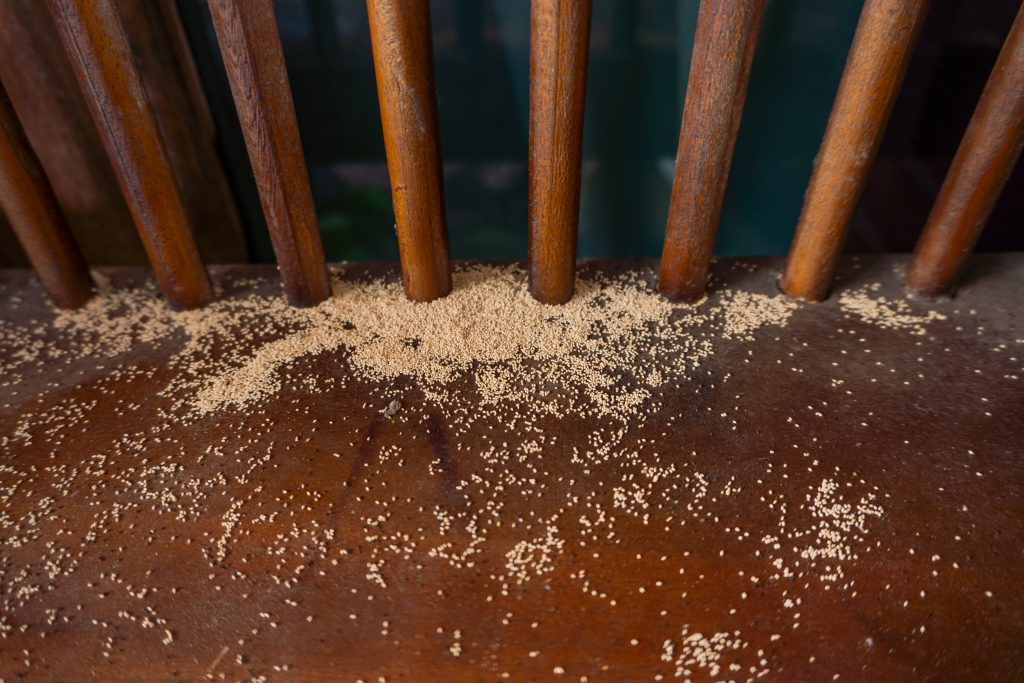
You spot a small pile of tan grains below a windowsill, cabinet, or baseboard. No one has drilled or sanded the wood, and the surface above it looks untouched. The material may be termite droppings expelled by drywood termites living out of sight.
These termite droppings are hard waste pellets called frass. They often resemble coarse sand, ground pepper, or fine sawdust from a distance. Their shape, texture, and position can help you separate them from carpenter ant debris, powderpost beetle dust, and ordinary wood shavings. This guide explains what to examine, where the pellets may come from, and what to save before arranging a termite inspection.
What Termite Droppings Look Like
Drywood termite droppings are small, firm pellets that tend to collect in concentrated piles. Most pieces in the same pile have a similar size and shape. The pellets may be cream, tan, reddish brown, dark brown, or almost black.
Color does not tell you whether a drywood termite infestation is new or severe. It often reflects the type of wood the termites consumed. A pale pile is not less concerning than a dark one, and mixed colors do not prove that several termite species are present.
Shape and Texture Provide Better Clues
Termite pellets are dry, slightly oblong, and marked by flattened sides. Those details are easiest to see with magnification, but their uniform appearance is often visible without special equipment.
Aim a flashlight across the pile at a low angle. Termite frass should cast small shadows and may roll when nudged with folded paper. Sawdust usually contains uneven fibers, flakes, curls, or thin splinters.
| Feature | Drywood Termite Droppings | Ordinary Sawdust |
| Shape | Small pellets with a consistent form | Mixed fibers, flakes, curls, and splinters |
| Texture | Hard, dry, and gritty | Soft, fibrous, or powdery |
| Color | Cream through dark brown | Usually resembles the exposed wood |
| Pattern | Often forms a concentrated pile | Usually spreads around a work area |
| Likely source | Waste pushed from termite galleries | Drilling, sanding, cutting, or normal wear |
| Nearby clue | Tiny hole, shed wings, or damaged wood | Tool marks, worn hardware, or recent repairs |
The table can help you decide whether the material deserves a closer look. It cannot locate the colony or show how much wood has been affected.
Why Drywood Termites Leave Frass Behind
Drywood termites spend most of their lives inside the wood they consume. They may occupy a window frame, attic beam, cabinet, door frame, fascia board, or piece of furniture without leaving a visible route to the ground.
Waste builds up as the colony feeds and moves through internal galleries. The termites clear that material through small openings called kick-out holes. The resulting termite frass falls onto the closest floor, sill, ledge, shelf, or section of attic insulation.
Look Above and Around the Pellet Pile
A kick-out hole may look like a pinprick in finished wood. The UC Statewide Integrated Pest Management Program’s drywood termite guide reports that these openings measure less than 2 millimeters across. Inspectors also look for fecal pellets, shed wings, and feeding damage when checking for drywood termites.
Check the wood directly above the pile, then move your light several inches to either side. Pellets can bounce from molding, slide down trim, or shift in moving air. The visible deposit may sit below and slightly away from the opening.
Leave suspected holes uncovered until the area has been inspected. Paint, caulk, or wood filler can hide a useful clue without reaching termites inside the galleries.
Termite Droppings vs. Sawdust and Other Debris
Several materials can resemble termite sawdust when viewed from standing height. Drywood termites produce compact fecal pellets. Carpenter ants discard wood fragments while excavating nesting space. Wood-boring beetles leave powder as their larvae tunnel through wood.
Use the complete pattern rather than one feature. Check the texture, the shape of any nearby hole, the condition of the wood, and whether the material returns after cleaning.
| Material | Typical Appearance | Common Location | Evidence Nearby |
| Termite frass | Hard, grain-like pellets of similar size | Below trim, beams, windows, furniture, or attic wood | Kick-out holes, shed wings, or recurring piles |
| Carpenter ant frass | Irregular shavings mixed with soil or insect parts | Near damp framing, windows, doors, or wall voids | Large ants, moisture damage, or smooth galleries |
| Powderpost beetle frass | Fine powder that resembles flour | Under hardwood, cabinets, furniture, or stored lumber | Tiny round exit holes |
| Construction sawdust | Fibers, flakes, and splinters of mixed sizes | Near repairs, drilled hardware, or cut wood | Fresh tool marks or exposed wood |
| Household debris | Lint, crumbs, hair, and irregular grit | Along flooring edges or beneath furniture | No matching hole or consistent pellet shape |
Termite Frass vs. Carpenter Ant Frass
Carpenter ants remove wood to create nesting space. Their discarded material may contain splinters, soil, dead ants, and parts of other insects. The pile usually looks rougher and less consistent than drywood termite droppings.
Moisture offers another lead. Carpenter ants often use wood weakened by a leak, condensation, or drainage issue. Drywood termites can occupy dry, sound wood without an obvious water problem.
Termite Frass vs. Powderpost Beetle Frass
Powderpost beetle frass is much finer than termite pellets. It may pour from a small round hole and spread like flour when touched. Hardwood floors, cabinets, furniture, and unfinished lumber are common discovery points.
In its wood-boring beetle guide, the UC Statewide IPM Program describes powderpost beetle frass as fine and powdery. It contrasts that material with the larger, granular, pepperlike pellets left by drywood termites.
Termite pellets usually hold their shape when collected carefully. Save a few intact pieces instead of crushing the pile during cleanup.
Where Termite Droppings May Appear Around Your Home
Begin where the pellets landed, then work upward. Look along trim joints, cracks, nail holes, shelf edges, and places where two pieces of wood meet. Your goal is to document visible signs of drywood termites, not to open the wall or dismantle finished wood.
California homes may contain exposed or concealed wood from the foundation to the roofline. Termite droppings on a windowsill are easy to notice, but evidence can also collect in an attic, cabinet, garage, or piece of furniture.
| Area | Places to Examine | Evidence Worth Recording |
| Windows and doors | Sills, frames, shutters, trim, and nearby flooring | Pellets, loose wings, small openings, or cracked wood |
| Attic | Rafters, joists, roof sheathing, vents, and stored lumber | Frass on insulation or beneath beams |
| Exterior | Eaves, fascia, decks, siding, fences, and patio covers | Holes, weakened edges, wings, or scattered pellets |
| Living areas | Baseboards, floors, shelves, cabinets, and ceiling trim | Reappearing piles, blistering, or damaged surfaces |
| Garage | Door frames, joists, shelving, and wall framing | Debris beneath wood or signs of swarming |
| Furniture | Drawers, joints, legs, frames, and unfinished undersides | Pellets inside recesses or beneath the item |
Windows, Baseboards, and Cabinets
Windowsills catch falling pellets and keep them visible. The kick-out hole may be in the upper frame or nearby molding rather than directly above the center of the pile. Shed termite wings near the glass provide another reason to inspect the surrounding wood.
A deposit beside a baseboard may have fallen from higher trim or concealed framing. Pulling off the molding without a clear inspection plan can damage the room while exposing the wrong section.
Cabinets deserve the same attention. Look at interior corners, shelf supports, drawer tracks, and unfinished undersides. A pile inside a cabinet may come from the cabinet itself rather than the wall behind it.
Attics, Eaves, and Furniture
Termite frass in an attic may sit unnoticed on insulation, boxes, ducts, or wall plates. Check only areas you can reach safely. Do not step between joists or disturb wiring to follow a suspected opening.
Outside, examine eaves, fascia boards, decks, fences, and patio covers. Wind may scatter pellet piles, so small holes and discarded wings can provide stronger evidence in exposed areas.
Drywood termites can also remain inside cabinets, bed frames, tables, picture frames, and stored lumber. Inspect unfinished surfaces, joints, drawer corners, and recessed hardware before moving a suspicious item next to other wood.
What Termite Droppings Can Tell You
Termite frass confirms that drywood termites occupied wood near the discovery point. The pile cannot tell you when the pellets fell, how many termites remain, or whether activity is limited to one board.
Vibration can release old pellets trapped in a crack or gallery. A clean-looking pile may contain older material. A colony can also remain active without sending frass onto a surface you regularly see.
Signs That May Point to Current Activity
Photograph the material before cleaning it. Take one close image and another that shows its position in the room. Place a coin beside the pile for scale and record the date.
Clean the surface and check it again over the next several days. New termite droppings in the same area suggest that pellets are still being pushed from the wood. No new pile only means none reached that particular surface during the monitoring period.
Other signs may include shed wings, winged termites indoors, new kick-out holes, blistered surfaces, and wood that breaks along hidden galleries. Do not estimate the size of the colony from the amount of frass. A large pile may have accumulated slowly, while a concealed colony may release little visible waste.
The financial risk makes correct identification worthwhile. The U.S. Environmental Protection Agency (EPA) reports that termites cause billions of dollars in structural damage each year. Property owners also spend more than $2 billion annually treating them.
Get a Clear Answer About Termite Droppings
Save several intact pellets in a sealed container or on folded paper. Keep your photographs and notes with the sample. An inspector can compare the debris with carpenter ant frass, powderpost beetle frass, and ordinary sawdust while examining accessible wood nearby.
Skip surface sprays and random drilling. A product that kills exposed termites may not protect the structure or reach a concealed drywood termite infestation. A professional termite inspection should identify the source, check other vulnerable areas, and determine whether any treatment is needed.
Round the Clock Pest Services inspects accessible interior, exterior, attic, and foundation areas and explains the findings before recommending a response. The inspection helps you avoid paying for the wrong product, replacing sound wood, or treating a pest that was never present. Initial termite checks are free, and same-day inspection availability may be offered.
Contact Round the Clock Pest Services and request a termite inspection when unexplained pellets, shed wings, or damaged wood appear around your property. You will know what caused the debris and which areas, if any, require treatment.