
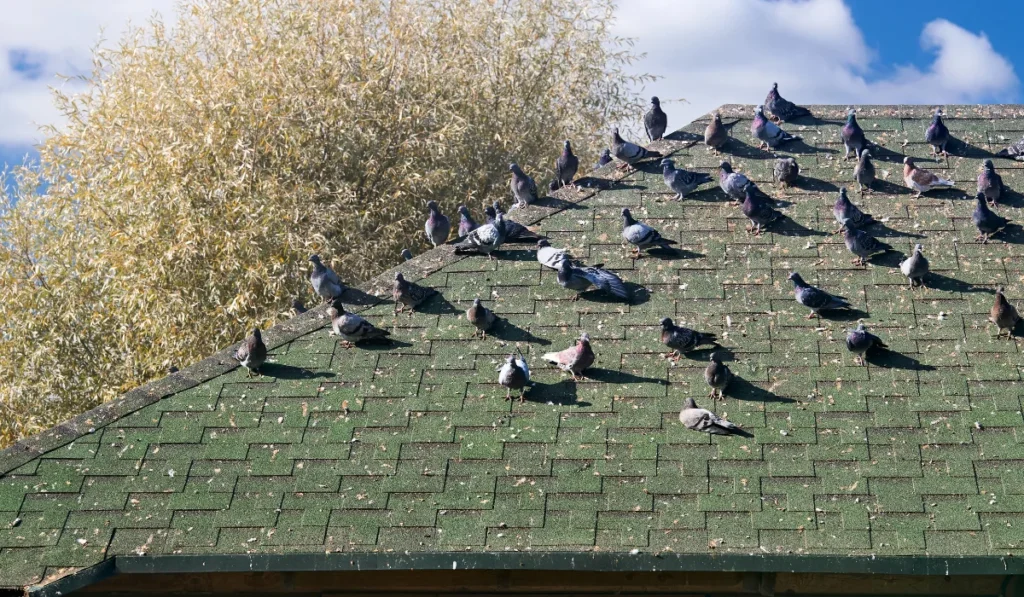
Birds often gather on rooftops in San Francisco. Many homeowners notice seagulls, pigeons, and other bird species resting or walking across their homes. At first, it may seem harmless, but large groups of birds can cause problems.
When birds stay on roofs too long, they may leave droppings, clog gutters, or nest in hidden spots. Over time, this can lead to mess, damage, and even bird infestations around the home.
The good news is that there are safe ways to reduce bird activity. Understanding why birds choose certain roofs helps you find the right bird deterrent and long-term bird control solution.
Key Takeaways
- Seagulls and pigeons often gather on rooftops for food and safety
- Droppings and nesting can damage roofs, gutters, and awnings
- Tools like bird spikes, bird wire, and bird netting help stop perching
- Early bird control helps prevent birds from forming nesting areas
- Professional pest control can install safe and lasting bird deterrent systems
Why Seagulls and Pigeons Gather on Roofs
Birds gather on roofs because the area feels safe and comfortable.
Safe Vantage Points
Roofs offer high vantage points where birds can watch their surroundings. From a flat roof or tall building, seagulls and pigeons can look for food or danger.
These high spots make rooftops a common first place birds choose to land and rest.
Easy Food Source
Another reason birds gather is the presence of a nearby food source. Trash bins, outdoor dining, and open areas often attract seagulls and other birds.
Once birds find easy food, they return again and again. This can lead to large groups resting on the same roof.
Good Nesting Sites
Roofs also provide quiet nesting sites. Birds may bring nesting materials like sticks or leaves to build nests.
Areas around gutters, vents, and solar panels often become spots for pigeons to nest or for other birds to settle.
Problems Birds Cause on Roofs
Bird activity may start small but can grow into larger problems.
Droppings and Mess
Large amounts of droppings can build up on roofs, window sills, and awnings. Over time, the mess can stain surfaces and create unpleasant smells.
Droppings may also wash into gutters, leading to blockages during rain.
Damage to Roof Areas
Bird nests and debris can clog gutters and trap water. When this happens, moisture may collect on the roof.
Birds moving around a flat roof can also loosen roofing materials. In some cases, nests near vents or panels can cause damage.
Growing Bird Infestations
If birds keep returning, small groups may grow into larger infestations. Seagulls, starlings, and other small birds may gather in large numbers.
This makes it harder for homeowners to get rid of pigeons or stop birds without help.
Deterrent Options That Actually Work
Several tools can safely reduce bird activity.
Bird Spikes
Bird spikes are one of the most common bird solutions. These anti-roosting spikes make it hard for birds to land.
Pigeon spikes and stainless steel bird spikes are often placed along roof edges, ledges, or window sills. The stainless steel material makes them durable and weather-resistant.
Bird Wire Systems
Bird wire creates a light barrier that prevents birds from landing. The wire is stretched across the roof edges or ledges.
Many buildings use bird wire because it is an effective deterrent that stops perching without harming birds.
Bird Netting
Bird netting works well in larger areas. It blocks birds from entering spaces where nesting might occur.
This method is often used near solar panels, under roof overhangs, or around open roof structures.
Prevention to Stop Birds From Returning
Stopping birds early can prevent long-term problems.
Remove Nesting Materials
Clearing away nesting materials helps prevent birds from settling in the same spot again.
Check the roof corners, gutters, and vents for nests.
Avoid DIY Fixes That Fail
Some DIY options, such as plastic decoys, a hanging scarecrow, or store-bought repellent, may work for a short time.
Birds often learn that these methods are harmless and return quickly.
Install Long-Term Bird Deterrents
The best way to deter seagulls and pigeons is to install long-term bird deterrent systems.
Professional bird control may include heavy-duty bird spikes, bird wire, or netting designed for the structure.
Schedule Roof Bird Deterrent Service in San Francisco
Bird activity on rooftops can grow quickly if ignored. Groups of seagulls, pigeons, and other birds may return daily once they find a comfortable roof space.
Professional bird control helps stop birds from landing, nesting, and creating damage around the home. Trained technicians can install bird spikes, bird wire, and other deterrents that protect roofs, gutters, and nearby structures.
Pest-R-Us provides reliable pest control and bird-deterrent solutions throughout San Francisco. If birds are gathering on your roof, schedule service to protect your home and keep birds away long-term.